Women's World T20: England beat India by eight wickets to enter final
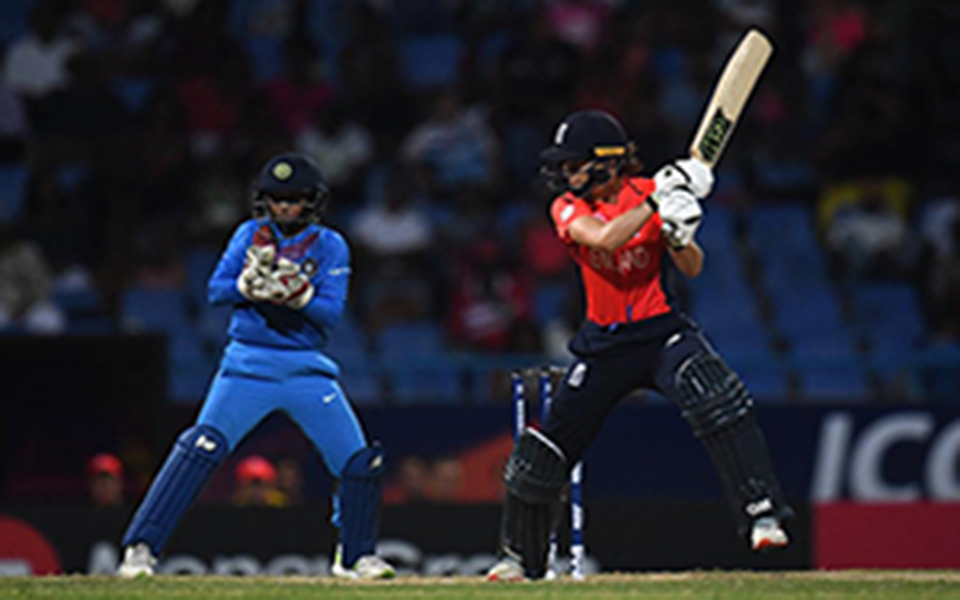
North Sound (Antigua), Nov 23 :Reigning ODI World Champions England beat India by eight wickets to enter the final of the ICC Women's World T20 on Friday.
England will meet Australia in the final after the Southern Stars demolished hosts and last edition's winners West Indies by 71 runs.
Batting first, India collapsed to 112 in 19.2 overs with opener Smriti Mandhana scoring 33 off 24 balls.
For England, Kirstie Gordon (2/20), skipper Heather Knight (3/9) and Sophie Ecclestone (2/22) wreaked havoc as seven Indian batters failed to get into double figures on a day when Women In Blue decided to drop their seniormost player Mithali Raj.
While chasing, England coasted along nicely to reach the below-par target in only 17.1 overs.
Amy Jones (53 no off 45 balls) and Natalie Sciver (52 no off 40 balls) added 92 runs for third wicket to take their team to the summit clash.
Brief Scores: India 112 in 19.2 overs (Smriti Mandhana 33 off 24 balls, Jemimah Rodriguez 26 off 26 balls, Heather Knight 3/9, Kirstie Gordon 2/20)
England 116 for 2 in 17.1 overs (Amy Jones 53 no, Nat Sciver 52 no).
Let the Truth be known. If you read VB and like VB, please be a VB Supporter and Help us deliver the Truth to one and all.
Brothers awaiting board exam results drown in canal

Erode (Tamil Nadu) (PTI): Minor brothers who were awaiting their board exam results have drowned in a canal in this district while spending their Summer holidays at their aunt's place, police said.
According to Arachalure Police, Santhosh, aged 17, and his younger brother Sanjai, aged 15, natives of Musiri village in Tiruchirapalli district, came to Gopaliparai hamlet near Arachalure to their Aunt's house a couple of days ago after writing their annual 12th and 10th examinations, respectively.
The police said on Friday that both boys went to the nearby Lower Bhavani Project canal to take a bath. It was alleged that while taking a bath, both boys went to a deeper area of the canal and went missing.
As they didn't return home, even two hours after they left, their aunt grew suspicious and informed the Fire and Rescue Services, Chennimalai. A rescue team from the department rushed to the spot. After a few minutes of searching, they located the dead bodies of the brothers and sent them to the hospital. Arachalure police registered a case of death due to drowning and are investigating.