Imran Khan demands high treason proceedings against Pak poll mandate thieves

Islamabad (PTI): Pakistan's jailed former prime minister Imran Khan has sought high treason proceedings against officials who allegedly stole the people's mandate in the February general elections.
Khan's remarks came as he spoke to reporters on Saturday after the hearing of the Al-Qadir Trust corruption case in which his wife Bushra Bibi, aide Farah Gogi and property tycoon Malik Riaz are also implicated.
The February 8 elections in Pakistan were marred by the allegations of vote rigging.
Though more than 90 independent candidates backed by Khan's Pakistan Tehreek-e-Insaf (PTI) won the maximum number of seats in the National Assembly, the Pakistan Muslim League-Nawaz (PML-N) led by former prime minister Nawaz Sharif and the Pakistan Peoples Party (PPP) led by former foreign minister Bilawal Bhutto struck a post-poll deal and formed a coalition government in the country.
PTI says the new government was formed by stealing its mandate.
Khan on Saturday claimed that his party bagged over 30 million votes whereas the rest of the 17 political parties jointly secured the same number of votes, Dawn newspaper reported.
He said his party took up the irregularities in polls with the International Monetary Fund (IMF) and that non-government organisations also pointed out flaws in the electoral process.
Meanwhile, a protest was held outside the International Monetary Fund (IMF) headquarters in the US against the alleged rigging in the polls.
Khan, 71, in his remarks, endorsed the demonstration outside the IMF office but distanced himself from the anti-Army slogans raised by the protesters.
"First, the PTI was denied its electoral symbol of bat under a conspiracy and then the former ruling party was deprived of its share of reserved seats," Khan said, as he sought high treason proceedings against officials who stole the people's mandate.
The theft of the mandate was akin to treason, which attracted Article 6 of the Constitution, the cricketer-turned-politician said.
He said the order of the Peshawar High Court (PHC) on reserved seats would be challenged in the Supreme Court, adding that the Election Commission of Pakistan (ECP) could not allocate PTI's seats to other political parties.
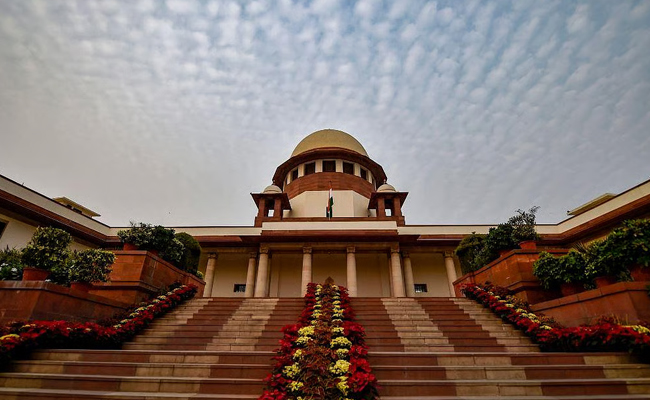
In a huge blow to PTI, the PHC on Thursday unanimously rejected the Sunni Ittehad Council's petition challenging the election commission's decision to allocate reserved seats for women and minorities in the national and provincial legislatures meant for it to other parties.
PTI-backed independents, who won the February 8 elections, joined the Sunni Ittehad Council, a political alliance of Islamic political and Barelvi religious parties in Pakistan, to get a share of the reserved seats.
Khan said the February 8 election was a fixed match in which the "ECP and the caretaker gov e rnment were hand in glove".
A few political parties and the establishment "sabotaged the plan to bring in electronic voting", he said.
Khan also termed the upcoming Senate polls a fixed match'. Elections for the Senate, the upper house of the bicameral parliament, will take place on April 2.
In response to a question about whether the ties with the government were healing, Khan replied that reconciliation depended on the fair audit of elections.
Khan said that the incu m bent government was not sus tainable because of the fragile economy. He rejected the criticism that the PTI left the country on the verge of default.
According to the former premier, the PML-N left a USD 20 billion deficit in 2018 and there was no other option available but to approach the IMF.
Khan said the incumbent government had no mandate to carry out structural reforms. He advised the government to seek loans if it could repay the debt.
During the hearing of the Al-Qadir Trust case, Khan's counsel concluded the cross-examination of a prosecution witness, who was the chief financial officer of Al-Qadir University.
The Al-Qadir Trust case is about the settlement of 190 million pounds, about Rs 50 billion, which the UK's National Crime Agency sent to Pakistan after recovering the amount from a Pakistani property tycoon.
Khan, being the prime minister then, instead of depositing in the national treasury, allowed the businessman (Riaz) to use the amount to partly settle a fine of about Rs 450 billion imposed by the Supreme Court some years ago.
Reportedly, the tycoon, in return, gifted about 57 acres of land to a trust set up by Khan and his wife, Bushra Bibi, to establish the Al-Qadir University in the Sohawa area of the Jhelum district of Punjab.
Accountability judge Nasir Javed Rana also recorded the statement of another prosecution witness.
During the hearing, Khan, Bushra Bibi, her daughter and son-in-law were also present in the courtroom. The case was adjourned till March 20.
Let the Truth be known. If you read VB and like VB, please be a VB Supporter and Help us deliver the Truth to one and all.
Telangana rains: Four farmers dead, three injured as sheds collapse in Mancherial

Karimnagar (Telangana) (PTI): Four farmers died, and three others were injured after tin-roofed sheds and dilapidated structures collapsed in two separate incidents in Mancherial district of Telangana, officials said on Wednesday.
The incidents occurred in two villages of Luxettipet mandal late on Tuesday night, when the farmers were taking shelter in the structures following heavy rain and strong winds.
According to officials, two people died when a shed caved in at Kothuru village.
In a separate incident in Gampalapalli village, two more persons died after another structure collapsed, police and district authorities said.
The three injured were shifted to a hospital in Karimnagar for treatment, police said.
Preliminary reports indicate that unseasonal rains accompanied by strong winds weakened the structures, leading to the collapses.
Authorities are assessing the situation, and further investigation is underway.