Imran Khan to appear before LHC ahead of graft case hearing in Islamabad court
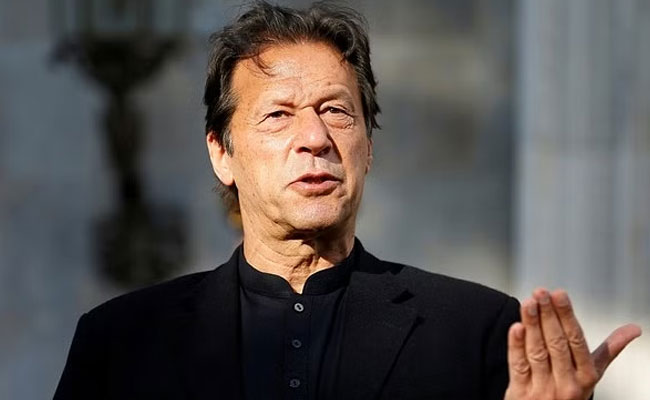
Lahore (PTI): Ousted premier Imran Khan will appear before a Pakistani court here on Friday and provide an assurance that he was ready to present himself on Saturday before the judge handling a corruption case against him.
Khan, the 70-year-old Pakistan Tehreek-e-Insaf (PTI) chief, has been resisting arrest in the Toshakhana case and is holed up inside his Zaman Park residence here surrounded by hundreds of his supporters, who have fought pitched battles with the police and Rangers over the past few days.
"Imran Khan will come to the Lahore High Court himself and assure the judge that he is ready to go to the Islamabad court," PTI leader Fawad Chaudhry told media persons on Friday, adding that "an undertaking has also been given to the court".
Additional District and Sessions Judge in Islamabad Zafar Iqbal had re-issued non-bailable arrest warrants for Khan on February 28 and directed the capital city police to bring him to court by March 18.
While hearing the case, the judge remarked that Khan should surrender unconditionally before seeking any favour from the court.
Khan has skipped several hearings in the case.
Judge Iqbal on Monday re-issued non-bailable arrest warrants for Khan and directed the police to bring him to court by March 18.
However, when the police reached Khan's Zaman Park residence in Lahore to arrest him on Tuesday, they were met with resistance, leading to two-day pitched battles between PTI supporters and law enforcement agencies. The clashes ultimately subsided after the courts intervened on Wednesday.
Ahead of the hearing in LHC on Friday, Chaudhry tweeted that both parties had "agreed to resolve the issues" and the agreed solution will be presented in court.
Khan has been in the crosshairs for buying gifts, including an expensive Graff wristwatch he had received as the premier at a discounted price from the state depository called Toshakhana, and selling them for profit.
Established in 1974, the Toshakhana is a department under the administrative control of the Cabinet Division and stores precious gifts given to rulers, parliamentarians, bureaucrats, and officials by heads of other governments and states and foreign dignitaries.
According to Khan, he was facing over 80 different cases in various courts across Pakistan.
Khan was ousted from power in April last year after losing a no-confidence vote, which he alleged was part of a US-led conspiracy targeting him because of his independent foreign policy decisions on Russia, China, and Afghanistan.
Since his ouster, Khan has been asking for early elections to oust what he termed an "imported government" led by prime minister Shehbaz Sharif.
Sharif has maintained that elections will be held later this year once the parliament completes its five-year tenure.
Let the Truth be known. If you read VB and like VB, please be a VB Supporter and Help us deliver the Truth to one and all.
Allahabad HC orders probe into 'reinstatement' of teacher in UP's Barabanki
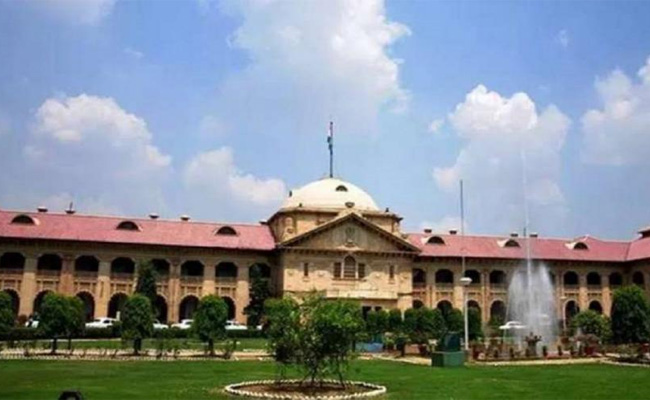
Lucknow (PTI): The Lucknow Bench of the Allahabad High Court on Friday ordered a probe by the special task force (STF) into alleged irregularities in the rejoining of a teacher at City Intermediate College in Barabanki, observing that the reinstatement appeared to be prima facie illegal.
The court also directed the recovery of the salary paid to the teacher during the disputed period.
A bench of Justice Rajeev Singh passed the order on a petition filed by the college management committee. The court expressed doubts over the roles of the District Inspector of Schools (DIOS), Barabanki, the college principal and the teacher concerned and hence, directed a detailed inquiry into the matter.
Taking note of alleged manipulation of records and misleading submissions, the court ordered the immediate transfer of the Barabanki DIOS to ensure a fair probe. It also directed the initiation of disciplinary proceedings against the then joint director of education of the Ayodhya division.
In its order, the court found that the teacher, Abhay Kumar, was initially appointed as an assistant teacher in 2018 but joined an Eklavya Model Residential School in Chhattisgarh as a lecturer in June 2024 without obtaining permission from the management. His subsequent request to retain the lien was rejected.
Despite this, he was allowed to rejoin the Barabanki College in September 2025 on the directions of the joint director of education and the DIOS, and was even paid the salary for October 2025. The court termed the rejoining "wholly illegal" and lacking any legal basis.
The bench also expressed concern over lapses in communication within the education department and directed the Uttar Pradesh chief secretary to ensure that official orders are communicated through email and WhatsApp as well, to prevent disputes.
The matter is next listed for hearing on May 28 when a compliance report is sought.