In 1st, US surgeons transplant pig heart into human patient
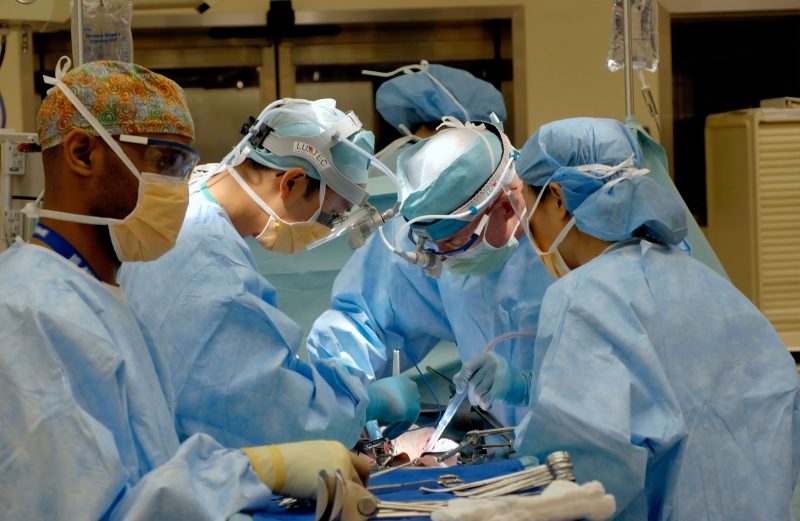
Baltimore (US), Jan 11: In a medical first, doctors transplanted a pig heart into a patient in a last-ditch effort to save his life and a Maryland hospital said Monday that he's doing well three days after the highly experimental surgery.
While it's too soon to know if the operation really will work, it marks a step in the decades-long quest to one day use animal organs for life-saving transplants. Doctors at the University of Maryland Medical Center say the transplant showed that a heart from a genetically modified animal can function in the human body without immediate rejection.
The patient, David Bennett, a 57-year-old Maryland handyman, knew there was no guarantee the experiment would work but he was dying, ineligible for a human heart transplant and had no other option, his son told The Associated Press.
It was either die or do this transplant. I want to live. I know it's a shot in the dark, but it's my last choice, Bennett said a day before the surgery, according to a statement provided by the University of Maryland School of Medicine.
On Monday, Bennett was breathing on his own while still connected to a heart-lung machine to help his new heart. The next few weeks will be critical as Bennett recovers from the surgery and doctors carefully monitor how his heart is faring.
There's a huge shortage of human organs donated for transplant, driving scientists to try to figure out how to use animal organs instead. Last year, there were just over 3,800 heart transplants in the U.S., a record number, according to the United Network for Organ Sharing, which oversees the nation's transplant system.
"If this works, there will be an endless supply of these organs for patients who are suffering, said Dr. Muhammad Mohiuddin, scientific director of the Maryland university's animal-to-human transplant program.
But prior attempts at such transplants or xenotransplantation have failed, largely because patients' bodies rapidly rejected the animal organ. Notably, in 1984, Baby Fae, a dying infant, lived 21 days with a baboon heart.
The difference this time: The Maryland surgeons used a heart from a pig that had undergone gene-editing to remove a sugar in its cells that's responsible for that hyper-fast organ rejection. Several biotech companies are developing pig organs for human transplant; the one used for Friday's operation came from Revivicor, a subsidiary of United Therapeutics.
I think you can characterize it as a watershed event, Dr. David Klassen, UNOS' chief medical officer, said of the Maryland transplant.
Still, Klassen cautioned that it's only a first tentative step into exploring whether this time around, xenotransplantation might finally work.
The Food and Drug Administration, which oversees such experiments, allowed the surgery under what's called a compassionate use emergency authorization, available when a patient with a life-threatening condition has no other options.
It will be crucial to share the data gathered from this transplant before extending it to more patients, said Karen Maschke, a research scholar at the Hastings Center, who is helping develop ethics and policy recommendations for the first clinical trials under a grant from the National Institutes of Health.
Rushing into animal-to-human transplants without this information would not be advisable, Maschke said.
Over the years, scientists have turned from primates to pigs, tinkering with their genes.
Just last September, researchers in New York performed an experiment suggesting these kinds of pigs might offer promise for animal-to-human transplants. Doctors temporarily attached a pig's kidney to a deceased human body and watched it begin to work.
The Maryland transplant takes their experiment to the next level, said Dr. Robert Montgomery, who led that work at NYU Langone Health.
This is a truly remarkable breakthrough," he said in a statement. "As a heart transplant recipient, myself with a genetic heart disorder, I am thrilled by this news and the hope it gives to my family and other patients who will eventually be saved by this breakthrough.
The surgery last Friday took seven hours at the Baltimore hospital. Dr. Bartley Griffith, who performed the surgery, said the patient's condition heart failure and an irregular heartbeat made him ineligible for a human heart transplant or a heart pump.
Griffith had transplanted pig hearts into about 50 baboons over five years, before offering the option to Bennett.
We're learning a lot every day with this gentleman, Griffith said. And so far, we're happy with our decision to move forward. And he is as well: Big smile on his face today.
Pig heart valves also have been used successfully for decades in humans, and Bennett's son said his father had received one about a decade ago.
As for the heart transplant, He realizes the magnitude of what was done and he really realizes the importance of it, David Bennett Jr. said. He could not live, or he could last a day, or he could last a couple of days. I mean, we're in the unknown at this point.
Let the Truth be known. If you read VB and like VB, please be a VB Supporter and Help us deliver the Truth to one and all.
Kejriwal resorting to 'vendetta politics', says BJP after MP Sandeep Pathak booked
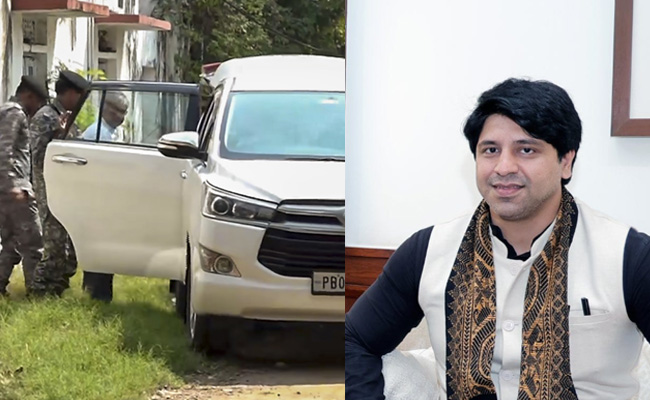
New Delhi (PTI): The BJP on Saturday accused Aam Aadmi Party's national convenor Arvind Kejriwal of vendetta politics after Punjab Police booked Rajya Sabha MP Sandeep Pathak, who recently defected to the BJP.
In an X post, BJP national spokesperson Shehzad Poonawalla claimed that Kejriwal is misusing the Punjab Police to settle political scores, and Chief Minister Bhagwant Mann has become a party to it.
"Two FIRs have been filed against Sandeep Pathak, who until recently was in the Aam Aadmi Party (AAP) as a Rajya Sabha MP and general secretary (organisation). What is baffling is the shameless, brazen vendetta politics being pursued by Arvind Kejriwal, with Bhagwant Mann complicit in it," Poonawalla said.
ALSO READ: BJP, TMC hail SC directions on counting of votes for West Bengal polls
"It is clear this has been done out of vendetta politics by Kejriwal, who is extremely vengeful and vindictive, and misuses the Punjab Police to pursue such political vendetta," he alleged.
Questioning the timing of the FIRs, Poonawalla said, "If these cases existed from the beginning, why were FIRs not filed earlier? If he was corrupt, why was he kept in the party for so long, especially when he was the general secretary (organisation)? Has any new material surfaced in the last few days, or has the alleged corruption occurred only now?"
He alleged that Kejriwal has an "old habit" of targeting political opponents and dissenters.
"We have seen how he has used the police against rivals, including Congress leaders. This is his old habit," Poonawalla said, referring to the withdrawal of Rajya Sabha MP Harbhajan Singh's security.
Poonawalla claimed that several leaders who had left AAP over the years, including Yogendra Yadav, Mayank Gandhi, Ashish Khetan, Ashutosh and Alka Lamba, were "hounded".
He accused the party of failing to introspect.
"Instead of introspecting on how they have changed -- from Anna to Lalu, from Lokpal to corruption -- they are indulging in vendetta politics, trying to victimise people using the strong arm of the law. This reflects an Emergency-like mindset and a dictatorial, Hitlerian mindset," he said.
According to sources, two FIRs have been lodged against Pathak under non-bailable sections.
No further details about the FIRs have been disclosed yet.
On April 24, the AAP suffered a jolt when seven of its 10 Rajya Sabha MPs quit, alleging that Arvind Kejriwal's party has strayed from its principles, values and core morals.
Of the seven MPs -- who were Pathak, Raghav Chadha, Ashok Mittal, Harbhajan Singh, Rajendra Gupta, Vikramjit Sahney and Swati Maliwal -- six were from Punjab.
Later, Rajya Sabha Chairman C P Radhakrishnan officially accepted their merger with the BJP, reducing AAP's strength in the Upper House to three.