In Manipur, efforts on to bring back sense of normalcy: EAM S Jaishankar
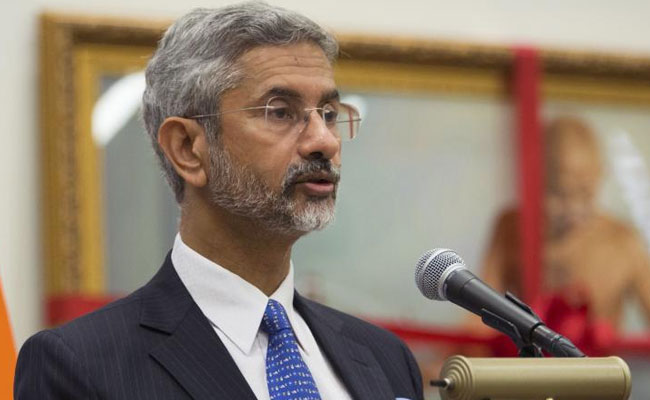
New York (PTI): External Affairs Minister S Jaishankar has said efforts are on in Manipur by the state and the central governments to find a way by which a sense of normalcy returns and there is adequate law-and-order enforcement.
"...I think one part of the problem in Manipur has been the destabilising impact of migrants who have come," he said Tuesday at the Council on Foreign Relations in response to a question on the situation in the northeastern state in India.
"But there are also tensions which obviously have a long history which precede that. And today, I think the effort is on the part of the state government and the Union government to find a way by which a sense of normalcy returns, that arms which were seized during that period are recovered, that there is an adequate law-and-order enforcement out there so that incidents of violence don't happen," the minister said.
Earlier this month, a group of United Nations experts said they are "appalled" by reports and images of violence in Manipur targeting women and girls, and urged the Indian government to take robust action to investigate the incidents and hold the perpetrators to account.
The experts raised an alarm on reports of serious human rights violations and abuses in Manipur, including acts of alleged sexual violence, extrajudicial killings, home destruction, forced displacement, torture and ill-treatment.
India had rejected these comments, calling them "unwarranted, presumptive and misleading", and asserted that the situation in the state was peaceful.
Jaishankar was asked about him dismissing these comments as "presumptive".
"The comment wasn't made by me personally but by the spokesperson. Was that comment correct? My answer to you would be yes," he said.
The minister was also asked about reports by Sweden's V-Dem Institute and the US government-funded NGO Freedom House that had criticised India on freedom and democracy.
Jaishankar had slammed the two organisations for their "hypocrisy" and called them "self-appointed custodians of the world who find it very difficult to stomach that somebody in India is not looking for their approval".
Responding to the question on this at the CFR event, he said, "I think it answers the question if you would be objective enough to understand it. I think it says very clearly that the people who are writing these reports have a strong bias, often they distort facts. Many of these reports are actually riddled with inaccuracies."
Let the Truth be known. If you read VB and like VB, please be a VB Supporter and Help us deliver the Truth to one and all.
Man arrested with Rs 2.54-crore heroin in Mumbai

Mumbai (PTI): Police have arrested a man and seized over 500 grams of heroin worth Rs 2.54 crore in the illicit market from him in Mumbai, officials said on Friday.
The police's Anti-Narcotics Cell (ANC) made the drug seizure in Santacruz in the western suburbs. The operation was conducted by the Kandivali unit of the ANC on Thursday as part of a special crackdown against drug trafficking in the area, they said.
Acting on specific inputs, an ANC team conducted a raid in Santacruz (East) and intercepted a man. During a search, the team recovered 508 grams of high-grade heroin from his possession, an official said.
The seized contraband, a highly addictive, opioid drug derived from morphine, is estimated to be worth Rs 2.54 crore in the international market, he informed.
Following the seizure, a case was registered against the man under relevant sections of the Narcotic Drugs and Psychotropic Substances (NDPS) Act, 1985, and he was formally placed under arrest in the early hours of Friday.
The police are currently investigating the source of the drug and trying to identify the intended recipients of the consignment, he said.