India a responsible nuclear state, believes in 'no first use': Akbar
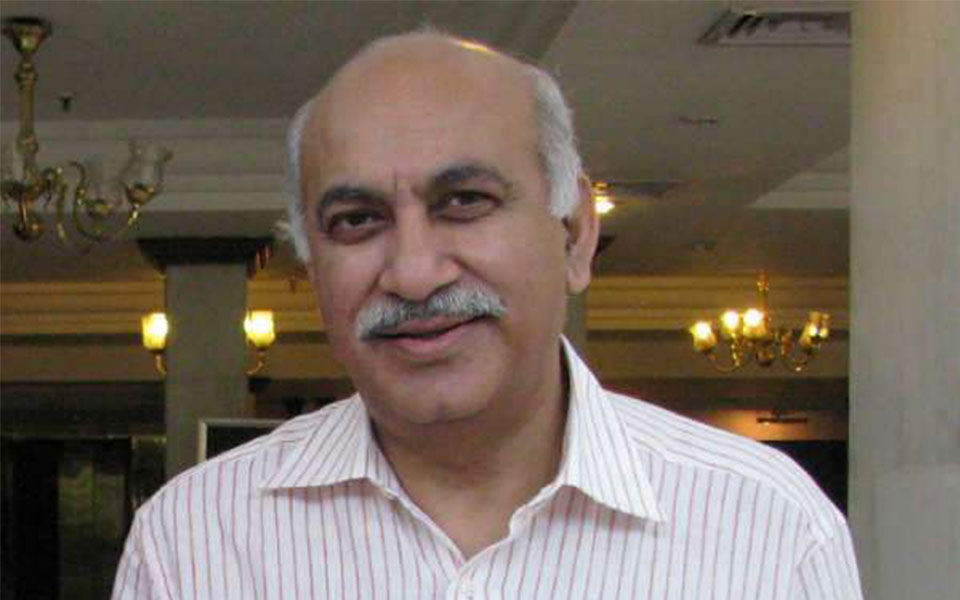
Davos: Union minister M J Akbar today asserted that India is a responsible nuclear state and believes in 'no first use' of such weapons, even as he questioned why no action is being taken at the global level against proliferation.
Speaking at a session on nuclear threats to international security here at the World Economic Forum (WEF), he said many countries see nuclear weapons as the ultimate deterrence and see "missiles as a message".
The minister of state for external affairs said just a few days ago India joined the Australia Group and is party to other such pacts.
"The world recognises that India is a very responsible nuclear state. Also, we are like that not because someone asked us to do so, but because we want to be like that," Akbar said.
He said India's approach is clear -- it wants a nuclear regime that is non discriminatory.
"We have got support from so many countries on our approach and we hope that the world will work together on reducing if not eliminating the nuclear threats," he said while adding that he is hopeful as everyone takes the threat of destruction seriously.
Asked about both India and Pakistan having nuclear weapons, he said, "We can only speak from our position. I can't speak on behalf of another country and we have these weapons as form of a deterrence and we believe in no first use."
"We would want to get an agreement at global level on 'no first use'. If ideals can't be achieved at least we can work towards good. It's easy to hear the noise but a little less easy to hear the silence," he said.
Akbar said India is very proud that its objective is peace. We want peace but peace not necessarily comes from pacifism, he added.
Akbar said people have gotten away with proliferation and strong actions are needed against that.
Speaking in the same session, Beatrice Fihn of the International Campaign to Abolish Nuclear Weapons said the only solution is to abolish and eliminate nuclear weapons and it makes no sense for responsible countries to have such weapons that always present a major risk.
She said these weapons create, rather than resolve, crises.
Akbar, however, said demands of security cannot be simply wished away and wondered why is it that no country is taking unilateral decision against nuclear weapons.
"We are in Europe which has nuclear states and why don't they lead the way? Can they seek public opinion on disarmament? At our level, we work very strongly through multilateral framework which is the only way forward.
"We urge other nations to take steps and we hope this diligence with which we work towards a safer world will yield result," he said.
Akbar asserted that we need to question why no steps are being taken against proliferation.
The panel discussed the increasing number of nuclear states and threat of "first use" of nuclear weapons as dual global risks on the rise.
The panel members discussed what political, diplomatic and military options can mitigate or manage such existential threats.
They also sought to understand why nuclear threats are back on the table.
Other areas of discussion included re-evaluating the risk/reward balance in nuclear deterrence and how to keep the human factor in focus.
Let the Truth be known. If you read VB and like VB, please be a VB Supporter and Help us deliver the Truth to one and all.
Noida International Airport appoints Nitu Samra as interim CEO
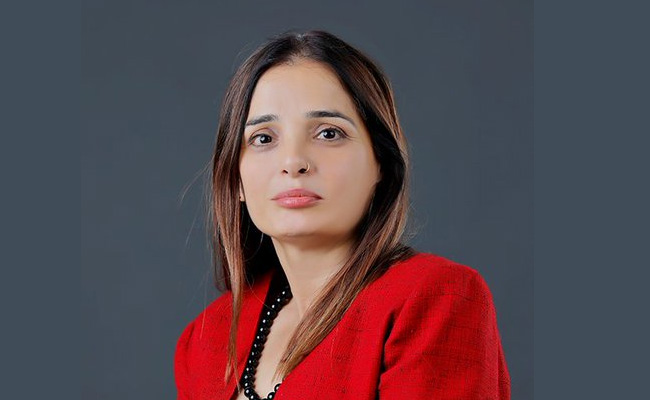
New Delhi (PTI): Noida International Airport on Friday announced the appointment of its Chief Financial Officer Nitu Samra as the interim Chief Executive Officer after authorities denied permission for foreign national Christoph Schnellmann to be at the helm.
"This change follows directions issued by the Bureau of Civil Aviation Security (BCAS) that the Chief Executive Officer of an airport in India is required to be an Indian national," NIA said in a statement.
Samra will replace Schnellmann, a Swiss national who has led Noida International Airport (NIA) as the CEO since August 2020.
The regulatory issue related to the requirement of having an Indian national as CEO has been delaying the start of commercial operations of the airport, which was inaugurated by Prime Minister Narendra Modi on March 28.
Schnellmann will join the airport's Board of Directors as Executive Vice Chairman. In this role, he will continue to support the project and its transition to operations, the statement said.
With immediate effect, NIA said Samra has been appointed as the CEO on an interim basis until the Board of Directors can conclude a formal selection process.
Samra has been serving as the CFO since October 2021 and was closely involved in the airport’s development journey, overseeing financial stewardship, governance, and strategic planning during a key phase of the project, the statement added.
NIA will be operated by Yamuna International Airport Pvt Ltd (YIAPL), a subsidiary of Zurich Airport International AG, under a public-private partnership.
Originally scheduled to commence passenger services in September 2024, NIA is being developed in four phases, along with a dedicated cargo terminal. It received an aerodrome license from the aviation regulator Directorate General of Civil Aviation (DGCA) in March.
YIAPL Chairman Daniel Bircher said that since the inauguration of the airport by the Prime Minister, the goal was to enable the start of operations as early as possible.
"This management change brings the airport into compliance with Bureau of Civil Aviation Security requirements while maintaining continuity in the airport’s leadership team. The newly structured team will support a smooth transition into operations, guided by clear and transparent governance and a strong corporate culture," he said.
On March 28, Civil Aviation Minister K Rammohan Naidu said commercial flight operations from the airport would start in the next 45 to 60 days.
Among the largest greenfield airport projects in the country, NIA will initially have a capacity to handle 12 million passengers per annum.
Once fully developed, the airport will have a total passenger handling capacity of 70 million.
The first phase of NIA has been developed at an investment of around Rs 11,200 crore. 'DXN' is the code for the airport.
The airport features a 3,900-metre runway capable of handling wide-body aircraft, along with modern navigation systems, including Instrument Landing System (ILS) and advanced airfield lighting.
The peak handling capacity in the first phase will be 30 flights per hour.
In the first phase, there will be 28 aircraft stands, and the projected cargo capacity is around 2.5 lakh tonnes.
Terminal 1 of the airport is spread across 1,37,985 square metres with 48 check-in counters. Over 40 acres of land have been earmarked for developing MRO (Maintenance, Repair and Overhaul) facilities at the airport.