India has just been devastated by COVID-19: Donald Trump
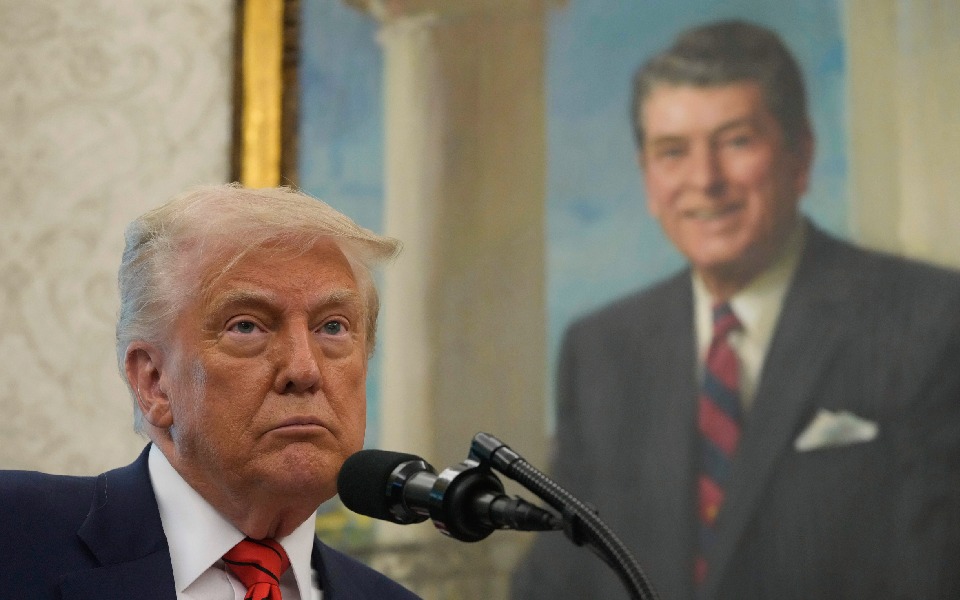
Washington, Jun 17: Former president Donald Trump on Thursday said that India has been devastated by the coronavirus pandemic, insisting that China should pay USD 10 trillion to the US for allegedly being responsible for the spread of COVID-19 globally.
In an interview with Fox News, Trump said that in fact, China should pay more as compensation to the world, but this is what they have the capacity to pay.
The number (compensation) is much higher than that. But there's only so much they can pay. And that's to us (United States). The number is bigger throughout the world. Look, countries have been destroyed over what they did, and whether by accident or not. And I would hope that it was an accident. I hope that it was through incompetence or an accident, Trump said in response to a question.
But, when you look, whether it was by an accident, whether it was -- whatever it is, this -- you look at these countries. They will never, ever be the same. Our country was hit so hard. But other countries were hit much harder, he said as he went on to cite India, which is currently experiencing the worst ever public health crisis.
Look at what's going on in India now. You know, they used to say, look how well India was doing, because they were always looking for an excuse -- look how well India is doing. The fact that India has just been devastated now, and virtually, every country has been devastated, Trump said.
I think that's one of the reasons that I feel it's very important to find out where it came from, how it came. I think I know. I mean, I feel certain about it. But certainly, China should help. Right now, their economy and our economy are the two economies that are coming back the fastest, he argued.
Coronavirus was first reported in Wuhan in December 2019 by Chinese health officials.
Trump has been alleging that the coronavirus may have leaked from the Wuhan Institute of Virology in central China's Wuhan city.
The total number of coronavirus cases globally are 177,136,569 and 3,835,123 people have died from it, according to the Johns Hopkins University tracker on Thursday.
In April, India was struggling with a second wave of the pandemic and hospitals were reeling under a shortage of medical oxygen and beds. However, the country is now witnessing a downswing in the second wave of the coronavirus.
Let the Truth be known. If you read VB and like VB, please be a VB Supporter and Help us deliver the Truth to one and all.
Allahabad HC orders probe into 'reinstatement' of teacher in UP's Barabanki
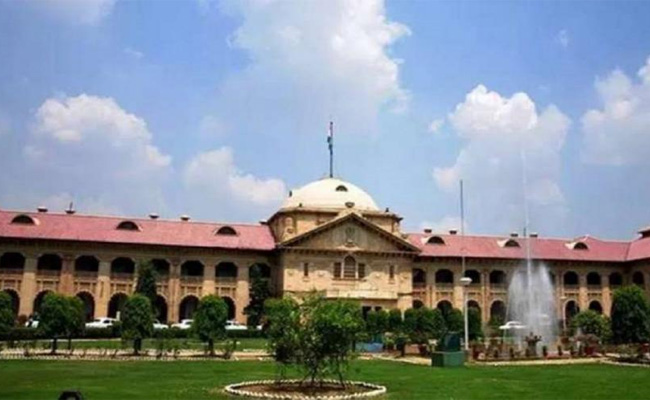
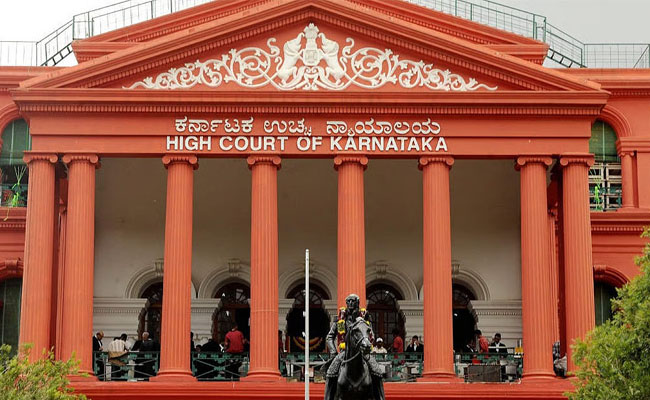
Lucknow (PTI): The Lucknow Bench of the Allahabad High Court on Friday ordered a probe by the special task force (STF) into alleged irregularities in the rejoining of a teacher at City Intermediate College in Barabanki, observing that the reinstatement appeared to be prima facie illegal.
The court also directed the recovery of the salary paid to the teacher during the disputed period.
A bench of Justice Rajeev Singh passed the order on a petition filed by the college management committee. The court expressed doubts over the roles of the District Inspector of Schools (DIOS), Barabanki, the college principal and the teacher concerned and hence, directed a detailed inquiry into the matter.
Taking note of alleged manipulation of records and misleading submissions, the court ordered the immediate transfer of the Barabanki DIOS to ensure a fair probe. It also directed the initiation of disciplinary proceedings against the then joint director of education of the Ayodhya division.
In its order, the court found that the teacher, Abhay Kumar, was initially appointed as an assistant teacher in 2018 but joined an Eklavya Model Residential School in Chhattisgarh as a lecturer in June 2024 without obtaining permission from the management. His subsequent request to retain the lien was rejected.
Despite this, he was allowed to rejoin the Barabanki College in September 2025 on the directions of the joint director of education and the DIOS, and was even paid the salary for October 2025. The court termed the rejoining "wholly illegal" and lacking any legal basis.
The bench also expressed concern over lapses in communication within the education department and directed the Uttar Pradesh chief secretary to ensure that official orders are communicated through email and WhatsApp as well, to prevent disputes.
The matter is next listed for hearing on May 28 when a compliance report is sought.