India reiterates support at UN for two-state solution to Israel-Palestinian conflict
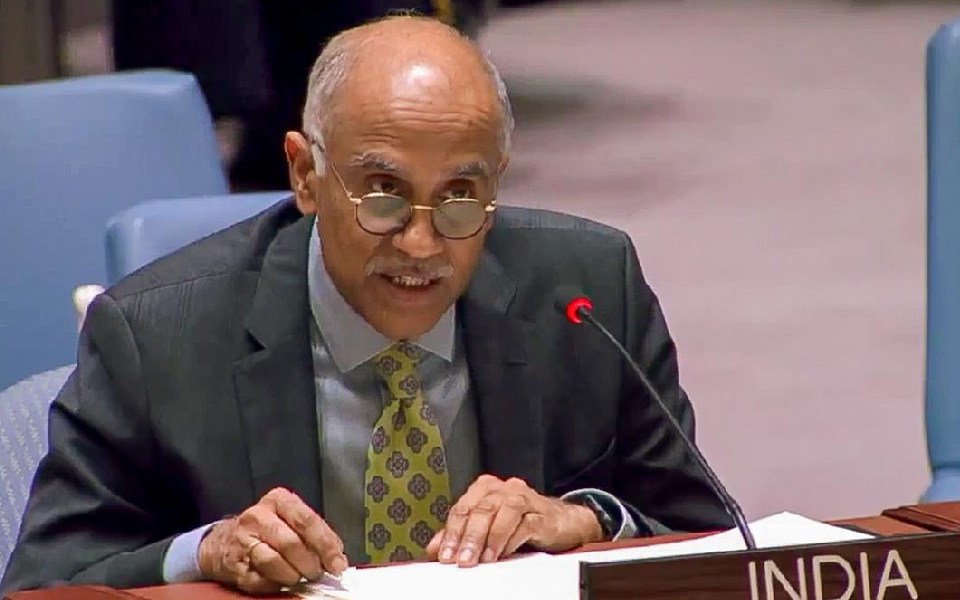
United Nations, Jul 30 (PTI): India told a high-level UN conference that global efforts must now focus on achieving a two-state solution to the Israel-Palestinian conflict through "purposeful dialogue and diplomacy".
It also said that one should not be content with paper solutions but strive to achieve practical ones.
India’s Permanent Representative to the UN Ambassador Parvathaneni Harish said on Tuesday that deliberations during the preparation for the UN High-Level International Conference on ‘The Peaceful Settlement of the Question of Palestine and the Implementation of the Two-State Solution’ confirm that the international community continues to believe there is no substitute for a two-state solution.
He said the conference offers an opportunity to reflect on the path traversed so far in the journey towards achieving peace through a two-state solution.
“Our efforts must now focus on how to bring about a two-state solution through purposeful dialogue and diplomacy, and bringing the parties to the conflict to engage directly with each other," Harish said.
"Reaffirmation of support must take the form of actionable steps that pave the way for the two-state solution. Identification of such steps and their implementation modalities demand our collective attention and effort,” he said in the UN General Assembly.
The high-level conference on July 28-30 is co-chaired by Saudi Arabia and France.
A 25-page outcome document titled ‘New York Declaration on the Peaceful Settlement of the Question of Palestine and the Implementation of the Two-State Solution’ asserted that the war in Gaza must end now and Hamas must free all hostages.
“In the context of ending the war in Gaza, Hamas must end its rule in Gaza and hand over its weapons to the Palestinian Authority,” the outcome document said.
It added that following a ceasefire, a transitional administrative committee must be immediately established to operate in Gaza under the umbrella of the Palestinian Authority.
Harish noted that certain action points are emerging from the UN conference, and following up on them is the key.
"Let us not be content with paper solutions but strive to achieve practical solutions that actually make a tangible difference in the daily lives of our Palestinian brothers and sisters,” he said, expressing India’s complete readiness to contribute to this “noble endeavour.”
Harish said India has been clear on the measures that must be undertaken in the short term.
These include an immediate ceasefire, sustained and unimpeded humanitarian assistance, release of all hostages, and the path of dialogue and diplomacy.
"There are no alternatives to these measures,” he said.
Noting that in 1988 India became one of the first countries to recognise the State of Palestine with firm support and commitment to the two-state solution, Harish underlined that the overall sentiment in this forum is clear.
“It is also India’s earnest desire to see peace and calm prevail in the Middle East. Lasting solutions are required to achieve this,” he said.
Asserting that humanitarian aid to Gaza needs to flow without impediments, India said Palestinians in Gaza must have access to food, fuel and other basic necessities without hindrance.
“Humanitarian assistance is vital in sustaining life and must remain outside the realm of politics or conflict,” Harish said, underlining that the humanitarian assistance pillar demands “our immediate attention and action.”
India voiced concern that the human suffering in Gaza continues unabated, tens of thousands have been killed, several medical facilities damaged or destroyed, and children deprived of schooling for more than 20 months.
India also stressed that the plight of the hostages should not be forgotten.
“There can be no justification whatsoever for terrorism, for addressing any root cause or political grievance.”
Noting that civilians, including women and children, have the right to lead normal lives, India said that in the years ahead, “meticulous reconstruction and rehabilitation" efforts of a substantially large scale will be required.
Highlighting the vital aspect of security, India said a stable arrangement that suitably caters to the security needs of both sides is necessary.
“Neither party should feel insecure. A sovereign, viable and independent State of Palestine within recognised and mutually agreed borders, living side by side with Israel in peace and security, is a prerequisite for enduring peace and sustainable development.”
India further said that while aid and support are essential for the Palestinian people in rebuilding their lives, it is equally important to create hope and economic structures conducive for investment and employment.
India has been making concerted efforts to bring about a tangible impact on the daily lives of the Palestinian people by implementing human-centric projects in diverse sectors. The total commitment by India on this front stands at around USD 160 million.
“Economic prospects and viability for a Palestinian state are crucial,” Harish said.
UN Secretary-General Antonio Guterres told the conference that the central question for Middle East peace is the implementation of the two-state solution.
“My central question to those who stand in the way is this: What is the alternative?” Guterres said, questioning whether the alternative is a one-state reality where Palestinians are denied equal rights, and forced to live under perpetual occupation and inequality or a one-state reality where Palestinians are expelled from their land.
“That is not peace. That is not justice. That is not in accordance with international law. And that is not acceptable,” the UN chief said.
Guterres stressed that statehood for the Palestinians is a right, not a reward. “And the denial of statehood would be a gift to extremists everywhere.”
UN agencies warn that key food and nutrition indicators in Gaza have exceeded famine thresholds, reaching their worst levels so far.
Let the Truth be known. If you read VB and like VB, please be a VB Supporter and Help us deliver the Truth to one and all.
Over 1 lakh students appear for NEET across TN
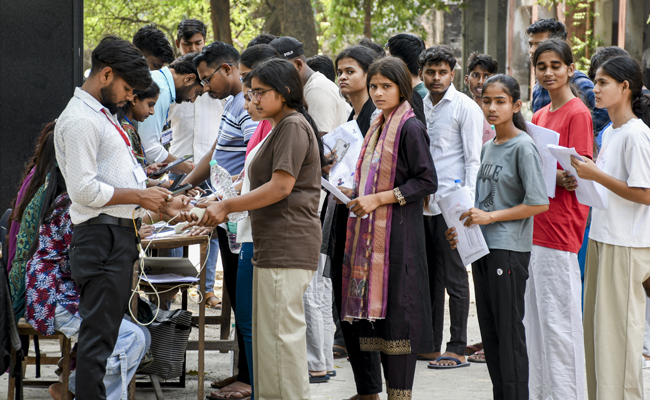
Chennai (PTI): About 1.4 lakh students appeared for the NEET 2026 exam for admission to medical degree courses across 31 centres in Tamil Nadu on Sunday.
Students claimed that the exam paper was easier than the previous year.
Organised by the National Testing Agency (NTA), 22.80 lakh students had registered for the National Eligibility cum Entrance Test (NEET) undergraduate exam nationwide.
NTA sources said that CCTV surveillance was installed at all examination centres, with feeds linked to centralised control rooms.
In view of the large candidate volume and prevailing summer conditions, the NTA ensured reliable power back-up, including generators at all centres, to ensure candidate comfort during the exam. Also, drinking water and on-site medical support were provided to students.
The sources further said that no malpractices were reported, especially in Chennai. The results of NEET are expected to be declared in June, 2026.