India, S Korea sign 7 pacts; to step-up cooperation in infrastructure, combating global crime
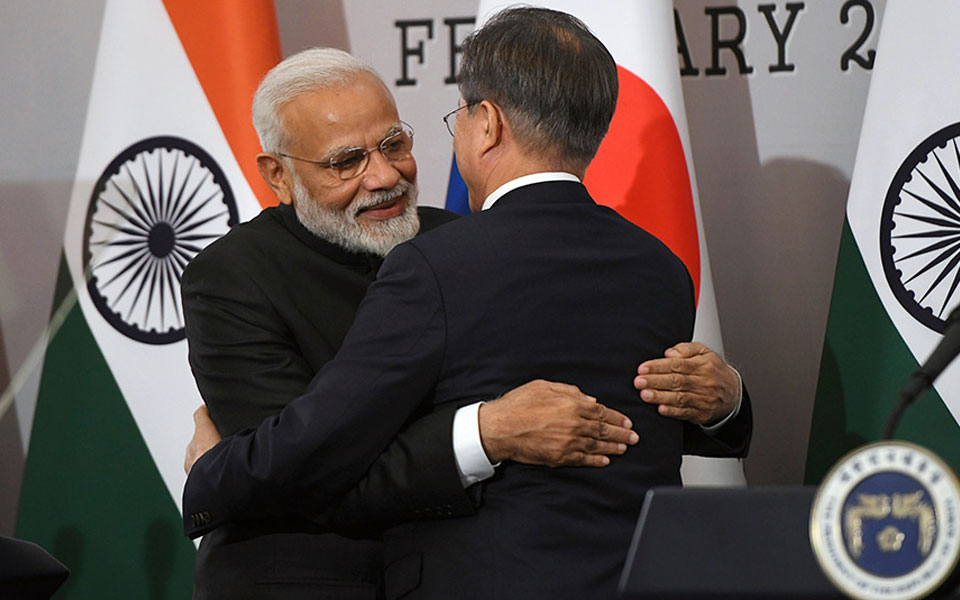
Seoul : India and South Korea signed seven agreements on Friday to enhance cooperation in key areas, including infrastructure development, media, start-ups and combating trans-border and international crime, during Prime Minister Narendra Modi's visit to the country.
Modi, who is on a two-day visit to South Korea to strengthen India's strategic ties with the country, was accorded an official reception at the Blue House, the executive office and official residence of the South Korean President Moon Jae-in here. He also met First lady Kim Jung-sook.
The memorandum of understandings (MoUs) were signed after the two leaders held "constructive" talks on enhancing bilateral cooperation in a number of areas including trade, investment, defence and security.
Ministry of External Affairs spokesperson Raveesh Kumar said that seven documents between India and South Korea were signed/exchanged in the presence of the two leaders on cooperation in media, start-ups and police among others.
An MoU was signed between Korean National Police Agency and the Ministry of Home Affairs to enhance cooperation between the law enforcement agencies of the two countries and combat trans-border and international crimes.
Another agreement was signed for releasing a joint stamp, commemorating Princess Suriratna (Queen Hur Hwang-ok), a legendary Princess of Ayodhya, who went to Korea in AD 48 and married King Kim-Suro. A large number of Koreans trace their ancestry to the princess.
The two sides also signed an agreement to continue operations of Korea Plus organisation that facilitates investments by Korean companies in India. Korea Plus was operationalised in June 2016, and comprises representatives from the Ministry of Industry, Trade and Energy of South Korea, Korea Trade Investment and Promotion Agency (KOTRA) and Invest India.
The two countries will promote collaboration among start-ups and set up a Korea Start-up Centre (KSC) in India to commercialise ideas, technologies and designs of start-up companies.
The Korean Broadcasting System (KBS) and Prasar Bharti have agreed to facilitate the broadcast of DD India Channel in South Korea and KBS World Channel in India.
An agreement was signed on fisheries and aquaculture for strengthening cooperation by encouraging exchanges, organising training workshops and development and utilisation of marine science and technology in the fields of fisheries and aquaculture.
Another MoU was signed between the National Highways Authority of India and Korea Expressway Corporation to promote bilateral cooperation in road and transport infrastructure development projects of India, and facilitate technical and institutional knowledge exchange in the field of road and transport.
Modi is visiting South Korea on the invitation of President Moon. This is his second visit to the Republic of Korea since 2015 and second summit meeting with the South Korean president.
Let the Truth be known. If you read VB and like VB, please be a VB Supporter and Help us deliver the Truth to one and all.
Karnataka launches India’s first digital grievance system for gig workers
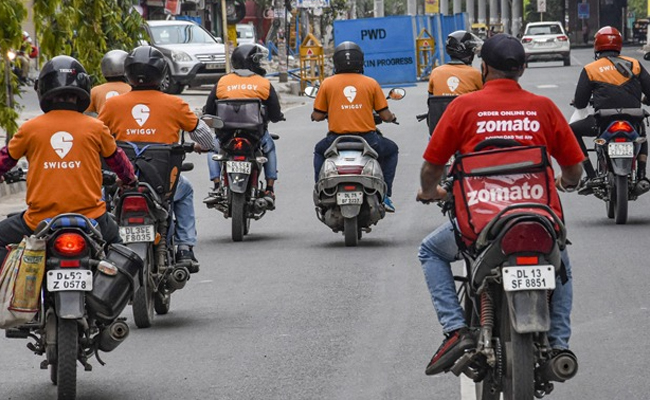
Bengaluru: In a first-of-its-kind initiative in India, the Karnataka government has launched a digital grievance redressal system for gig workers to provide structured support and protection to platform-based workers.
According to The Hindu, the system, developed by the Karnataka Platform-based Gig Workers’ Board in collaboration with the Department of e-Governance, allows workers to file complaints through the Integrated Public Grievance Redressal System (IPGRS).
Gig workers can raise issues related to pay, working conditions, and platform-specific disputes. Complaints will be routed to the Internal Dispute Resolution Committees (IDRCs) of respective platforms and are expected to be resolved within a defined timeframe. This is expected to bring transparency and legal recourse for a workforce that has so far operated without a formal dispute resolution framework.
Under The Karnataka Platform-Based Gig Workers (Social Security and Welfare) Act and Rules, every aggregator platform must constitute an Internal Dispute Resolution Committee (IDRC). Platforms such as Namma Yatri and Yulu have already integrated their IDRC contact details with the government portal.
Around 12 lakh gig workers have been identified in the state, and a unique identification system is being developed to remove duplicate entries. Officials said welfare schemes are also being designed based on type of work, working hours, and contribution.
Labour Minister Santosh Lad said that Karnataka, technology capital of the country, is leveraging this potential for worker welfare as well. “By launching this system, we are ensuring that the gig economy is no longer an informal space, but a structured one where every worker’s voice is heard,” he said.
“The schemes will vary based on the type of platforms. For example, cab rides are mostly undertaken by men whereas urban domestic activity is undertaken mostly by women. It may also be based on the contribution made, and the quantum of gig work done by a gig worker. Some gig workers work for more than eight hours while some may work on a few gigs. So, work load, nature of work, and time period of work could vary,” TH quoted G. Manjunath, Additional Labour Commissioner and CEO of the Board as saying.
“It has to be scientifically structured based on their effort and labour. We are working with experts, including academicians from Briston University, King’s College, and IISc, and other stake holders, including board members,” he said.
Officials added that aggregator platforms will be required to contribute 1 per cent towards worker welfare, with implementation beginning July 5.