India sending more relief, humanitarian materials to explosion-hit Lebanon
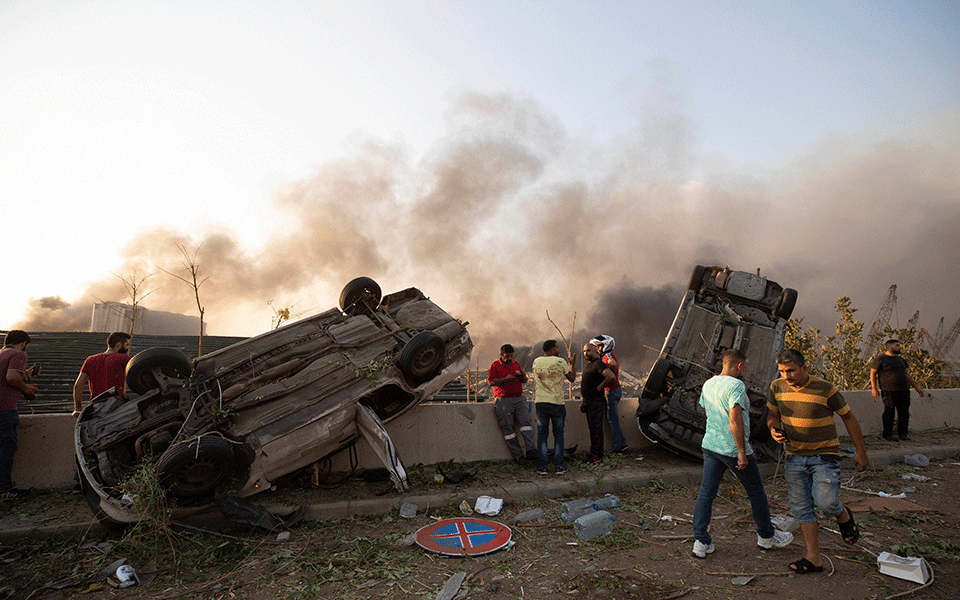
United Nations: India is sending more relief and humanitarian materials, including medicines and foodstuff, to Lebanon after a massive explosion last week devastated parts of Beirut, killing more than 160 people and injuring 6,000 others.
India's Permanent Representative to the UN Ambassador T S Tirumurti offered deep condolences on behalf of the Government and people of India to Lebanon on this terrible human tragedy".
"We are shocked by the loss of human lives and the widespread destruction this has caused in Beirut. We pray for strength to families to overcome their great loss, Tirumurti said on Monday at a briefing on the humanitarian situation in Lebanon.
Tirumurti said India just recently sent Lebanon essential medical items to combat COVID-19.
We are immediately sending more relief and humanitarian material of medicines, foodstuff and other essential items to do whatever we can to alleviate the difficulties on the ground. We are discussing with the Government of Lebanon on how we can contribute further, he said.
UN Secretary General Antonio Guterres also paid condolences to the families and loved ones of at least 160 people who were killed, and wished a full recovery to about 6,000 others injured in the explosion on August 4, which sent shockwaves across the bustling city of Beirut, bursting? out windows and shaking buildings.
Tirumurti recalled that he had paid an official visit to the beautiful city of Beirut last year, and said it is difficult for him to imagine that this vibrant and bustling city has been affected by the blast. I admire the resilience of the people and the dedication of the rescue workers to cope with this tragedy, he said.
India has had traditionally close and historical relations with Lebanon, including through Indian peacekeepers in the UN Interim Force in Lebanon (UNIFIL), Tirumurti said, adding that I would like to express our solidarity with Lebanon at this juncture.
Guterres said almost a week after the blast, many people remain missing. Buildings were damaged for miles around the city of Beirut after 2,750 tonnes of ammonium nitrate, a highly explosive chemical used in fertilisers, stored at the port for six years, reportedly caused the explosion.
A plane carrying 20 tonnes of World Health Organisation health supplies landed in Beirut on Wednesday to cover 1,000 trauma interventions and 1,000 surgical interventions for people suffering from injuries and burns as a result of the blast.
Further, within hours of the blast, the Resident Coordinator and Humanitarian Coordinator for Lebanon released USD 9 million from the Lebanon Humanitarian Fund to address immediate needs. Last Friday, the Emergency Relief Coordinator released a further USD 6 million from the Central Emergency Response Fund.
UN General Assembly President Tijjani Muhammad-Bande said the devastating impact of last week's tragedy makes it imperative for the international community to stand beside the people of Lebanon who have generously hosted thousands of refugees for years.
"We must respond by providing the necessary humanitarian assistance to alleviate the immediate suffering and to support the Lebanese people as they embark on the road to recovery. The needs are enormous and great.
Let the Truth be known. If you read VB and like VB, please be a VB Supporter and Help us deliver the Truth to one and all.
Representative of Iran's Supreme Leader in India calls current situation 'no war, no peace'
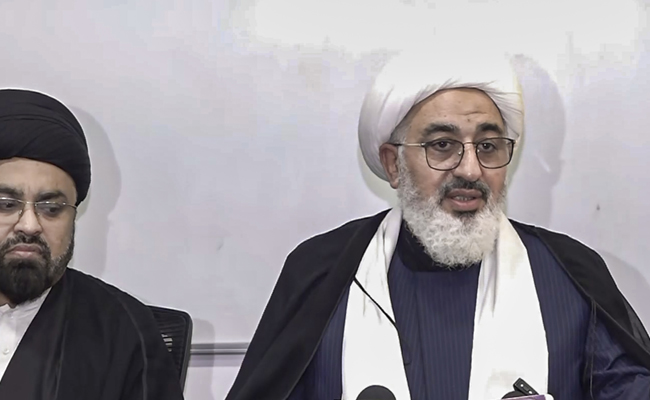
Bengaluru (PTI): Representative of Iran's Supreme Leader in India, Abdul Majeed Hakeem Ilahi on Saturday characterised the ongoing tensions between his country and the Israel-US alliance as a state of “no war, no peace”.
Calling for an immediate halt to the conflict, he said the global stability hinges on those who initiated the war.
He questioned why countries affected by the war and suffering from the energy crisis are not pressuring the US and Israel to stop the aggression.
Addressing a press conference here, Ilahi said Iran did not want the conflict, but was compelled to respond amid continued attacks, even as negotiations were expected to continue.
"Iran didn't want this war, but Iran was forced by the war and several times Iran tried to avoid this war... I don't know what is the condition of these people and these countries (US-Israel)... they want to impose on other countries what they want, and who gave them this authority?" he questioned.
Recalling the negotiations Iran held in Oman, he said talks later moved to Geneva and made progress before being disrupted by sudden attacks.
Ilahi claimed that airstrikes and missile attacks led to the deaths of Iran’s supreme leader Ayatollah Ali Khamenei, ministers, commanders and civilians.
"They killed a lot of civilians… They attacked a primary school, and they killed 175 innocent girls," he said, claiming over 4,000 deaths, more than 40,000 injuries, and widespread damage to houses, hospitals, universities and public infrastructure.
Despite these losses, he said Iran resisted calls for “unconditional surrender” and stood firm and defended itself.
"They wanted unconditional surrender. Which no one—no one can accept it. Iran said, 'Okay, we are ready to be sacrificed,' but we are not ready to submit ourselves," he added.
He argued that they (US-Israel) proposed the current ceasefire only after realising that they could not achieve any of their objectives after 40 days of conflict.
The envoy further claimed that the ceasefire is not an actual ceasefire, but a “no war, no peace” situation.
Explaining the current situation in Iran, he said conditions remain stable and people are going about their daily lives.
"They are working ....(leading) their ordinary life. They are working—they're going farming and they do everything....and they aren't scared of anything. And they are ready to defend themselves," he added.
Addressing the crisis in the Strait of Hormuz, he said the situation was stable before February 28 and all countries benefited from it.
"(For) 10,000 years, the Strait of Hormuz was open...and Iran daily yearly spent a lot for providing security in the Strait of Hormuz... so no one even complained anything about the Strait of Hormuz. Everyone was free...and even our enemies their warship was passing through the Strait of Hormuz," he said.
However, he linked the current maritime instability to the actions of the US and Israel.
"So Iran cannot do anything. Those people who initiated, created and started this war, they have to stop it. And everything will go back to normal," he said.
Criticising the mentality of the "great powerful country", Ilahi said, "they think they have the right to do whatever they want. It should change."
He sought to know why the countries affected by the conflict are not exerting pressure on the US and the "Zionist" regime to halt the war.
"Why are they not asking them? This crisis and problem by which a lot of countries are affected was created by them. A lot of factories are closed and even working days in some countries reduced... A lot of restaurants are closed," he said.
Seeking fairness and justice, Ilahi said instead of asking Iran, all those nations should ask those who initiated this war to stop it, by telling them, "we are suffering."
To a query on international mediation, Ilahi, referring to the US, asked, "Is it acceptable and reasonable that one country orders all countries -- you should not deal with this country, You should not purchase from this country. You should not have business with this country. You should not buy from this country."
Ilahi also highlighted Iran's long-standing ties with India and said, "It is a great country and we respect India and Indians."
"We have 5,000 years relationship and friendship. We are connected to India by education, by philosophy, by culture, by civilisation and by the economy," he said.
According to him, the bilateral cooperation remains strong, citing diplomatic engagement.
"At the moment also, our relationship, collaboration, cooperation with India is very good," he said, adding Iran allowing Indian ships to pass through Strait of Hormuz reflects the ties.
"Iran allowed Indian ships to pass through the Strait of Hormuz. Why? A lot of countries couldn't get this permission?... The relationship between Iran and India is very good," he added.
He expressed confidence that in future too, the ties between Iran and India will be strong.