India to deepen engagement with Singapore-based ship safety agency

Singapore (PTI): India, a founding member of the Regional Cooperation Agreement on Combating Piracy and Armed Robbery against Ships in Asia (ReCAAP), is set to deepen its engagement with the Singapore-based Information Sharing Centre (ISC) of the grouping, its Executive Director Vijay D Chafekar has said.
"We expect closer cooperation with the Maritime Rescue Coordination Centre (MRCC), the Indian Focal Point of ReCAAP, for promoting safe and secure seas in Asia," Chafekar told PTI on Saturday.
India is one of the founding members of the 21-nation ReCAAP, which was established as a regional, government-to-government institution for enhancing maritime security and ship safety.
The grouping is also drawing interest from countries beyond Asia, Chafekar said.
“Most of the attacks on ships are now for stealing engine and machinery spares for which there is demand in parallel markets. There has not been any incident of kidnapping of crew or hijacking ships in recent years,” said the retired Additional Director General of the Indian Coast Guard, who has been heading ReCAAP for the past year of his three-year term.
ReCAAP, he said, is now preparing for its 20th anniversary event to be held in Singapore in March, where representatives from member countries will discuss future plans of the agency.
A high-level Indian representation is expected at the Singapore forum, he said.
“Overall, ReCAAP engagement with the law enforcement agencies has been good and a successful arrangement is in place for ships to sail through Asian waters safely, though the weakest point is still the Straits of Malacca and Singapore (SOMS), where sea robberies have increased in 2025 though these were mostly petty theft cases,” Chafekar said.
He noted a marginal rise in incidents at Indian anchorages, with two cases reported in Kakinada and one in Kandla. In 2024, two incidents were recorded at Indian anchorages, according to ReCAAP ISC data.
Chafekar said the arrest of perpetrators in one of the attacks in Kakinada had led to a decline in such incidents in Indian waters.
A total of 132 incidents of piracy and armed robbery against ships in Asia were reported to ReCAAP ISC last year, marking a 23 per cent increase from 107 incidents reported in 2024. Only one Indian-flagged vessel was attacked among the incidents reported in 2025.
The SOMS continued to be an area of concern, with 108 sea robbery incidents reported in 2025.
“The sharp increase in number of incidents on SOMS in 2025 does not indicate a corresponding increase in threat to maritime trade passing through the straits, one of the world’s busiest shipping routes,” Chafekar said, adding that most of the reported incidents involved minor theft.
While the rise in sea robberies underscores persistent security challenges in busy waterways, the decline in incidents following the arrest of suspects by the Riau Islands Regional Police highlights the deterrent effect of effective enforcement, he said.
He reiterated ReCAAP ISC’s appeal to shipping companies to report all incidents of theft and unauthorised boarding to the nearest coastal state authority.
Let the Truth be known. If you read VB and like VB, please be a VB Supporter and Help us deliver the Truth to one and all.
Remarks against St Francis Xavier: Right-wing speaker Gautam Khattar gets bail
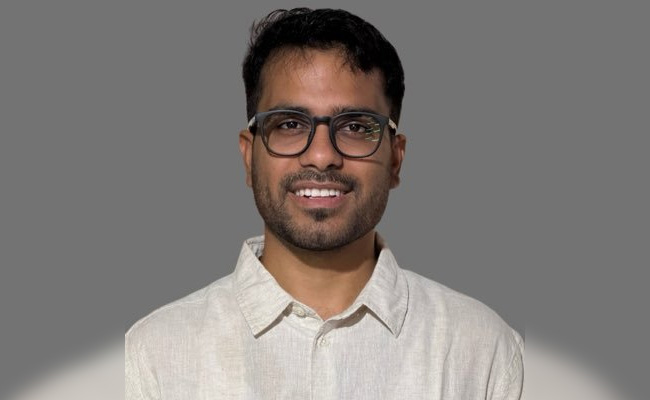
Panaji (PTI): A court in Goa on Saturday granted bail to right-wing speaker Gautam Khattar, who was arrested after he allegedly made derogatory comments against St Francis Xavier.
Judicial Magistrate First Class, Vasco, granted regular bail to Khattar, currently admitted to Goa Medical College and Hospital at Bambolim for treatment of chest pain after he was shifted from the District Hospital in Mapusa two days back.
A row erupted after a video of remarks by Khattar, the founder of Sanatan Mahasangh, at an event on April 18 in the presence of Swami Brahmeshanand, State Transport Minister Mauvin Godinho and BJP MLAs Sankulp Amonkar and Daji (Krishna) Salkar, went viral.
St Francis Xavier is revered as the patron saint of Goa.
The controversial remarks led to the Vasco Police registering an FIR against Khattar on charges of hurting religious sentiments and creating enmity between groups.
He was detained in Kullu, Himachal Pradesh, by local police. His custody was later handed over to the Goa Crime Branch, according to officials.