India votes in favour of UNGA resolution supporting Palestine's bid to become full UN member
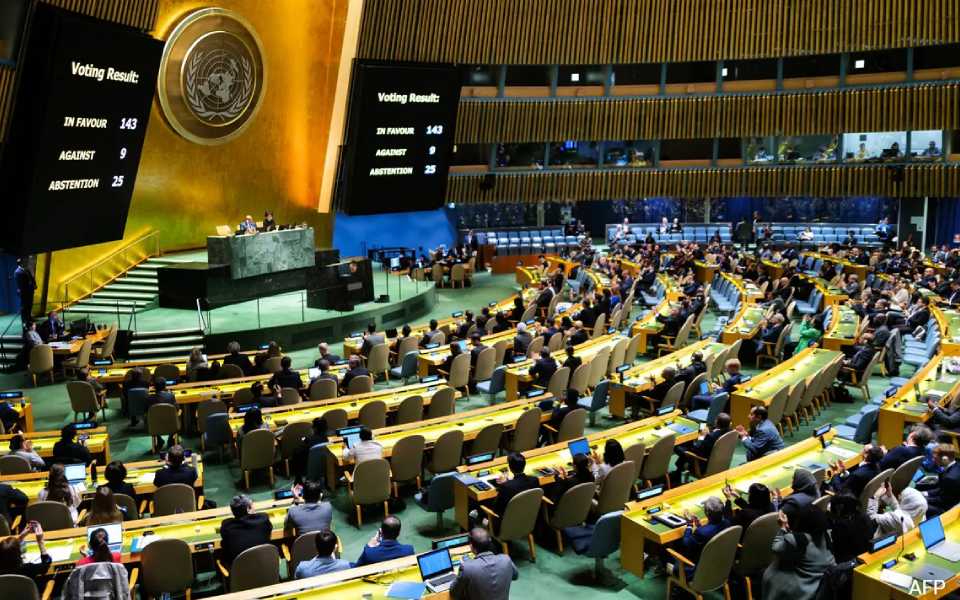
United Nations, May 10: India on Friday voted in favour of a draft UN General Assembly resolution that said Palestine is qualified and should be admitted as full member of the United Nations and recommended that the Security Council “reconsider" the matter “favourably”.
The 193-member General Assembly met in the morning for an emergency special session where the Arab Group resolution ‘Admission of new Members to the United Nations’, in support of the State of Palestine's full membership in the UN, was presented by the United Arab Emirates, as Chair of the Arab Group in May.
The resolution got 143 votes in favour, including by India, nine against and 25 abstentions. The UNGA hall broke into an applause after the vote was cast.
The resolution determined that “the State of Palestine is qualified for membership in the United Nations” in accordance with Article 4 of the Charter of the United Nations and "should therefore be admitted to membership in the United Nations”.
It recommended that the Security Council “reconsider the matter favourably, in the light of this determination”.
India was the first non-Arab State to recognise the Palestine Liberation Organisation as the sole and legitimate representative of the Palestinian people in 1974. India was also one of the first countries to recognise the State of Palestine in 1988 and in 1996, Delhi opened its Representative Office to the Palestine Authority in Gaza, which was later shifted to Ramallah in 2003.
Earlier this month, India’s Permanent Representative to the UN Ambassador Ruchira Kamboj had said that while Palestine’s application for membership at the UN was not approved by the Security Council because of the veto in the UNSC, “I would like to state here at the very outset that in keeping with India's long-standing position, we hope that this would be reconsidered in due course and that Palestine’s endeavour to become a member of the United Nations will get endorsed".
An annex to the resolution said that the additional rights and privileges of participation of the State of Palestine will be effective as of the 79th session of the General Assembly that begins in September this year.
These include the right to be seated among member states in alphabetical order; the right to make statements on behalf of a group, including among representatives of major groups; the right of members of the delegation of the State of Palestine to be elected as officers in the plenary and the Main Committees of the General Assembly and the right to full and effective participation in UN conferences and international conferences and meetings convened under the auspices of the General Assembly.
Palestine, in its capacity as an observer state, does not have the right to vote in the General Assembly or to put forward its candidature to UN organs.
In April, Palestine had sent a letter to UN Secretary-General Antonio Guterres requesting that its application for full UN membership be considered again. For a state to be granted full UN membership, its application must be approved both by the Security Council and the General Assembly, where a two-thirds majority of the members present and voting is required for the state to be admitted as a full member.
Last month, the US had vetoed a resolution in the Security Council on the Palestinian bid to be granted full membership of the United Nations. The 15-nation Council had voted on a draft resolution that would have recommended to the 193-member UN General Assembly “that the State of Palestine be admitted to membership in the United Nations”.
The resolution got 12 votes in its favour, with Switzerland and the UK abstaining and the US casting its veto. To be adopted, the draft resolution required at least nine Council members voting in its favour, with no vetoes by any of its five permanent members – China, France, Russia, United Kingdom and United States.
Currently, Palestine is a “non-member observer state” at the UN, a status granted to it by the General Assembly in 2012. This status allows Palestine to participate in proceedings of the world body but it cannot vote on resolutions. The only other non-member observer state at the UN is the Holy See, representing the Vatican.
Let the Truth be known. If you read VB and like VB, please be a VB Supporter and Help us deliver the Truth to one and all.
'Last rites' of INDIA bloc: BJP on Cong-DMK fallout in Tamil Nadu
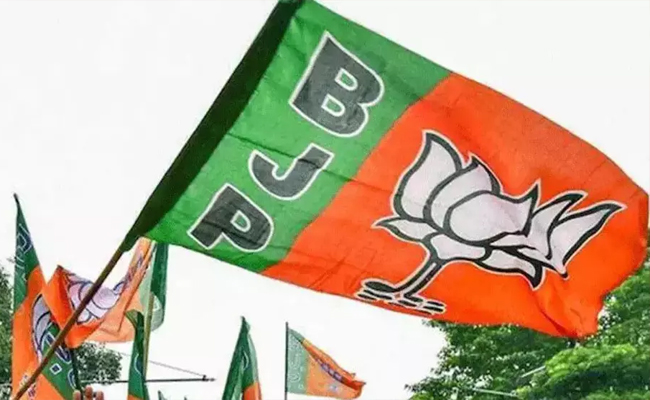
New Delhi (PTI): The BJP on Wednesday took a swipe at the Congress for extending support to Vijay's TVK in forming the government in Tamil Nadu and breaking away from its long term ally DMK, saying the party has a history of "betraying" its allies.
The saffron party also attacked the opposition INDIA bloc, claiming the alliance is "falling apart like a pack of cards" and lacks any common ideology or vision.
The Tamil Nadu Congress has decided to support TVK leader Vijay in forming a secular government in the state, sources said.
The decision to support the TVK was taken at an urgent meeting of the Political Affairs Committee (PAC) of Tamil Nadu Congress late on Tuesday night.
Reacting to the development, BJP national spokesperson Shehzad Poonawalla claimed the INDIA alliance had effectively come to an end after the declaration of assembly election results on May 4.
"There is nobody whom the Congress has not deceived. Imagine what they will do to the Samajwadi Party if they have done this to the DMK," he wrote in a post on X.
Calling it the "last rites" of the INDIA bloc, Poonawalla, in a video post, said, "It has become a Bharat free of the DMK, TMC and the Left, and now Congress has dumped the DMK for the TVK."
The BJP spokesperson alleged that the opposition bloc was formed solely out of political compulsions and personal ambitions.
"The INDI alliance never had any mission or vision. It was only about ambition for position, corruption, commission and obsession against Modi ji that they came together. But now it is all falling apart like a pack of cards," he said.
Questioning the unity of the opposition parties, Poonawalla said the alliance was absent in several states during the election.
"Where was the INDI alliance in Bengal, in Kerala, in Gujarat, in Punjab, in Delhi, in Haryana, in Karnataka? There is no INDI alliance," he said.
The DMK on Wednesday described the Congress move to extend support to TVK as a "backstab" by its long-time national ally.
Speaking to PTI videos, DMK spokesperson Saravanan Anadurai said, "The Congress party has decided to ally with the TVK, pledging their support to the party. I think they have backstabbed... They have backstabbed the people of Tamil Nadu. They've backstabbed the mandate given by the people of Tamil Nadu."
He said that the decision came even before the electoral process had fully concluded.
"Even before the ink on the returning officer's signature on the victory certificate dried up, they've chosen to go ahead with an alliance," he said.
Vijay's TVK won 108 seats in the 234-member Tamil Nadu Assembly, falling short of the halfway mark. He needs the support of 10 MLAs to form a government with a simple majority. The results were declared only on Monday.
The Congress has won five seats, while the Pattali Makkal Katchi (PMK) has bagged four seats. The CPI and CPI-M have two seats each. The outgoing ruling party, Dravida Munnetra Kazhagam (DMK), has won 59 seats while the All India Anna Dravida Munnetra Kazhagam (AIADMK) has won 47 seats.
The Bharatiya Janata Party (BJP) has won only one seat, and so have the Desiya Murpokku Dravida Kazhagam (DMDK) and the Amma Makkal Munnettra Kazagam (AMMK), while the VCK has won two seats.
The Congress had fought the assembly polls in a pre-poll alliance with the DMK, while the BJP had a tie-up with the AIADMK.