Indian architect Balkrishna Doshi wins prestigious UK medal
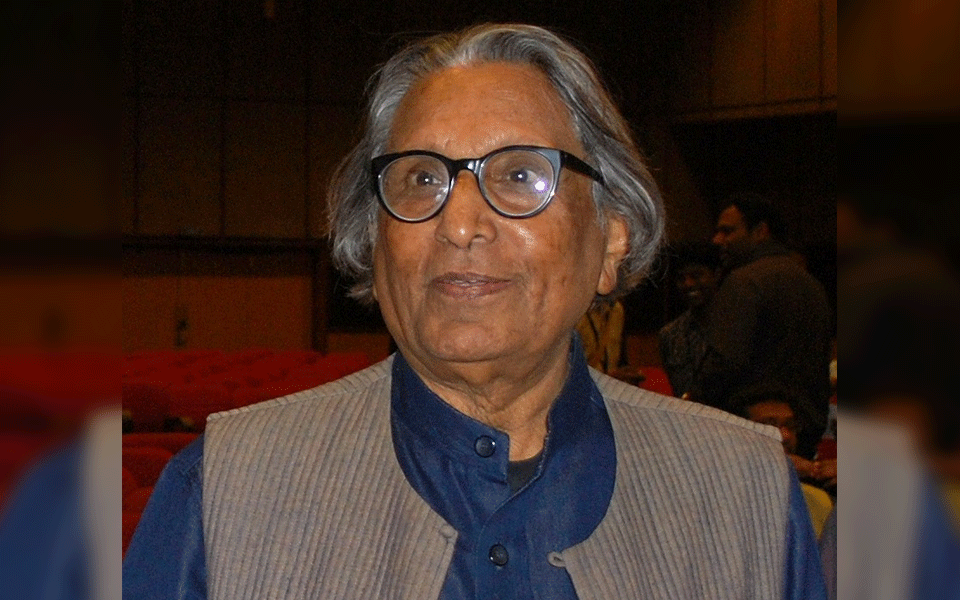
London(PTI): Acclaimed Indian architect Balkrishna Doshi will receive the Royal Gold Medal 2022, one of the world's highest honours for architecture, the Royal Institute of British Architects (RIBA) announced.
RIBA said on Thursday that with a 70 year career and over 100 built projects, 94-year-old Doshi has influenced the direction of architecture in India and its adjacent regions through both his practice and his teaching.
Given in recognition of a lifetime's work, the Royal Gold Medal is approved personally by Queen Elizebth II and is given to a person or group of people who have had a significant influence on the advancement of architecture.
I am pleasantly surprised and deeply humbled to receive the Royal Gold Medal from the Queen of England. What a great honour, said Doshi, on hearing about the big win.
The news of this award brought back memories of my time working with Le Corbusier in 1953 when he had just received the news of getting the Royal Gold Medal. I vividly recollect his excitement to receive this honour from Her Majesty. He said to me metaphorically, I wonder how big and heavy this medal will be', he shared.
Today, six decades later I feel truly overwhelmed to be bestowed with the same award as my guru, Le Corbusier honouring my six decades of practice. I would like to express my heartfelt gratitude to my wife, my daughters and most importantly my team and collaborators at Sangath my studio, he said.
RIBA said his buildings combine pioneering modernism with vernacular, informed by a deep appreciation of the traditions of India's architecture, climate, local culture and craft. His projects include administrative and cultural facilities, housing developments and residential buildings. He has become internationally known for his visionary urban planning and social housing projects, as well as his work in education, both in India and as a visiting professor at universities around the world.
RIBA President Simon Allford said: "It was an honour and a pleasure to chair the committee in selecting Balkrishna Doshi as the 2022 Royal Gold Medallist. He has influenced generations of architects through his delightfully purposeful architecture. Influenced by his time spent in the office of Le Corbusier his work nevertheless is that of an original and independent thinker able to undo, redo and evolve."
"In the twentieth century, when technology facilitated many architects to build independently of local climate and tradition, Balkrishna remained closely connected with his hinterland: it's climate, technologies new and old and crafts."
Balkrishna Doshi's outstanding contribution to the art of architecture, the craft of construction and the practice of urban design establish him as a most deserving recipient of this award and I greatly look forward to him being presented with the medal next year.
Born in 1927 in Pune, to an extended family of furniture makers, Balkrishna Doshi studied at the JJ School of Architecture, Bombay, before working for four years with Le Corbusier as Senior Designer (1951-54) in Paris and four more years in India to supervise projects in Ahmedabad. He worked with Louis Kahn as an associate to build the Indian Institute of Management, Ahmedabad, and they continued to collaborate for over a decade.
He founded his own practice, Vastushilpa in 1956 with two architects. Today Vastushilpa is a multi-disciplinary practice with ?ve partners spanning three generations and has sixty employees. The practice invites dialogue and its philosophy of pro-active participation even applies to their office space which has an open door, inviting passers-by to drop in.
Doshi's key projects in Ahmedabad include Shreyas Comprehensive School Campus (1958-63); Atira Guest House low cost housing (1958); The Institute of Indology (1962) building to house rare documents; Ahmedabad School of Architecture renamed CEPT University in 2002 which focused on creating spaces that promoted collaborative learning; Tagore Hall & Memorial Theatre (1967); a 700-seat Brutalist auditorium.
Premabhai Hall (1976) theatre and auditorium. Besides, he has also designed the Indian Institute of Management in Bangalore (1977-1992); Sangath (1981), the studio for his architecture practice, Vastu Shilpa; Kanoria Centre for Arts (1984), an arts and creative hub; and Aranya Low Cost Housing (1989), Indore.
Let the Truth be known. If you read VB and like VB, please be a VB Supporter and Help us deliver the Truth to one and all.
Sengottaiyan secures historic 10th victory in Gobichettipalayam assembly constituency
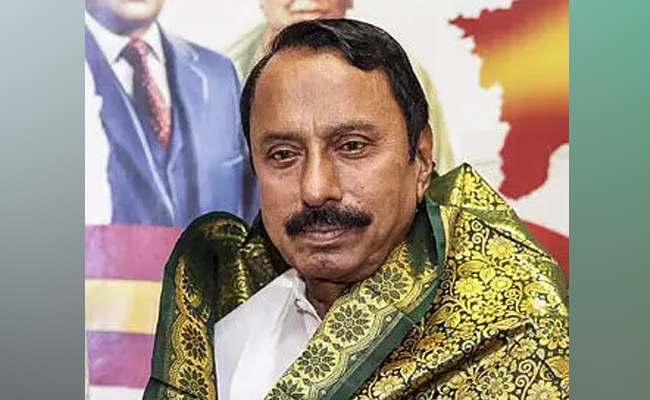
Gobichettipalayam (Tamil Nadu) (PTI): In a historic 10th win, veteran leader K A Sengottaiyan clinched the Gobichettipalayam seat in the 2026 Assembly elections.
Contesting for the first time under actor Vijay’s TVK, the 78-year-old secured approximately 71,380 votes, defeating DMK’s N Nallasivam by a margin of nearly 13,000 votes.
This win marks Sengottaiyan’s 10th consecutive victory in the constituency, cementing his status as an immovable force in the region despite his high-profile exit from the AIADMK in late 2025.
His success was a cornerstone for the TVK, which emerged as a formidable force across the state. Supporters celebrated the win as a testament to Sengottaiyan’s personal influence, which successfully transitioned from his former Dravidian home to the newly formed TVK.