Indian historian wins Israel's prestigious USD 1 mn Dan David award
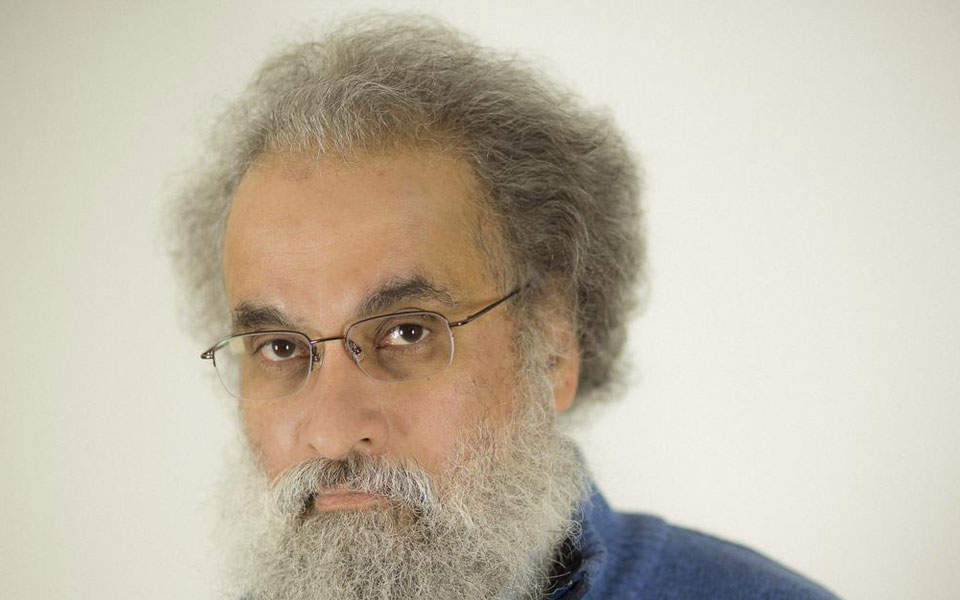
Jerusalem : Noted Indian historian Sanjay Subrahmanyam has won Israel's prestigious Dan David Prize for this year for his work on inter-cultural encounters between Asians, Europeans and people of North and South America during the early modern era.
Subrahmanyam, son of strategic analyst K Subrahmanyam and brother of former foreign secretary S Jaishankar, won the award in the category of 'past time dimension' for his work in macro history.
He shares the USD 1 million award in this category with Prof Kenneth Pomeranz of University of Chicago.
The international Dan David Prize is awarded annually to those who have made outstanding scientific, technological and humanistic accomplishments in fields representing the past, present and future of human achievement. Three Dan David Prize are given every year.
The recipients in the "Past" category are generally drawn from the fields of history, archaeology, paleontology and biography; the "Present" from arts, media, policy and economics; and the "Future" from one of the exact or natural sciences.
This year's winners were chosen from the three categories for their work in macro history, defending democracy and combating climate change, respectively.
Subrahmanyam, an alumni of University of Delhi, holds the Irving and Jean Stone Endowed Chair in Social Sciences at the University of California, Los Angeles (UCLA), which he joined in 2004. He is also the recipient of the Infosys Prize for humanities for his "path-breaking contribution to history".
The eminent historian, who did his doctorate from Delhi School of Economics, began as an economic historian but later branched out to work on political, intellectual and cultural history.
The Dan David Prize is a joint international enterprise endowed by the Dan David Foundation headquartered at Tel Aviv University.
The award ceremony is likely to be held at the university in May.
The prize, now in its 18th year, was established by late Dan David, an international businessman and philanthropist who envisioned a project that would extend beyond traditional academic categorisations.
The winners in the "Present" category for "Defending Democracy" this year has been won by Reporters without Borders, an organisation that works for the freedom of the Press and Prof Michael Ignatieff.
Ignatieff is a Canadian author, academic and former politician who headed Liberal Party of Canada and was also the leader of the official opposition for almost three years.
Christina Figueres, a Costa Rican diplomat has been awarded the prize in the "future" dimension for her role in combating climate change.
Subrahmanyam, with this honour, joins the elite group of other prominent Indian laureates of the Dan David Prize which includes author Amitav Ghosh, music conductor Zubin Mehta, renowned chemist CNR Rao and astronomy professor Shrinivas Kulkarni.
In order to encourage and foster new generations of scholars, the laureates are required to donate 10 per cent of their prize money towards scholarships for graduate or post-graduate researchers in their respective fields.
Other prominent recipients of the award include former US vice president Al Gore, former British premier Tony Blair, cellist Yo-Yo Ma, novelist Margaret Atwood, Wikipedia co-founder Jimmy Wales and filmmakers Joel and Ethan Coen.
Meanwhile, reacting to Subrahmanyam's achievement, eminent Indian historian and writer Ramachandra Guha tweeted, "Delighted that my college contemporary Sanjay Subrahmanyam has won the Dan David Prize. Our teacher Dharma Kumar said when he was a student: Sanjay will be India's first truly world-class historian . And so it has proved."
He further said, Subrahmanyam "is a true polymath; in his command of languages and sources, his brilliant analytical mind, his interdisciplinary framework, his literary flair. Incidentally all his degrees are in economics, all from the University of Delhi.
Let the Truth be known. If you read VB and like VB, please be a VB Supporter and Help us deliver the Truth to one and all.
Power struggle in ruling Cong has 'created massive confusion' in Karnataka: BJP leader Ashoka
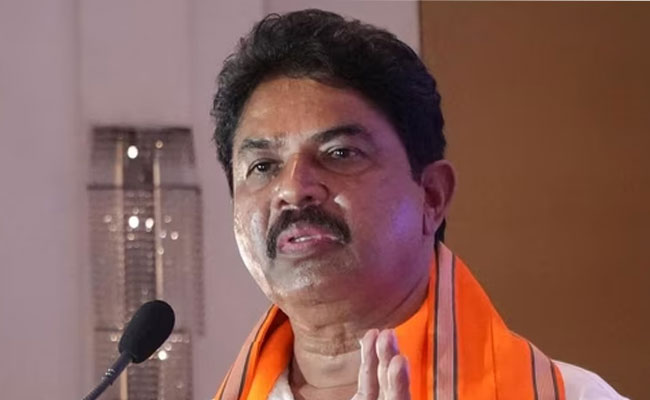
Bengaluru (PTI): BJP leader R Ashoka on Friday claimed that the ongoing power struggle between Chief Minister Siddaramaiah and his deputy D K Shivakumar has created massive confusion in Karnataka.
He remarked that the proverb “when two people fight, the third one benefits” has come true, as AICC President Mallikarjun Kharge is also now making efforts to become Chief Minister.
Speaking to reporters here, Ashoka said the entire government has turned into a house of confusion due to the alleged power tussle.
Kharge’s new statement has only added to the chaos, he said.
Congress chief Mallikarjun Kharge had on Friday said that no date has been fixed yet to discuss possible leadership change in Karnataka.
This came a day after Kharge said there was no change of CM in Karnataka "for now" and that the leadership issue in the state would be resolved soon.
The BJP leader said that Kharge too has aspirations and that he was cheated earlier.
"Perhaps he has received a green signal from the Congress high command to become CM. Everyone is already saying Kharge should become CM. Kharge himself has declared, “I am ready to become CM.” Despite many attempts in the past, he never became CM. Now he is trying to seize the opportunity," the Leader of Opposition in the state assembly said.
According to him, the situation in Congress has perfectly become a case of “two people fighting, third one benefits.”