Indian in Gaza seek evacuation as Israel bombards Hamas-ruled enclave
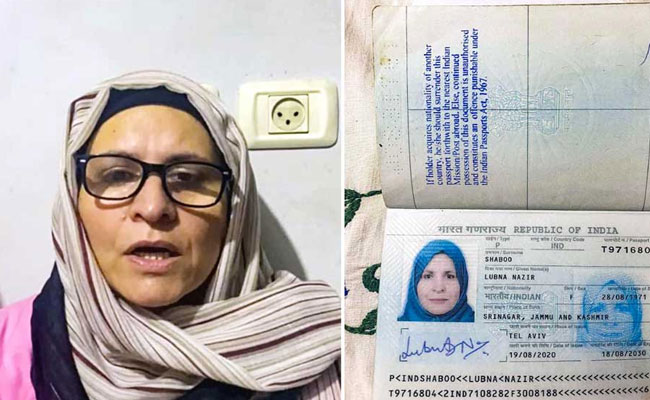
Jerusalem (PTI): Fearing for their life amid continuous bombardments by Israel, an Indian woman living in Gaza with her family on Tuesday sought an immediate evacuation from the war-torn Hamas-ruled enclave.
“We are facing a brutal war here and everything is being destroyed in bombarded in a matter of seconds. We are paying the price of this conflict as civilians are being targeted,” Lubna Nazir Shaboo, an Indian from Jammu & Kashmir living in Gaza, told PTI over the phone.
The Israel-Hamas conflict has entered the fourth day and it has already claimed at least 1,600 lives on both sides. This includes 788 killed and 4,100 others injured on the Gaza side.
Following the brutal attacks by Hamas militants on Saturday morning in the southern areas of the Jewish state, backed by a barrage of rockets that hit even the central parts of the country, Israeli warplanes have pounded downtown Gaza City, home to Hamas' centres of government.
“The sounds of bombardment are too scary and the whole house shakes. It is a very, very scary situation,” Shaboo said.
Shaboo, who is living with her husband, Nedal Toman, and youngest daughter, Karima, in Gaza, said the “water supply was officially cut off” in addition to electricity. Her two elder children live and study in Cairo, Egypt.
Internet connection in Gaza is also poor and only those with their limited net packs are able to establish contact with people outside. Israel's defence minister Yoav Gallant on Monday ordered a “complete siege” of the Hamas-ruled Gaza Strip. “I have given an order - Gaza will be under complete siege. There will be no electricity, food or fuel [delivered to Gaza]. We are fighting barbaric [terrorists] and will respond accordingly,” Gallant said.
The Kashmiri woman said that she hadn't seen anything like this before and has currently two families living with them who had to run away after bombardment in the bordering areas of Gaza.
“We are not able to go anywhere because there is no safe place for us anywhere and the Gaza Strip is too small and it is closed from every side. There are no exit points over here,” Lubna said.
“I have already asked for help from the Representative office of India in Ramallah to help me get to a safer place along with my husband and my daughter,” she said in a video message sent to PTI. The only exit route from Gaza, the Rafah crossing with Egypt, was shut down on Monday practically closing all possibilities of escape for Gaza residents.
The Representative Office of India in Ramallah said they “are in touch and are trying to help all Indians but the situation on the ground constrains our options.” In addition, the Indian embassy in Tel Aviv is also actively looking for ways to assist all the Indians in the affected areas.
Earlier, Israeli Prime Minister Benjamin Netanyahu said in a nationally televised address: “We have only started striking Hamas. What we will do to our enemies in the coming days will reverberate with them for generations.”
Let the Truth be known. If you read VB and like VB, please be a VB Supporter and Help us deliver the Truth to one and all.
4 workers die after being buried under coal slurry in Jharkhand's Dhanbad
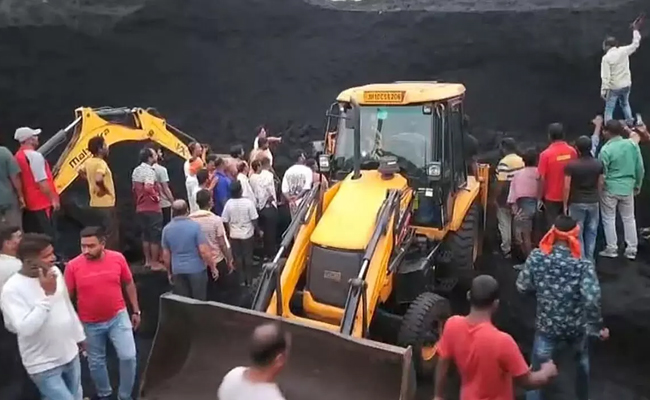
Dhanbad (Jharkhand) (PTI): At least four workers died after being buried under coal slurry in Jharkhand's Dhanbad district on Saturday, a police official said.
The incident took place at Moonidih coal washery in the command area of Bharat Coking Coal Limited (BCCL).
"Bodies of all four workers were dug out of debris during a rescue operation," Putki police station in-charge Waqar Hussain told PTI.
The incident took place when coal slurry was being loaded into trucks by workers, during which a large chunk of slurry fell and trapped several workers underneath, officials said.
The deceased have been identified as Manik Bauri, Dinesh Bauri, Deepak Bauri, and Hemlal Gope.
Meanwhile, the family members of the deceased and local villagers placed the bodies in front of the washery gate and began a protest.
They demanded compensation, jobs for dependents and action against those responsible for the incident.
Police and administration officials are trying to pacify the protesters, an official said.