Indian man missing in Turkiye quake found dead

Kotdwar (Uttarakhand), Feb 11: An Indian national missing in Turkiye since the massive earthquake on February 6 was found dead on Saturday in the rubble of a hotel where he was staying.
Vijay Kumar Gaud, who hailed from Uttarakhand's Pauri district and was working for a Bengaluru-based company, had gone to Turkiye on an official assignment.
With his face crushed beyond recognition, Gaud was identified with a tattoo of the word "Om" on one of his hands, his family said here quoting Indian embassy officials.
Gaud was a resident of Padampur area in Kotdwar in Pauri district. His clothes had been found on Friday.
"We inform with sorrow that the mortal remains of Shri Vijay Kumar, an Indian national missing in Turkiye since February 6 earthquake, have been found and identified among the debris of a hotel in Malatya, where he was on a business trip," the Indian embassy in Turkiye tweeted.
Gaud's wife and son, who were hoping against hope for some positive news, were inconsolable as their worst fears had come true. Friends and relatives flocked to Gaud's house to express their condolences to the bereaved family.
His body will first be flown to Istanbul and then taken to Delhi. It may take three days for his body to reach Kotdwar, family sources said quoting Indian embassy officials.
"Our deepest condolences to his family and loved ones. We are making arrangements for the earliest possible transportation of his mortal remains to his family," the embassy said on Twitter.
Gaud worked for Oxy Plant India Pvt Ltd and was on an official assignment, his elder brother Arun Kumar Gaud said.
"His phone rings but no one responds," Arun had told PTI after his brother went missing.
His wife and six-year-old son had last talked to him on the phone on February 5 and he was to return to India on February 20, he had said.
The Ministry of External Affairs had said on Wednesday that an Indian was missing and 10 others were stuck but safe in remote regions following the quake.
The number of Indians residing in Turkiye was around 3,000, out of which about 1,800 live in and around Istanbul, while 250 were in Ankara and the rest were spread all over the country, according to officials.
The hotel where Gaud was staying collapsed on the morning of February 6 when the 7.8 magnitude earthquake hit Turkiye leaving behind a trail of death and destruction. Over 23,000 people have died in the region due to the temblor.
Let the Truth be known. If you read VB and like VB, please be a VB Supporter and Help us deliver the Truth to one and all.
CM Siddaramaiah alleges ‘criminal conspiracy’ in Sringeri recount, vows legal action
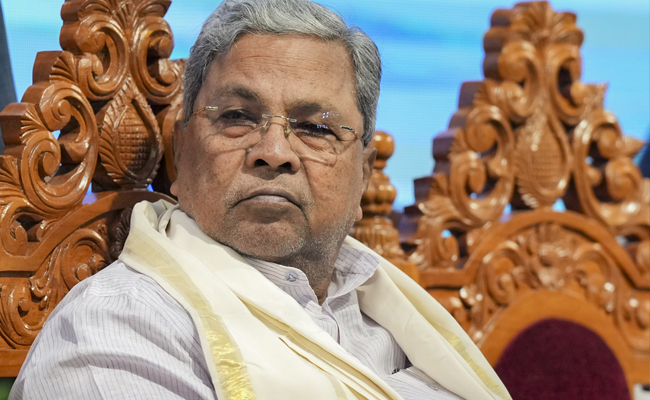
Bengaluru (PTI): Alleging a “criminal conspiracy” by BJP candidate D N Jeevaraj in the Sringeri Assembly poll recounting, Karnataka CM Siddaramaiah on Tuesday said the outcome was manipulated after valid postal ballot votes in favour of Congress leader T D Raje Gowda were tampered with during the recounting process.
Following a Karnataka High Court order on an election petition filed by Jeevaraj, challenging Raje Gowda’s election, the reverification and recounting were conducted on Saturday.
After the reverification and recount of postal ballots for the Sringeri Assembly constituency, votes polled in favour of Raje Gowda were reduced by 255, the returning officer said.
A report on the matter has been submitted to the Election Commission of India for further action, the officer added.
Congress leader Raje Gowda had won the 2023 Assembly polls from Sringeri by 201 votes, defeating his nearest rival Jeevaraj.
Addressing a press conference in Bengaluru, Siddaramaiah said the High Court had directed the recounting of postal ballots and that irregularities were noticed during the exercise conducted on May 2.
“This is a clear case of criminal conspiracy,” Siddaramaiah said, alleging that valid votes cast in favour of Raje Gowda were altered after being accepted by counting agents of all parties, including Congress, BJP, and JD(S).
He claimed that during the recounting of postal ballots, 255 votes were initially accepted as valid by all agents but were later tampered with by subordinate officials.
“There is a second mark on the votes polled in favour of Raje Gowda. They had accepted these as valid votes. Subsequently, another mark was made by officials. This is a clear case of criminal conspiracy,” he said.
When asked who was behind the alleged conspiracy, the CM replied, “It was hatched by Jeevaraj and others. It is planned.”
Siddaramaiah further alleged that the returning officer acted improperly by declaring the result despite the presence of an Election Commission observer during the recounting.
“Immediately after the counting, the returning officer announced the result. He should not have done so; this is against the law,” he said.
He pointed out that Raje Gowda had originally won by 201 votes, but after the recounting, the BJP candidate was declared the winner by 52 votes.
“The BJP has committed a criminal act of conspiracy. This is not vote chori but vote dacoity,” he alleged.
The CM said a police complaint had already been filed by Raje Gowda’s election agent, Sudhir Kumar, and emphasised the need for electoral integrity.
“We want transparency and free and fair elections. That is what our Constitution mandates,” he added.
Stating that the government would pursue legal remedies, Siddaramaiah said, “We are preparing an appeal challenging the returning officer’s announcement in a court of law.”
Responding to a separate query on elections in other states, the CM said there appeared to be an anti-incumbency factor in West Bengal, while results in Tamil Nadu were “surprising,” adding that Vijay’s party was emerging as the largest there.
Following the victory of party candidates in Bagalkote and Davanagere South, Siddaramaiah expressed confidence about future electoral prospects in Karnataka.
“Even in 2028, we will win the Assembly elections. We will come back,” the CM said.
Siddaramaiah added that he would order a forensic examination into the alleged tampering of postal ballots.