Indian-origin Catholic priest shot dead in Kansas
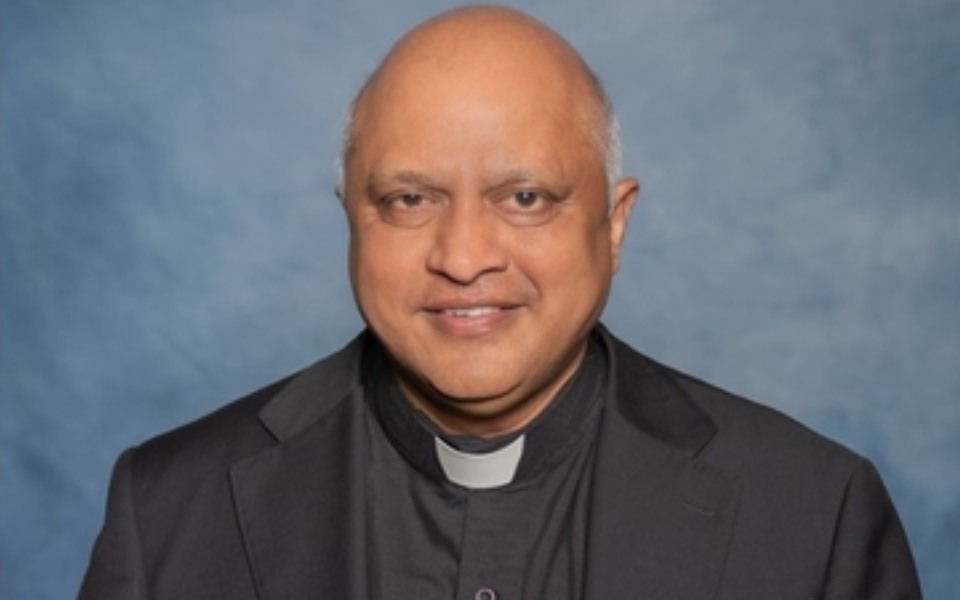
Seneca (US), Apr 4 (AP): An Indian-origin Catholic priest was shot and killed by a man who approached him at his parish rectory in the town of Seneca, Kansas, church officials said.
An Oklahoma man is being held on suspicion of the killing.
Officers called to the Saints Peter and Paul Catholic Church in Seneca on Thursday afternoon found Arul Carasala with gunshot wounds outside the rectory, the Nemaha County Sheriff's Office said in a Facebook post. The 57-year-old priest was taken by ambulance to a hospital, where he died.
“I am heartbroken to share the tragic news of the death of Fr. Arul Carasala, who was fatally shot earlier today," Archbishop Joseph Naumann of the Archdiocese of Kansas City in Kansas said in a Facebook post on Thursday.
"This senseless act of violence has left us grieving the loss of a beloved priest, leader, and friend.”
Carasala had been the pastor at Saints Peter and Paul Catholic Church in Seneca since 2011, according to his profile on the parish website.
Sheriff's deputies and officers with the Seneca Police Department later arrested Gary Hermesch of Tulsa, Oklahoma. Authorities say Hermesch, 66, is being held in the Nemaha County Jail on suspicion of first-degree murder.
The Associated Press left a phone message with county prosecutor Brad Lippert seeking additional information.
Authorities have not released a possible motive for the shooting or said whether the suspect and the priest knew each other.
Kris Anderson, the parish's director of religious education, told the AP on Thursday through tears that she knew few details.
“From what we know, an older man walked up to him (Carasala) and shot him three times,” she said.
The priest's death left people in shock in Seneca, a city of about 2,100 where Carasala had been the pastor at Saints Peter and Paul Catholic Church since 2011, according to his profile on the parish website. He was ordained as a priest in 1994 in his native India and had served in Kansas since 2004. He became a US citizen in 2011.
Archbishop Joseph Naumann of the Archdiocese of Kansas City in Kansas said in a Facebook post that there was no ongoing threat to the community, but that he recognised the “pain and shock” the priest's death had brought to the community.
“Fr. Carasala was a devoted and zealous pastor who faithfully served our Archdiocese for over twenty years, including as dean of the Nemaha-Marshall region,” he wrote.
“His love for Christ and His Church was evident in how he ministered to his people with great generosity and care. His parishioners, friends, and brother priests will deeply miss him.”
Seneca is about 60 miles (97 kilometres) north of Topeka, about 90 miles (145 kilometres) northwest of Kansas City and about 300 miles (480 kilometres) north of Tulsa.
Let the Truth be known. If you read VB and like VB, please be a VB Supporter and Help us deliver the Truth to one and all.
Maharashtra sets up state vaccination task force to strengthen immunisation programme

Mumbai (PTI): The Maharashtra government has set up a State Vaccination Task Force to strengthen the regular immunisation programme and review the progress of related campaigns, a health department official said on Monday.
The State Vaccination Task Force will comprise at least 29 members and will be headed by the administrative head of the health department, he informed.
The government has also constituted separate district-level and municipal vaccination task forces to improve implementation and address challenges at the grassroots level, he said.
Municipal task forces, chaired by respective civic commissioners, have been constituted in view of the vast urban population in Maharashtra and the role of civic bodies in implementing different health programmes.
The district-level task forces will function under the chairmanship of collectors.
"Complete immunisation of children at the appropriate age is an extremely simple, cost-effective and highly effective measure to reduce child mortality and the prevalence of diseases among kids. Immunisation is a powerful tool for reducing illness in children," maintained the official.
To ensure full vaccination of all children, the state government implements various campaigns from time to time as per the central government guidelines, he pointed out.
"Active participation and cooperation of other relevant government departments are essential (in making these campaigns successful)," according to the official.
The state-level body will review the regular immunisation programme, associated campaigns and vaccine-preventable diseases in detail. It will also conduct focused assessments of high-risk districts and municipal corporations, including vacancies at district, municipal and sub-district levels, availability of cold chain equipment, resource gaps and training requirements, he noted.
The state task force will review allocation and utilisation of funds for immunisation and ensure timely action by officers concerned based on reports from district and municipal task forces and state-level monitoring mechanisms, the official said.
It will also ensure active coordination and participation of other government departments in immunisation drives, while district and municipal task forces will carry out similar functions at their respective levels, the official added.