Indian software engineer becomes US citizen in rare ceremony at White House hosted by Trump
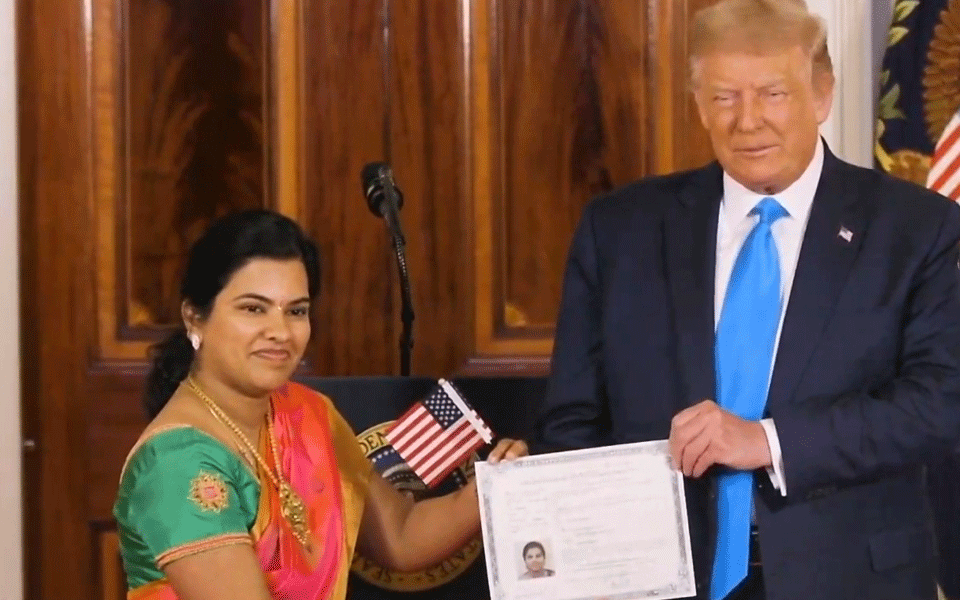
New York/Washington: President Donald Trump has presided over a rare naturalisation ceremony at the White House where five immigrants, including a software developer from India, were sworn in as American citizens, as the US leader welcomed them to the "magnificent nation that is comprised of every race, religion and colour.
Trump hosted the naturalisation ceremony at the White House and the video of the ceremony was played during the second night of the Republican National Convention on Tuesday.
Immigrants from five countries - India, Bolivia, Lebanon, Sudan and Ghana, stood in a line during the ceremony in the White House.
With their right hand raised and a US flag in their left hand, they were administered the Oath of Allegiance by Acting United States Secretary of Homeland Security Chad Wolf, while Trump looked on.
Sudha Sundari Narayanan, a software developer from India, was among those sworn in as American citizens.

Today America rejoices as we welcome five absolutely incredible new members into our great American family. You are now fellow citizens of the greatest nation on the face of God's Earth. Congratulations, Trump said.
Trump said the newly sworn-in American citizens followed the rules, obeyed the laws, learned the nation's history, embraced American values and proved themselves to be men and women of the highest integrity.
It's not so easy. You went through a lot and we appreciate you being here with us today. You've earned the most prized treasured, cherished and priceless possession anywhere in the world. It's called American citizenship. There is no higher honour and no greater privilege, Trump said adding that it is an honour for him to be their President.
Later, Trump read out the names and a few details of the five new citizens.
Trump said Narayanan is a phenomenal success", born in India, who came to the United States 13 years ago.
Sudha is a talented software developer and she and her husband are raising two beautiful, wonderful children the apples of your life'. Thank you very much and congratulations. Fantastic job.
Trump handed Narayanan, who was wearing a bright coral pink sari, her Certificate of Citizenship.
In his remarks, Trump congratulated the new citizens and said it is his honour to be with them. He added that with the rights and freedoms each of them now enjoy as citizens, there is no dream beyond their wildest reach because Americans can do anything.
Today you have also accepted the profound duties and responsibilities that come with American citizenship. By swearing the Oath of Allegiance, each of you has entered a sacred and unbreakable covenant with our nation.
Trump said the five new citizens have pledged their undying loyalty to the American people, the American Constitution and the American way of life. The history and heritage of the United States are now yours to preserve and pass down to the next generation. Our culture, our traditions and our values are now yours to uphold and live by.
He added that the US Bill of Rights is now yours to support, protect, and defend. As citizens, you're now stewards of this magnificent nation, a family comprised of every race, colour, religion, creed, united by the bonds of love.
The United States Bill of Rights comprises the first ten amendments to the United States Constitution.
First Lady Melania Trump also recalled her immigrant journey in the US. During her address at the Rose Garden, she said she arrived in the US when she was 26 years old, adding that living and working in the land of opportunity was a dream come true for her.
But I wanted more. I wanted to be a citizen. After 10 years of paperwork and patience, I studied for the test in 2006 and became an American citizen.
As an immigrant and a very independent woman, I understand what a privilege it is to live here and to enjoy the freedoms and opportunities that we have.
Immigration featured in addresses during the second night of the convention.
Florida Lieutenant Governor Jeanette Nu ez said that as the daughter of Cuban immigrants, her story began in 1959, before I was born, when my parents' dreams of a prosperous life became a nightmare. Chaos spread quickly when Fidel Castro took control of Cuba.
Trump's son Eric Trump said Democratic Presidential nominee Joe Biden "has pledged to stop border wall construction and give amnesty and healthcare to all illegal immigrants.
Immigration has been a very critical agenda of the Trump campaign and his presidency, with Trump asserting throughout that as the American President he will ensure job security and safety for American citizens first.
As job losses mounted and the American economy suffered due to the COVID-19 pandemic, Trump ordered some stringent immigration restrictions, including suspending the H1B visas, which is popular among Indian IT professionals, along with other foreign work visas for the rest of the year.
Trump has said the step was essential to help millions of Americans who have lost their jobs due to the current economic crisis.
Indian IT workers form the majority of H1B visa holders in the US and have to wait decades for Green Cards due to a huge backlog.
Let the Truth be known. If you read VB and like VB, please be a VB Supporter and Help us deliver the Truth to one and all.
Commercial LPG hike: Delhi restaurant owners warn of higher menu rates, job losses
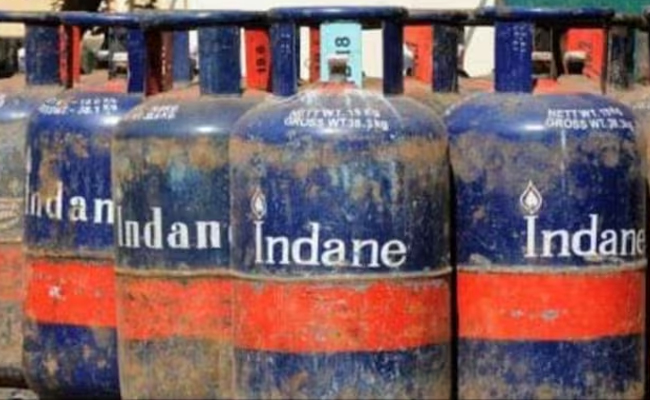
New Delhi (PTI) A day after a 50 per cent rise in commercial LPG cylinder prices, Delhi's food business, with restaurant owners and street vendors have warned of higher menu rates, financial strain and potential job losses if the trend persists.
The price of commercial LPG was hiked by a steep Rs 993 per 19 kg cylinder, marking the third consecutive monthly hike amid rising global energy prices linked to the West Asia conflict.
For many in the restaurant industry, the spike has been both sudden and steep.
Manpreet Singh, honorary treasurer of the National Restaurant Association of India, said that eateries are already grappling with supply challenges alongside rising costs.
"There is a huge difficulty in getting these cylinders, and black marketing is also increasing in many unregulated sectors," he said, noting that prices that were once around Rs 1,600, often dropping to nearly Rs 1,300 with discounts, have now surged to between Rs 3,000 and Rs 4,000 per cylinder.
He further added that a medium-sized restaurant typically uses between two and five cylinders daily, making the increase particularly burdensome as costs mount.
Singh further said that as costs mount, smaller establishments could struggle to stay afloat. Instead, the association has advised restaurants to shift towards piped natural gas connections through Indraprastha Gas Limited as a more sustainable alternative.
"If this problem continues, PNG is the only long-term solution," he said, adding that temporary measures like coal offer limited relief due to slower cooking times and that it can largely be used only for tandoors.
Echoing similar concerns, Kabir Suri, owner of Mamagoto in Khan Market, said the impact is already visible across the industry. "There has been almost a threefold increase in cylinder prices for restaurants," he said, adding that rising fuel and logistics costs are compounding the pressure.
"If this continues, it will become a significant financial burden, and food prices will inevitably go up. Adding to this burden, higher fuel costs are also affecting logistics and transportation, making a price rise unavoidable. The extent of the impact will vary between small eateries and large chains depending on their scale," he said.
Global oil prices have surged nearly 50 per cent following disruptions in energy supply chains due to the West Asia conflict, pushing up commercial fuel costs and transport expenses.
A West Delhi-based restaurateur said they are trying to manage rising costs while keeping their staff secure. "We are trying to ensure that our staff, from kitchen workers to waiters, are paid on time and do not face immediate hardship," the owner said.
"We are a small restaurant with seating for about 20 to 25 people at a time. But if this continues for long, we will have to take difficult calls. There is only so much we can absorb, and menu prices will have to go up. We hope this does not continue for a longer period," he said.
Another restaurant owner in North Delhi, who did not wish to be named, said operational adjustments alone may not be enough. "We are checking our costs very carefully and trying to cut wherever possible, but if fuel prices remain high, it will eventually affect how we run the business," the owner said.
"Coal helps in tandoor cooking, but it takes more time," the owner further added.
The strain is even more acute among street vendors, many of whom operate on thin margins. A vendor in Saket said he had recently expanded his business, moving from a mobile cart to a rented outlet.
"I have a family to feed and more responsibilities now. Earlier, I managed with a moving cart, but after renting the place, expenses increased," he said. "Whenever cylinders were unavailable, I had to buy them at higher rates in the black market. Now even regular supply is too expensive, and if this continues, we may have to shut down," he added.
In Laxmi Nagar, another vendor said they are struggling to keep the business running. "Sometimes we even used domestic cylinders from home when supply ran out because we had to keep the stall running," he said, adding that rising costs leave little choice but to increase prices or bear losses.
On April 1, the rates of commercial LPG cylinders were hiked by Rs 195.50 per cylinder, followed by a Rs 114.5 hike on March 1, taking the total increase over the past three months to Rs 1,303. With the latest revision, a 19 kg commercial LPG cylinder now costs Rs 3,371.5 in Delhi, up from Rs 2,078.5 earlier.
The prices of domestic LPG cylinders used for household cooking have remained unchanged. They were last increased by Rs 60 per 14.2 kg cylinder on March 7 and currently cost Rs 913 in Delhi.