Indian woman caught shoplifting items worth ₹1 lakh at US target store
Interrogation video goes viral
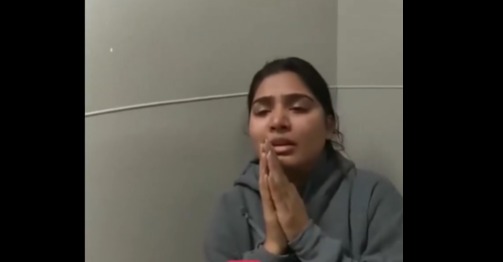
Washington, D.C. : An Indian woman was caught red-handed while allegedly shoplifting items worth over ₹1 lakh at a Target store in the United States. According to reports, the woman admitted to having stolen the goods and was later let off with a statutory warning by the police.
A 10-minute video of her police interrogation, released by a YouTube channel named @PoliceRelease, has since gone viral. In the footage, the woman appears visibly nervous, gasping for breath, and breaking down multiple times during questioning. She identified herself as an Indian and stated that her primary language is Gujarati.
During the interrogation, officers reportedly asked if she needed medical assistance as she appeared to be hyperventilating for more than an hour. The woman also confessed that she intended to resell the stolen items. Reports further suggest that she was a regular shoplifter at the same store but had never been caught until this incident, which occurred in January this year.
While the video continues to circulate widely on social media, the authenticity of the footage has not been independently verified.
The case has sparked mixed reactions online. One user commented, “Shoplifting is actually not a very big issue there; 25% of Americans have done it at least once in their life. Police usually take action only if the products are worth $800–900. She might have crossed that threshold.”
Another user remarked, “Not sure why criminals are being connected with a country’s identity. Nobody tarnishes the image of Indians more than Indians themselves. Shoplifting is not even that big a crime for which this poor lady is being shared around.”
An Indian girl (Gujarati) was caught shoplifting in the US. She's arrested. This was viral on TikTok. pic.twitter.com/huJK9gAeZQ
— Lord Immy Kant (@KantInEastt) September 7, 2025
Let the Truth be known. If you read VB and like VB, please be a VB Supporter and Help us deliver the Truth to one and all.
Austrian police detain suspect in case of rat poison found in baby food jars on supermarket shelves
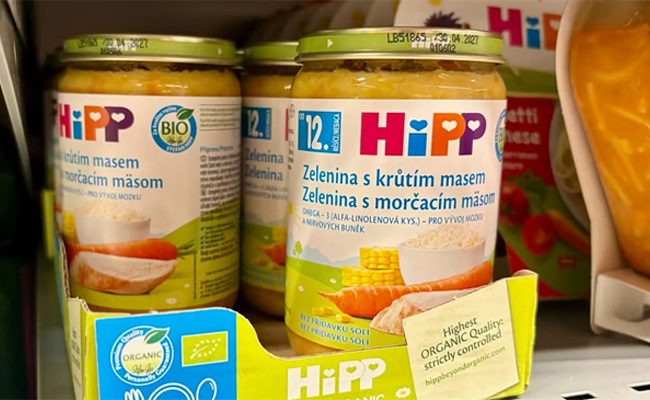
Vienna (AP): Police in eastern Austria say a 39-year-old suspect has been arrested after rat poison turned up in some HiPP baby food jars on supermarket shelves in central Europe.
HiPP, which recalled some of its baby food jars in Austria, Slovakia and the Czech Republic after the case came to light last month, said in a statement Saturday it was “greatly relieved” by the arrest, and would provide further updates as verified details come in.
The Burgenland State Criminal Police Office, under the direction of prosecutors, said a probe was launched after poison turned up in a baby food jar purchased at a supermarket in the city of Eisenstadt on April 18.
It said the suspect was being questioned, and that no further details would be immediately provided. The Burgenland public prosecutor's office has announced an investigation into suspected “intentional endangerment of the public.”
The Austrian Press Agency reported that an expert report on the toxicity of the poison was pending. A total of five tampered baby food jars were seized before they could be consumed, APA reported.
Authorities said previously they believe the tampering occurred in 190-gram (6.7-ounce) jars of baby food made with carrots and potatoes for 5-month-olds that were sold from SPAR supermarkets in Austria.
HiPP responded by recalling all of its baby food jars sold at SPAR supermarkets — which include SPAR, EUROSPAR, INTERSPAR and Maximarkt stores — in Austria as a precaution. Vendors in Slovakia and the Czech Republic also removed all of the brand's baby jars from sale.
The company said the recall was not due to any product or quality defect on its part, and said the jars left its facility in “perfect condition.”
Police said a customer at the time of the discovery had reported that a jar appeared to have been tampered with, but no one had consumed the baby food.