Indians' funds in Swiss banks rise to over Rs 20k cr on surge in securities, institutional holdings
Customer deposits down for 2nd year
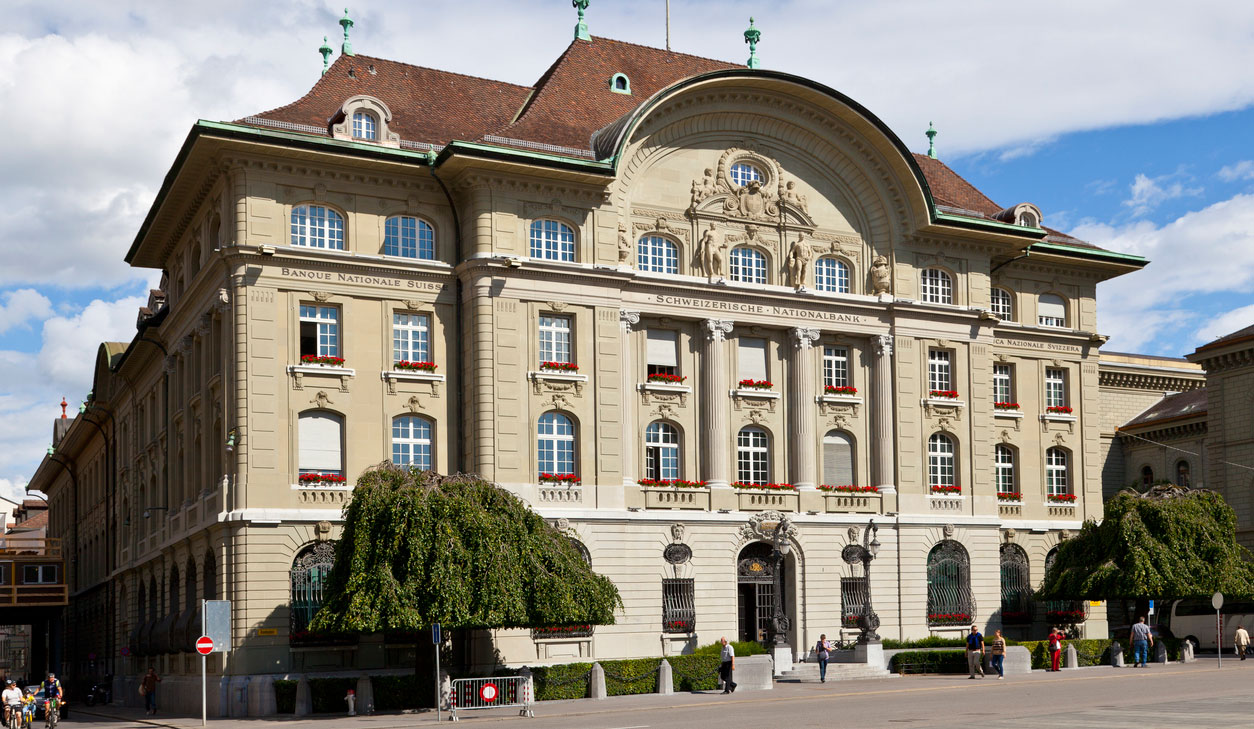
New Delhi/Zurich, Jun 17: Funds parked by Indian individuals and firms in Swiss banks, including through India-based branches and other financial institutions, jumped to 2.55 billion Swiss francs (over Rs 20,700 crore) in 2020 on a sharp surge in holdings via securities and similar instruments, though customer deposits fell, annual data from Switzerland's central bank showed on Thursday.
The increase in aggregate funds of Indian clients with Swiss banks, from 899 million Swiss francs (Rs 6,625 crore) at the end of 2019, reverses a two-year declining trend and has taken the figure to the highest level in 13 years.
It stood at a record high of nearly 6.5 billion Swiss francs in 2006, after which it has been mostly on a downward path, except for a few years including in 2011, 2013 and 2017, as per the Swiss National Bank (SNB) data.
The total amount of CHF 2,554.7 million (Rs 20,706 crore), described by the SNB as 'total liabilities' of Swiss banks or 'amounts due to' their Indian clients at the end of 2020, included CHF 503.9 million (over Rs 4,000 crore) in customer deposits, CHF 383 million (over Rs 3,100 crore) held via other banks, CHF 2 million (Rs 16.5 crore) through fiduciaries or trusts and the highest component of CHF 1,664.8 million (nearly Rs 13,500 crore) as 'other amounts due to customers' in form of bonds, securities and various other financial instruments.
While the funds classified as 'customer account deposits' have actually declined from CHF 550 million at the end of 2019 and those through fiduciaries also more than halved from CHF 7.4 million, the money held via other banks rose sharply from CHF 88 million in this period.
However, the biggest difference has been a surge in 'other amounts due to customers' from India, which rose over six times from CHF 253 million at 2019-end.
All four components had declined during 2019.
These are official figures reported by banks to the SNB and do not indicate the quantum of the much-debated alleged black money held by Indians in Switzerland.
These figures also do not include the money that Indians, NRIs or others might have in Swiss banks in names of third-country entities.
According to the SNB, its data for 'total liabilities' of Swiss banks towards Indian clients takes into account all types of funds of Indian customers at Swiss banks, including deposits from individuals, banks and enterprises. This includes data for branches of Swiss banks in India, as also non-deposit liabilities.
On the other hand, the 'locational banking statistics' of the Bank for International Settlement (BIS), which have been described in the past by Indian and Swiss authorities as a more reliable measure for deposits by Indian individuals in Swiss banks, show an increase of nearly 39 per cent during 2020 in such funds to USD 125.9 million (Rs 932 crore).
This figure takes into account deposits as well as loans of Indian non-bank clients of Swiss-domiciled banks and had shown an increase of 7 per cent in 2019, after declining by 11 per cent in 2018 and by 44 per cent in 2017.
It peaked at over USD 2.3 billion (over Rs 9,000 crore) at the end of 2007.
Swiss authorities have always maintained that assets held by Indian residents in Switzerland cannot be considered as 'black money' and they actively support India in its fight against tax fraud and evasion.
An automatic exchange of information in tax matters between Switzerland and India has been in force since 2018. Under this framework, detailed financial information on all Indian residents having accounts with Swiss financial institutions since 2018 was provided for the first time to Indian tax authorities in September 2019 and this is to be followed every year.
In addition to this, Switzerland has been actively sharing details about accounts of Indians suspected to have indulged in financial wrongdoings after submission of prima facie evidence. Such exchange of information has taken place in hundreds of cases so far.
Overall, customer deposits in all Swiss banks rose in 2020 to nearly CHF 2 trillion, which included over CHF 600 billion of foreign customer deposits.
While the UK topped the charts for foreign clients' money in Swiss banks at CHF 377 billion, it was followed by the US (CHF 152 billion) at the second spot -- the only two countries with 100-billion-plus client funds.
Others in the top 10 were West Indies, France, Hong Kong, Germany, Singapore, Luxembourg, Cayman Islands and Bahamas.
India was placed at 51st place, ahead of countries like New Zealand, Norway, Sweden, Denmark, Hungary, Mauritius, Pakistan, Bangladesh and Sri Lanka.
Among BRICS nations, India stood below China and Russia, but above South Africa and Brazil.
Others placed above India included Netherlands, UAE, Japan, Australia, Italy, Saudi Arabia, Israel, Ireland, Turkey, Mexico, Austria, Greece, Egypt, Canada, Qatar, Belgium, Bermuda, Kuwait, South Korea, Portugal, Jordan, Thailand, Seychelles, Argentina, Indonesia, Malaysia and Gibraltar.
The countries for which Swiss banks reported a decline in amounts due to clients included the US and UK, while the money parked by individuals and enterprises from Bangladesh also declined during 2020.
However, the amount almost doubled in the case of Pakistan to over CHF 642 million.
Just like India, the issue of alleged black money in Swiss banks has been a political hot potato in the two neighbouring countries as well.
As per the SNB, there were 243 banks in Switzerland at the end of 2020.
Let the Truth be known. If you read VB and like VB, please be a VB Supporter and Help us deliver the Truth to one and all.
Allahabad HC orders probe into 'reinstatement' of teacher in UP's Barabanki
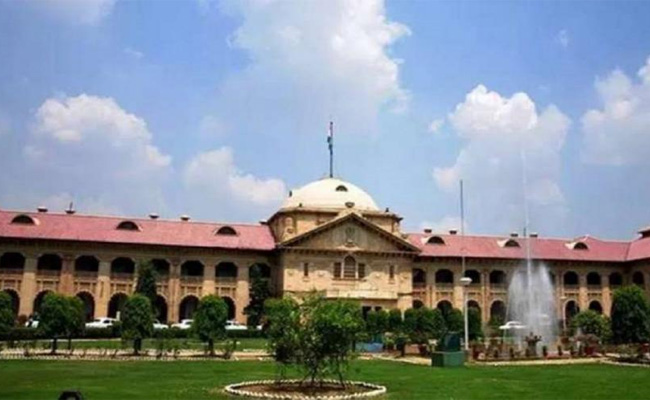
Lucknow (PTI): The Lucknow Bench of the Allahabad High Court on Friday ordered a probe by the special task force (STF) into alleged irregularities in the rejoining of a teacher at City Intermediate College in Barabanki, observing that the reinstatement appeared to be prima facie illegal.
The court also directed the recovery of the salary paid to the teacher during the disputed period.
A bench of Justice Rajeev Singh passed the order on a petition filed by the college management committee. The court expressed doubts over the roles of the District Inspector of Schools (DIOS), Barabanki, the college principal and the teacher concerned and hence, directed a detailed inquiry into the matter.
Taking note of alleged manipulation of records and misleading submissions, the court ordered the immediate transfer of the Barabanki DIOS to ensure a fair probe. It also directed the initiation of disciplinary proceedings against the then joint director of education of the Ayodhya division.
In its order, the court found that the teacher, Abhay Kumar, was initially appointed as an assistant teacher in 2018 but joined an Eklavya Model Residential School in Chhattisgarh as a lecturer in June 2024 without obtaining permission from the management. His subsequent request to retain the lien was rejected.
Despite this, he was allowed to rejoin the Barabanki College in September 2025 on the directions of the joint director of education and the DIOS, and was even paid the salary for October 2025. The court termed the rejoining "wholly illegal" and lacking any legal basis.
The bench also expressed concern over lapses in communication within the education department and directed the Uttar Pradesh chief secretary to ensure that official orders are communicated through email and WhatsApp as well, to prevent disputes.
The matter is next listed for hearing on May 28 when a compliance report is sought.