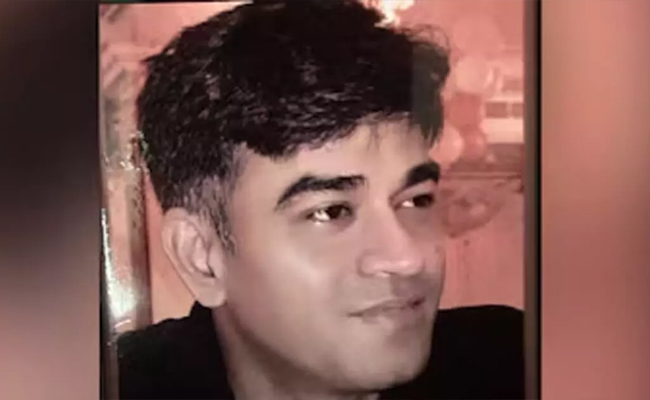
India's Jagjit Pavadia re-elected to International Narcotics Control Board

United Nations: In a significant victory, India's Jagjit Pavadia was re-elected to the International Narcotics Control Board (INCB) for another term, posting the highest number of votes at 44. Pavadia, in her 60s, has been a member of the INCB since 2015 and her current term is set to expire in 2020.
"India's Jagjit Pavadia tops International Narcotics Control Board Election," India's Permanent Representative to the UN Ambassador Syed Akbaruddin tweeted after the election results were announced. "We are deeply grateful to all India's many friends who ensured such a huge win in a very competitive election," he said.
The 54-member Economic and Social Council (ECOSOC) held elections by secret ballot Tuesday, with 15 candidates in fray for five seats.
There were 54 members present and voting and the required majority to win the election was 28. After the first round of voting, Pavadia emerged at the top, getting the highest number of votes at 44, followed by Jallal Toufiq of Morocco with 32 votes and Cesar Tomas Arce Rivas of Paraguay with 31 votes.
Pavadia has been re-elected for a five-year term beginning on March 2, 2020 and expiring on March 1, 2025. In a video message, Pavadia said she is "deeply grateful" to the Member States for the "trust reposed" in her by re-electing her as a member of the Board for the period 2020-2025.
"I am committed to working impartially and sincerely to the treaty-mandated duties assigned to me as a Board member," she said, thanking the Member States for their "invaluable support."
The victory added to India's successful record of winning crucial elections at the UN and to the world organisation's subsidiary bodies. China's candidate Wei Hao got only 23 votes in the first round of voting. The council then held a second round of restricted voting in which Bernard Leroy of France and Viviana Manrique Zuluaga of Colombia were elected after having garnered the required majority.
China's candidate managed only 19 votes in the second round and lost. According to Pavadia's profile on the INCB website, she has held several senior positions in the Indian Revenue Service for 35 years in the Government of India, including Narcotics Commissioner of India, Central Bureau of Narcotics (2006-2012) among others.
She was also member of the Indian delegation to the Commission on Narcotics Drugs, Vienna (2007-2012). Member of the International Narcotics Control Board since 2015.
Born in 1954, Pavadia competed her LL.B from Delhi University in 1988 and holds a Master's Diploma in Public Administration from the Indian Institute of Public Administration. She is the recipient of Presidential Appreciation Certificate for Specially Distinguished Record of Service, awarded in 2005 on the occasion of India's Republic Day, her profile said.
INCB consists of 13 members who are elected by the ECOSOC and who serve in their personal capacity, not as government representatives, according to information on the Board's website.
Three members with medical, pharmacological or pharmaceutical experience are elected from a list of persons nominated by the World Health Organization (WHO) and 10 members are elected from a list of persons nominated by Governments.
Pavadia has been nominated by the Indian Government. Established in 1968, the International Narcotics Control Board is the independent and quasi-judicial monitoring body for the implementation of the United Nations international drug control conventions.
According to information about its mandate on its website, INCB endeavours, in cooperation with Governments, to ensure that adequate supplies of drugs are available for medical and scientific uses and that the diversion of drugs from licit sources to illicit channels does not occur.
The INCB also monitors Governments' control over chemicals used in the illicit manufacture of drugs and assists them in preventing the diversion of those chemicals into the illicit traffic, it said.
Let the Truth be known. If you read VB and like VB, please be a VB Supporter and Help us deliver the Truth to one and all.
Sujit Nair raises concerns over speculation of DMK-AIADMK understanding to block TVK
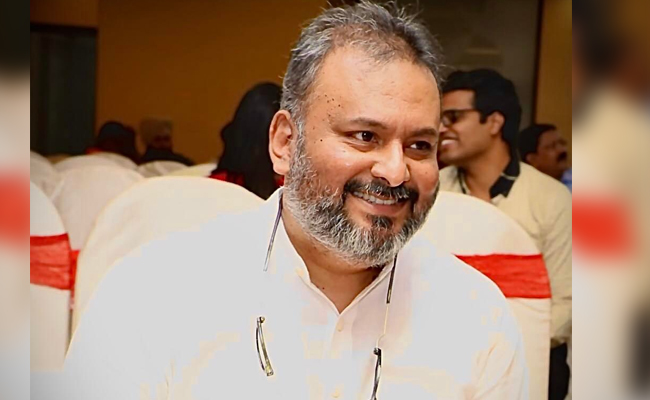
Chennai: Journalist and political commentator Sujit Nair has expressed concern over speculation that the Dravida Munnetra Kazhagam and the All India Anna Dravida Munnetra Kazhagam could explore a post-poll understanding to prevent Vijay-led Tamilaga Vettri Kazhagam from forming the government in Tamil Nadu.
In a social media post, Sujit Nair said the election verdict in Tamil Nadu reflected a clear public demand for political change and argued that the mandate should be respected irrespective of political preferences.
Referring to reports and political discussions surrounding a possible understanding between the DMK and AIADMK, he said he hoped such developments remained only speculative conversations and did not turn into reality.
Nair stated that if such an alliance were to take shape, it would raise serious questions about ideological politics in the country. He said TVK had emerged through a democratic electoral process and that the legitimacy to govern in a parliamentary democracy comes from the people’s verdict.
According to him, attempts to prevent an electoral winner from forming the government through unexpected political arrangements may be constitutionally valid, but many people could view them as politically opportunistic.
He further said that such a move could particularly affect the political image of the DMK, which has historically projected itself around ideology, social justice and opposition politics. Nair said that in ideological terms, the DMK appeared closer to TVK than to the AIADMK, and joining hands with its long-time political rival only to remain in power could weaken its broader political narrative.
He added that the same questions would apply to the AIADMK as well, as the party had spent decades positioning itself against the DMK and such an arrangement could create discomfort among its cadre and supporters.
Drawing a comparison with Maharashtra politics in 2019, Nair said he had expressed similar views when the Shiv Sena formed an alliance with the Indian National Congress and the Nationalist Congress Party after the Assembly elections.
He said post-poll alliances between long-standing political rivals often create a public perception that ideology and electoral mandates become secondary when political power equations come into play.
Nair also said such developments increase public cynicism towards politics and reinforce the belief among voters that ideology is often sidelined after elections.
He maintained that the Tamil Nadu verdict was emphatic and said respecting both the spirit and substance of the mandate was important for the credibility of democratic politics.