Indonesia bus plunges into a ravine, killing 27 pilgrims
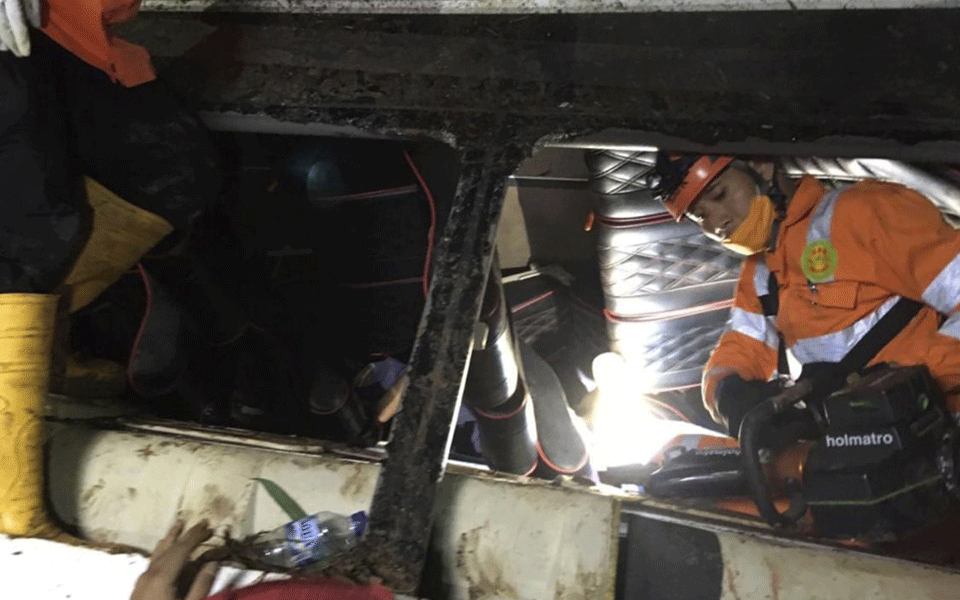
Jakarta: A tourist bus plunged into a ravine on Indonesia's main island of Java after its brakes apparently malfunctioned, killing at least 27 people and injuring 39 others, police and rescuers said Thursday.
The bus was carrying a group of Islamic junior high school students, teachers and parents from the West Java province town of Subang when the accident happened late Wednesday on a winding road, said local police chief Eko Prasetyo Robbyanto.
He said the bus was on its way back to Subang from a pilgrimage site in the province's Tasikmalaya district when it plunged into the 20-metre-deep ravine after the driver lost control of the vehicle in an area with a number of sharp declines in Sumedang district.
Police were still investigating the cause of the accident, but survivors told authorities that the vehicle's brakes apparently malfunctioned, Robbyanto said.
Bandung search and rescue agency chief Deden Ridwansah said the 27 bodies and 39 injured people were taken to a hospital and a nearby health clinic, including a body of a young boy who was pinned under the overturned bus and pulled from the wreckage Thursday morning.
Thirteen of the injured were treated for serious injuries, Ridwansah said. The driver was among those killed.
Television video showed police and rescuers from the National Search and Rescue Agency evacuating injured victims and carrying the dead to ambulances. Grieving relatives waited for information about their loved ones at Sumedang's general hospital, others tried to identify the bodies laid at a morgue.
Road accidents are common in Indonesia because of poor safety standards and infrastructure.
In December 2019, 35 people were killed when a passenger bus fell into a 80-metre-deep ravine and crashed into a fast-flowing river on Sumatra island. In early 2018, 27 people killed after a packed tourist bus plunged from a hill in West Java's hilly area.
Let the Truth be known. If you read VB and like VB, please be a VB Supporter and Help us deliver the Truth to one and all.
Indian startup's 'Drishti' satellite launched aboard SpaceX rocket
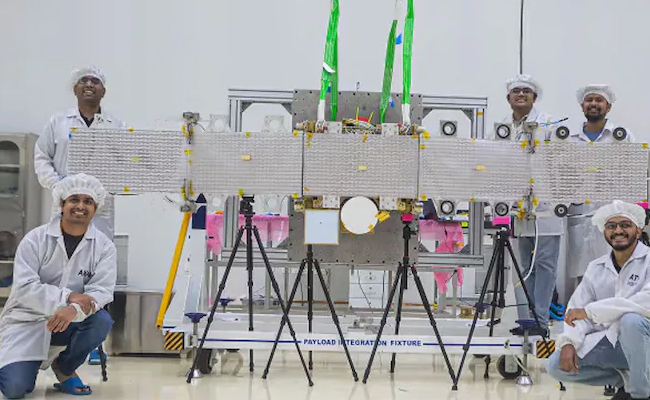
New Delhi (PTI): Bengaluru-based space start-up GalaxEye's Mission Drishti satellite was launched on Sunday aboard SpaceX's Falcon 9 rocket from California.
Mission Drishti is the world's first OptoSAR satellite, integrating electro-optical (EO) and synthetic aperture radar (SAR) sensors into a single operational platform, according to the company.
While EO sensors capture high-resolution images during sunlight and clear skies, SAR sensors provide all-weather and all-time images, using radar pulses.
In a statement, Suyash Singh, founder and CEO of GalaxEye, said, "With the satellite (Mission Drishti) now successfully in orbit, our immediate focus is on completing its commissioning. As we move through this phase, we are already witnessing strong global interest in the differentiated datasets enabled by our OptoSAR payload."
The satellite will help address long-standing limitations of conventional systems and enable more reliable and consistent data acquisition across diverse environmental conditions, the company said.
As a dual-use Earth observation satellite, the mission will support use cases across defence, agriculture, disaster management, maritime monitoring, and infrastructure planning.
The satellite is also expected to complement India's broader initiatives, including the 29 active Earth Observation satellites outlined in ISRO's recent annual report.
The launch came after five years of indigenous research and development, and extensive environmental testing and performance validation of the Mission Drishti.
In a statement, Lt Gen AK Bhatt (Retd), director general of Indian Space Association (ISpA), said, "GalaxEye has achieved what only a few global players have, which is seamlessly combining optical and SAR capabilities on a single platform to enable persistent, all-weather intelligence."
What stands out is not just the technology, but its broader impact on how downstream applications will increasingly define value in the space economy, particularly in Earth observation, where timely, decision-grade insights are critical," he added.
ISpA is the premier industry association of space and satellite companies in the country.
Union Minister Jitendra Singh also took note of the Mission Drishti launch, saying the development marked a significant milestone in India's space journey.
In a post on X, the minister said, "The successful launch of the world's first OptoSAR satellite, and the largest privately-built satellite in the country, reflects the immense potential of our young innovators driving nation-building."
GalaxEye aims to scale up Mission Drishti to a constellation of 10 satellites by 2030, developing a robust and sovereign Earth observation infrastructure for India.