Indonesia navy declares lost sub with 53 aboard sunk
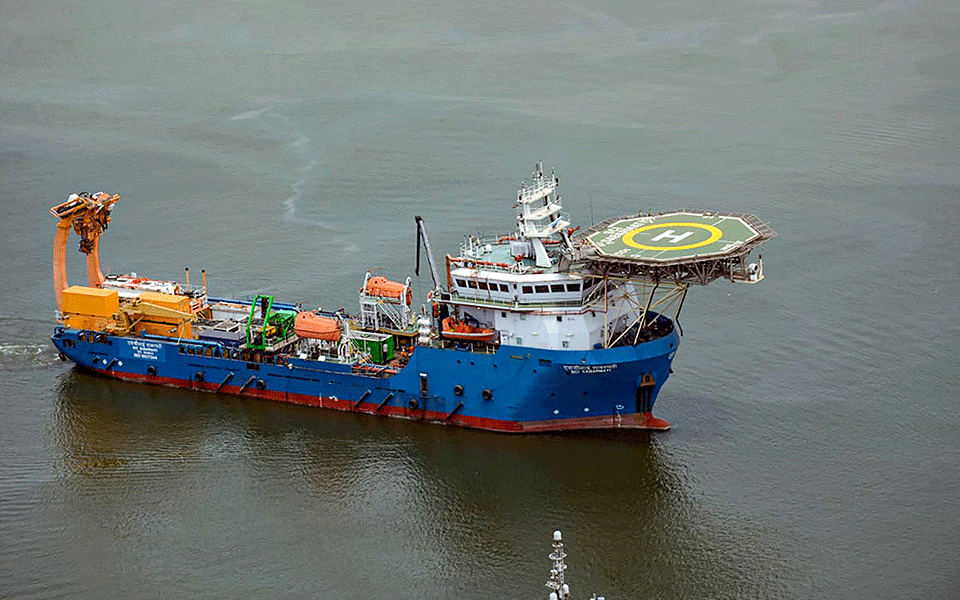
Banyuwangi (Indonesia): Indonesia's navy has declared its missing submarine had sunk and cracked open after finding items from the vessel over the past two days, apparently ending hope of finding any of the 53 crew members alive.
Military chief Hadi Tjahjanto said the presence of an oil slick as well as debris near the site where the submarine last dove Wednesday off the island of Bali were clear proof the KRI Nanggala 402 had sunk. Indonesian officials earlier considered the vessel to be only missing, but said the submarine's oxygen supply would have run out early Saturday.
Navy Chief of Staff Adm. Yudo Margono said at a press conference in Bali, If it's an explosion, it will be in pieces. The cracks happened gradually in some parts when it went down from 300 meters to 400 meters to 500 meters. ... If there was an explosion, it would be heard by the sonar."
The navy previously said it believes the submarine sank to a depth of 600-700 meters (2,000-2,300 feet), much deeper than its collapse depth of 200 meters (655 feet), at which point water pressure would be greater than the hull could withstand.
With the authentic evidence we found believed to be from the submarine, we have now moved from the sub miss' phase to sub sunk,' Margono said at the press conference, in which the found items were displayed.
The cause of the disappearance was still uncertain. The navy had previously said an electrical failure could have left the submarine unable to execute emergency procedures to resurface.
Margono said that in the past two days, searchers found parts of a torpedo straightener, a grease bottle believed to be used to oil the periscope, debris from prayer rugs and a broken piece from a coolant pipe that was refitted on the submarine in South Korea in 2012.
Margono said rescue teams from Indonesia and other countries will evaluate the findings. He said no bodies have been found so far.
An American reconnaissance plane, a P-8 Poseidon, landed early Saturday and had been set to join the search, along with 20 Indonesian ships, a sonar-equipped Australian warship and four Indonesian aircraft.
Let the Truth be known. If you read VB and like VB, please be a VB Supporter and Help us deliver the Truth to one and all.
Double-decker electric bus gutted in fire at Kurla BEST depot
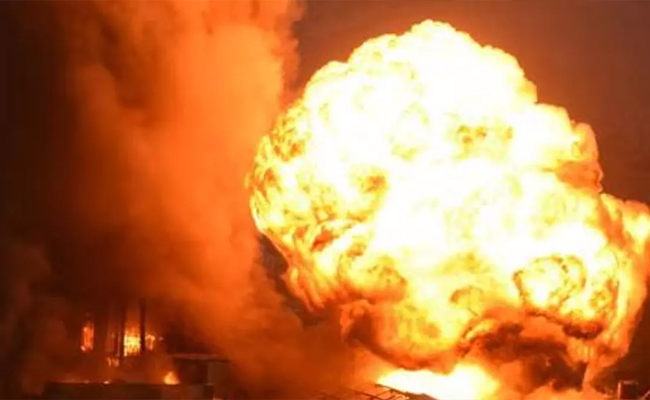
Mumbai (PTI): An empty double-decker electric bus was gutted in a fire during servicing at a BEST depot in Mumbai's Kurla area on Sunday, officials said, adding that nobody was injured.
The blaze broke out inside the Kurla BEST bus depot near Kanakia Building at 4.14 pm, according to preliminary information from the Mumbai Fire Brigade.
The parked bus was unoccupied at the time of the incident.
Fire brigade personnel rushed to the spot and brought the blaze under control. The exact cause of the fire was yet to be ascertained, they said.
No injuries were reported in the incident, officials added.
The Brihanmumbai Electricity Supply and Transport (BEST) Undertaking has hired 50 electric double-decker buses from Switch Mobility in its fleet of around 2,700 buses.