Iran launches missile strike against US in Iraq
'All is well,' says Trump after Iran missile attack
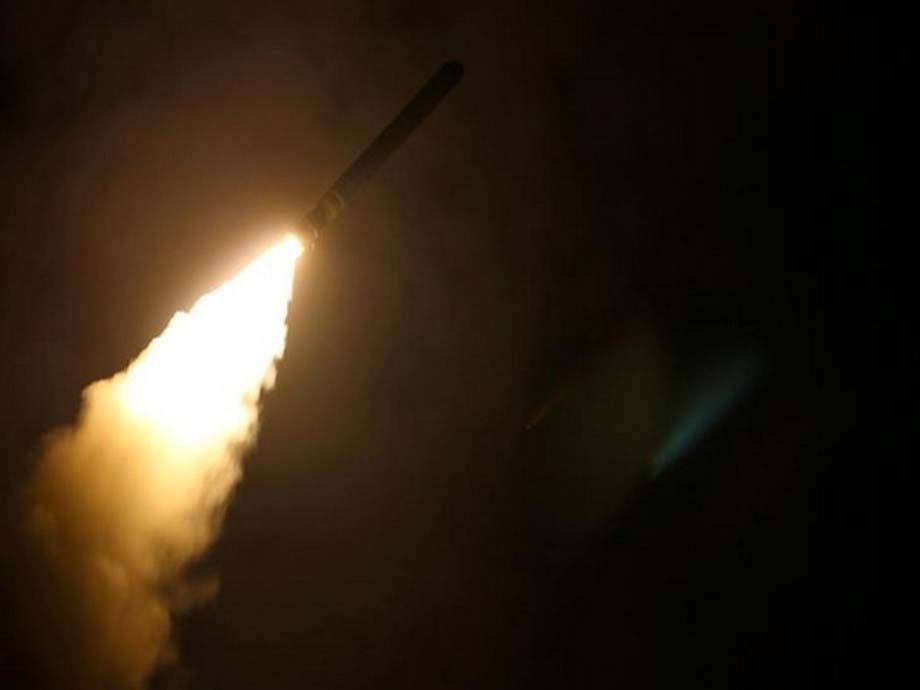
Washington, Jan 8: Iran has launched over a dozen ballistic missiles targeting at least two bases where US military and coalition forces' are stationed in Iraq, the Pentagon said on Tuesday.
According to Iranian state TV, the attacks were in revenge for the killing of the commander of Iran's powerful Revolutionary Guards, General Qasem Soleimani, in a US drone strike on Friday, which was ordered by President Donald Trump.
Shortly after the missile attacks, Trump tweeted, "All is well! Missiles launched from Iran at two military bases located in Iraq. Assessment of casualties & damages taking place now. So far, so good! We have the most powerful and well equipped military anywhere in the world, by far! I will be making a statement tomorrow morning."
Officials said President Trump has been briefed and he is monitoring the situation.
"We are working on initial battle damage assessments," Pentagon spokesperson Jonathan Hoffman said.
Hoffman said around 5:30 pm on January 7, "Iran launched more than a dozen ballistic missiles against US.military and coalition forces in Iraq".
"It is clear that these missiles were launched from Iran and targeted at least two Iraqi military bases hosting US military and coalition personnel at Al-Assad and Irbil, he said.
White House Press Secretary Stephanie Grisham said the President has been briefed about the situation.
We are aware of the reports of attacks on US facilities in Iraq. The President has been briefed and is monitoring the situation closely and consulting with his national security team, Grisham said.
Hoffman said in recent days and in response to Iranian threats and actions, the Department of Defence has taken all appropriate measures to safeguard its personnel and partners.
These bases have been on high alert due to indications that the Iranian regime planned to attack our forces and interests in the region, he said.
"As we evaluate the situation and our response, we will take all necessary measures to protect and defend US personnel, partners, and allies in the region, Hoffman said.
Meanwhile, President Trump spoke with Qatar Emir Sheikh Tamim bin Hamad Al Thani and thanked him for his country's strong partnership with the US. The two leaders discussed the situation in Iraq and Iran, as well as other critical bilateral and regional issues, officials said.
State Department spokesperson Morgan Ortagus said Secretary of State Michael R Pompeo telephoned Kurdistan Regional Government Prime Minister Masrour Barzani and updated him on the Iranian missile attacks on Iraqi air bases, including in Erbil.
The two leaders agreed to stay in close touch as the situation develops.
All is well! Missiles launched from Iran at two military bases located in Iraq. Assessment of casualties & damages taking place now. So far, so good! We have the most powerful and well equipped military anywhere in the world, by far! I will be making a statement tomorrow morning.
— Donald J. Trump (@realDonaldTrump) January 8, 2020
Let the Truth be known. If you read VB and like VB, please be a VB Supporter and Help us deliver the Truth to one and all.
Karnataka launches India’s first digital grievance system for gig workers
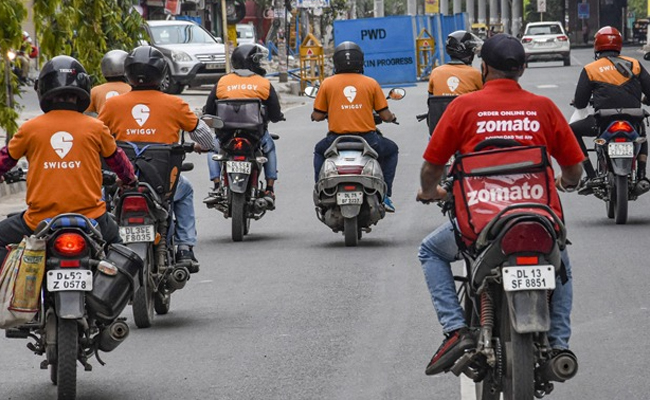
Bengaluru: In a first-of-its-kind initiative in India, the Karnataka government has launched a digital grievance redressal system for gig workers to provide structured support and protection to platform-based workers.
According to The Hindu, the system, developed by the Karnataka Platform-based Gig Workers’ Board in collaboration with the Department of e-Governance, allows workers to file complaints through the Integrated Public Grievance Redressal System (IPGRS).
Gig workers can raise issues related to pay, working conditions, and platform-specific disputes. Complaints will be routed to the Internal Dispute Resolution Committees (IDRCs) of respective platforms and are expected to be resolved within a defined timeframe. This is expected to bring transparency and legal recourse for a workforce that has so far operated without a formal dispute resolution framework.
Under The Karnataka Platform-Based Gig Workers (Social Security and Welfare) Act and Rules, every aggregator platform must constitute an Internal Dispute Resolution Committee (IDRC). Platforms such as Namma Yatri and Yulu have already integrated their IDRC contact details with the government portal.
Around 12 lakh gig workers have been identified in the state, and a unique identification system is being developed to remove duplicate entries. Officials said welfare schemes are also being designed based on type of work, working hours, and contribution.
Labour Minister Santosh Lad said that Karnataka, technology capital of the country, is leveraging this potential for worker welfare as well. “By launching this system, we are ensuring that the gig economy is no longer an informal space, but a structured one where every worker’s voice is heard,” he said.
“The schemes will vary based on the type of platforms. For example, cab rides are mostly undertaken by men whereas urban domestic activity is undertaken mostly by women. It may also be based on the contribution made, and the quantum of gig work done by a gig worker. Some gig workers work for more than eight hours while some may work on a few gigs. So, work load, nature of work, and time period of work could vary,” TH quoted G. Manjunath, Additional Labour Commissioner and CEO of the Board as saying.
“It has to be scientifically structured based on their effort and labour. We are working with experts, including academicians from Briston University, King’s College, and IISc, and other stake holders, including board members,” he said.
Officials added that aggregator platforms will be required to contribute 1 per cent towards worker welfare, with implementation beginning July 5.