Iran says it would resume nuclear talks with US if guaranteed no further attacks
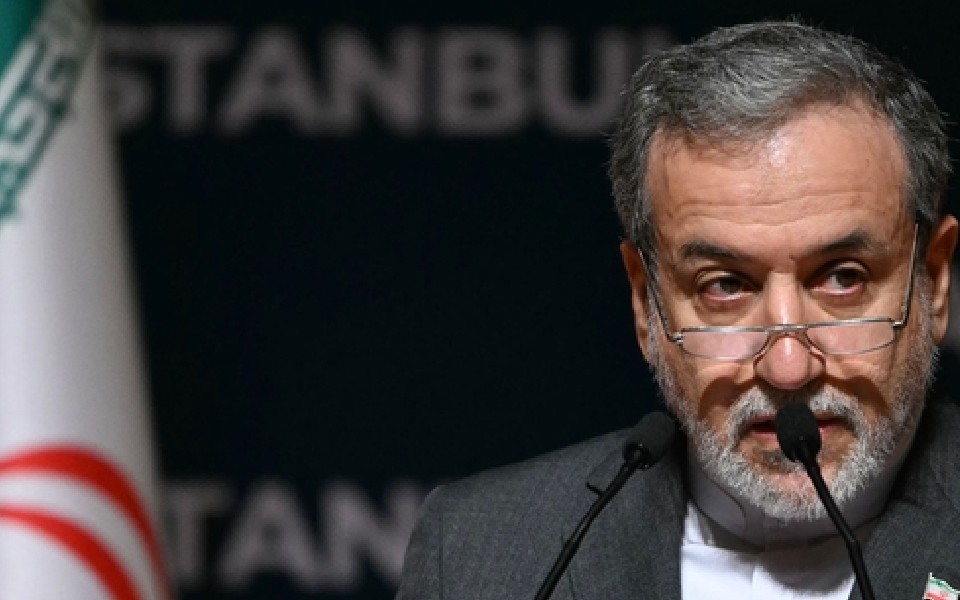
Tehran, Jul 12 (AP): Iran's foreign minister said Saturday that his country would accept a resumption of nuclear talks with the US if there were assurances of no more attacks against it, state media reported.
Foreign Minister Abbas Araghchi said in a speech to Tehran-based foreign diplomats that Iran has always been ready and will be ready in the future for talks about its nuclear programme, but, “assurance should be provided that in case of a resumption of talks, the trend will not lead to war.”
Referring to the 12-day Israeli bombardment of Iran's nuclear and military sites, and the US strike on June 22, Araghchi said that if the US and others wish to resume talks with Iran, "first of all, there should be a firm guarantee that such actions will not be repeated. The attack on Iran's nuclear facilities has made it more difficult and complicated to achieve a solution based on negotiations.”
Following the strikes, Iran suspended cooperation with the UN nuclear watchdog, which led to the departure of inspectors.
Araghchi said that under Iranian law, the country will answer the agency's request for cooperation "case by case,” based on Iran's interests.
He also said any inspection by the agency should be done based on Iran's “security” concerns as well as the safety of the inspectors.
“The risk of proliferation of radioactive ingredients and an explosion of ammunition that remains from the war in the attacked nuclear sites is serious,” he said.
He also reiterated Iran's position on the need to continue enriching uranium on its soil. US President Donald Trump has insisted that cannot happen.
Israel claims it acted because Tehran was within reach of a nuclear weapon. US intelligence agencies and the International Atomic Energy Agency had assessed Iran last had an organised nuclear weapons programme in 2003, though Tehran had been enriching uranium up to 60 per cent — a short, technical step away from weapons-grade levels of 90 per cent.
Iranian President Masoud Pezeshkian in an interview published Monday said the US airstrikes so badly damaged his country's nuclear facilities that Iranian authorities still have not been able to access them to survey the destruction.
Let the Truth be known. If you read VB and like VB, please be a VB Supporter and Help us deliver the Truth to one and all.
Two injuries, one DNF, a DQ as India end messy World Relays campaign

Gaborone (Botswana) (PTI): Amoj Jacob and Ragul Kumar got injured during the men's 4x400m and 4x100 races respectively as India ended their World Athletics Relays campaign in disappointment on the second day of competitions here on Sunday.
The Indian camp had high hopes of making the 2027 World Championships in the men's 4x400m relay but the team did not finish (DNF) the race as Jacob suffered cramps and pulled out of the race after taking the baton from the first leg runner Dharamveer Choudhary. Rajesh Ramesh and Vishal TK were to run in the third and fourth legs.
Those teams which could not qualify for the 2027 Beijing World Championships by reaching the final round of each of the six relay events on Saturday were given another chance in the second qualification round on Sunday.
The top two teams in each of the two heats (in all six relay events) booked the Beijing ticket on Sunday.
India will now have to try and qualify for the World Championships through the Top Lists of the World Athletics, which is a long and tedious process.
In the men's 4x100m race, third leg runner Ragul Kumar fell down the track after failing to hand over the baton inside the exchange zone to fourth leg runner Gurindervir Singh, which clearly showed the lack of coordination among the runners.
Harsh Santosh Raut and Animesh Kujur ran the first two legs.
The Indian quartet was disqualified and Kumar was seen being taken away from the Field of Play with the help of the volunteers.
It was a comedy of errors in the case of the women's 4x100m race, which saw the baton being dropped during an exchange between first leg runner Tamanna and second runner Nithya Gandhe, though the Indians finished the race in 53.09 seconds.
Gandhe started running quite a distance, but after realising that the baton was not in her hand, she turned and ran back to pick it up.
The only silver-lining for the Indian contingent was the national record time in the mixed 4x100m relay race, though the quartet of Ragul Kumar, Nithya Gandhe, Animesh Kujur and Sneha SS finished sixth in heat number two with a time of 41.35 seconds, bettering the previous national mark of 42.30 seconds set in March in Chandigarh.
The mixed 4x400m relay quartet of Theerthesh P Shetty, Kumari Saloni, Nihal William and Rashdeep Kaur ended at fifth in heat number one with a time of 3 minutes and 19.40 seconds.
On Saturday, all the five Indian relay teams had failed to make it to the respective final rounds and thus missed out on the 2027 World Championships berths.