Iran says no response to US outreach for talks amid escalating conflict
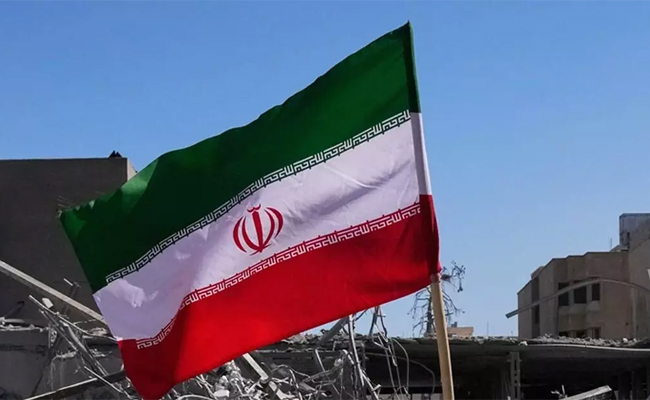
Tehran: Iranian officials have claimed that they have not responded to private communication from the United States seeking talks, even as public statements from US President Donald Trump suggest that Tehran is keen to negotiate amid the ongoing conflict.
According to a report by Drop Site News, two Iranian officials said US Special Envoy Steve Witkoff had sent messages to Iranian authorities, including Foreign Minister Abbas Araghchi, last week exploring the possibility of resuming negotiations. The officials said Iran did not respond to these messages and also received communication routed through third countries.
A senior Iranian official was quoted as saying that the decision not to respond was taken at the highest level. “The message here is clear: Iran has once again closed the window for any direct negotiations,” the official said, adding that any decision on ceasefire rests with the country’s Supreme Leader.
In contrast, President Trump has repeatedly stated in public that Iran is seeking talks. “They want to negotiate. They want to negotiate badly,” he said, while also claiming that Iran’s military capabilities have been significantly weakened.
The White House, responding to the report, dismissed the claims as false and criticised the publication. It said the US operation against Iran would continue until its objectives are achieved.
Meanwhile, conflicting accounts have emerged. A US official told Axios that it was Iran that had initiated contact, a claim denied by Araghchi, who said his last communication with Witkoff took place before recent military strikes. “Any claim to the contrary appears geared solely to mislead oil traders and the public,” he said.
Araghchi also rejected the suggestion that Iran is seeking a ceasefire or negotiations, stating in an interview that the country would continue to defend itself. Iranian officials have maintained that they will not consider any ceasefire arrangement unless it ensures an end to future attacks.
The report also indicates that multiple countries have attempted to mediate between the two sides, but Iran has conveyed that efforts should instead be directed towards the US administration.
Amid the conflict, global oil markets have been affected. Iran has threatened to target vessels linked to the US and its allies passing through the Strait of Hormuz, leading to a sharp drop in shipping traffic through the route. Iranian officials said the strait remains open in general but restricted for certain countries.
US officials, however, said Iranian ships have been allowed to pass through without being targeted. Rising oil prices and disruptions in supply have led to concerns among global energy companies, with industry leaders reportedly warning of severe economic consequences if the situation continues.
The US has also moved to strengthen its military presence in the region, including deploying additional troops and exploring options to secure maritime routes. President Trump has called for international participation, including from NATO countries and China, though several nations have expressed reservations.
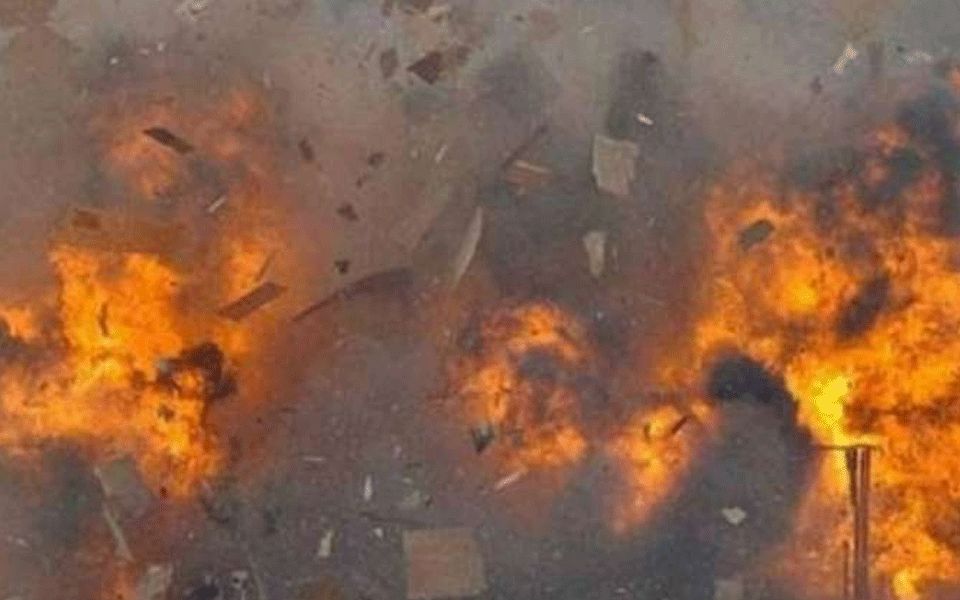
On the ground, the conflict has intensified, with continued missile and drone strikes reported across the region. Iran has indicated that it is prepared for a prolonged confrontation and may expand its strategy to apply pressure on US and allied interests.
Iranian officials have also warned against any attempt to target key infrastructure such as Kharg Island, which handles a major portion of the country’s oil exports. They said any such move would escalate the situation further.
At the diplomatic level, divisions remain visible. While some Gulf countries have blamed Iran for the escalation, Tehran has criticised them for not condemning US and Israeli actions.
The report also notes that the conflict has led to significant casualties in Iran, with authorities claiming over 1,400 deaths and thousands injured. At the same time, regional tensions remain high, with concerns that the conflict could widen further involving other actors.
Iran has indicated that any future ceasefire would need to include broader conditions, including guarantees against further attacks and international oversight.
Let the Truth be known. If you read VB and like VB, please be a VB Supporter and Help us deliver the Truth to one and all.
Recurring delays in approval, fund release give perception of systemic inequity: Siddaramaiah to PM
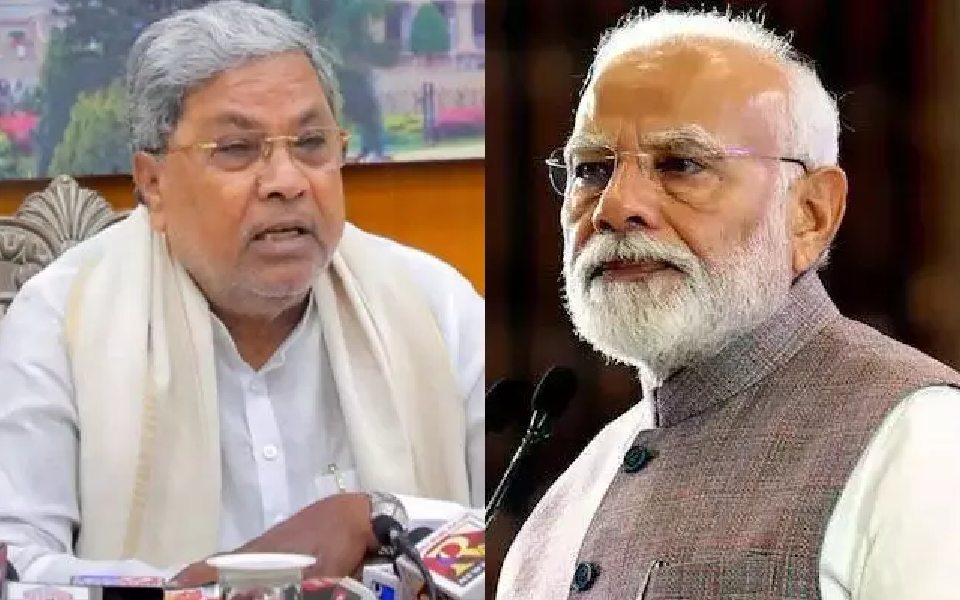
Bengaluru (PTI): Karnataka Chief Minister Siddaramaiah on Wednesday submitted a memorandum to Prime Minister Narendra Modi, seeking his intervention on 18 issues, including the demand to give constitutional protection to Karnataka's 56 per cent reservation policy and release of deficit grants, among others.
Siddaramaiah also highlighted that recurring delays on the part of the Union government, in approvals and fund releases to the state, have created a perception of systemic inequity.
CM sought the PM's intervention for the inclusion of Karnataka's 56 per cent reservation for Scheduled Castes, Scheduled Tribes, and Other Backward Classes in the Ninth Schedule of the Constitution and inclusion of certain OBCs in the central list of ST.
He insisted on the release of revenue deficit grants, special grants to Bengaluru, and approval to the Mekedatu project, among others.
According to the chief minister's office, Siddaramaiah handed over the memorandum to the prime minister on his arrival at the city's HAL airport on his way to Adichunchanagiri in Mandya district.
"Karnataka has always taken pride in contributing to India's growth with responsibility and vision. However, recurring delays in approvals and financial releases have created a perception of systemic inequity. Addressing these concerns will reaffirm the spirit of true cooperative federalism and strengthen our shared vision for the development of India," Siddaramaiah said in the letter to Modi.
"The people of Karnataka look forward to your kind intervention in resolving these issues. I am certain that the Union Government will enable Karnataka to continue playing a transformative role in India's inclusive and sustainable development," he said.
"Our state embodies the aspirations of a progressive and inclusive India and remains steadfast in its commitment to the ideals of cooperative federalism," he said.
While Karnataka continues to be among the largest contributors to the national exchequer and a leader in economic and social development, certain long-pending issues require the Union Government's urgent attention, he said.
Pointing out that the railway coach factory at Kolar announced in the Railway Budget remains unimplemented despite the state offering 1.123 acres of land, Siddaramaiah said, reviving this project will catalyse industrial development and employment in the backward Kolar region.
He said that including the Bengaluru-Mysuru segment in the proposed high-speed rail corridor is essential for balanced regional development and enhanced connectivity. The state respectfully urges the Union government to expedite the release of committed Central assistance for the Bengaluru Suburban Rail Project and to initiate the Bengaluru-Mumbai High-Speed Rail Corridor, connecting key districts of Kittur Karnataka and Kalyana Karnataka.
The CM also sought the release of the pending central share of Rs 17,554 crore and resolution of policy issues, including support for retrofitting and augmentation schemes, to ensure universal access to safe drinking water under the Jal Jeevan Mission.
Regarding 15th Finance Commission Grants to Gram Panchayats, he said, despite fulfilling all conditions, Karnataka is yet to receive grants of Rs 2,860 crore for FY 2025-26. "Their timely release is vital for sustaining rural infrastructure and essential services," he said.
Karnataka seeks the centre's urgent intervention for the sanction and implementation of pending National Highway projects, Siddaramaiah said, noting that the State has not received any major new NH projects in the last 12 years despite its significant contribution to the national economy.
Regarding revenue deficit grants of Rs 5,495 crore, he said, "The State requests the immediate release of the pending grants recommended by the 15th Finance Commission to address fiscal imbalances and sustain developmental initiatives."
He also demanded a special grant for Bengaluru to the tune of Rs 6,000 crore.
He urged the PM to direct the Ministry of Jal Shakti and the Central Water Commission to expedite the appraisal and approval of the Mekedatu Project, envisaging 67 TMC storage for Bengaluru's drinking water, regulated releases to Tamil Nadu, and 400 MW hydropower, in line with CWMA referral and the Supreme Court's judgment dated November 13, 2025.
Siddaramaiah further urged the centre to release the announced Rs 5,300 crore Central Assistance and national project status for the Upper Bhadra Project under the PMKSY-AIBP scheme, to gazette the Krishna Water Disputes Tribunal-II Award and declare the Upper Krishna Project (Stage-III) as a National Project.
He also urged wildlife clearance for the Kalasa Nala Diversion Project, enabling the diversion of 1.72 TMC of water for drinking purposes under the Mahadayi Tribunal Award.
Other demands mentioned in the memorandum include: provision of dedicated financial support of Rs 5,000 crore annually for the development of the Kalyana Karnataka region, in line with the spirit of Article 371(J) of the Constitution; establishing at least one public sector undertaking in each of the districts of North Karnataka; expedited forest, environmental, and wildlife clearances for the nationally significant energy storage project, which will enhance grid stability and support India's renewable energy goals; and establishment of AIIMS in Raichur.