Iran suspends nuclear deal curbs in push for relief from US sanctions
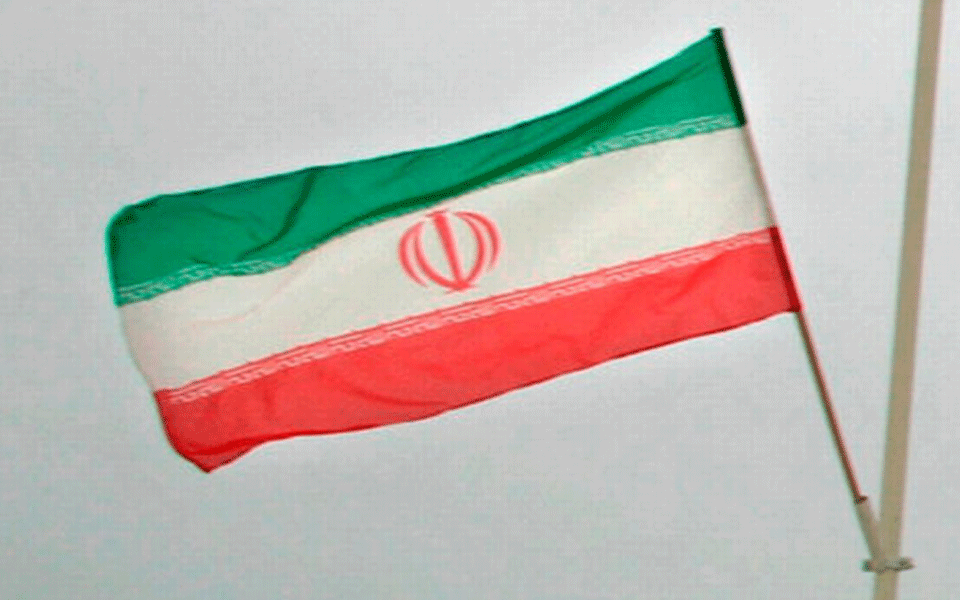
Tehran: Iran said Wednesday it had stopped respecting limits on its nuclear activities agreed under a 2015 deal with major powers until they find a way to bypass renewed US sanctions.
The well trailed announcement came as Washington stepped up its rhetoric against Tehran, accusing it of planning "imminent" attacks and deploying an aircraft carrier strike group with several nuclear-capable B-52 bombers to the region.
Iran said it was responding to the sweeping unilateral sanctions that Washington has reimposed since it quit the agreement one year ago, which have dealt a severe blow to the Iranian economy.
It said it would stop implementing some of the restrictions it had agreed with immediate effect.
Tehran said it would abandon more if the remaining parties to the agreement -- Britain, China, France, Germany and Russia -- failed to start delivering on their commitments to sanctions relief within 60 days.
President Hassan Rouhani underlined that the ultimatum was intended to rescue the nuclear deal from his US counterpart Donald Trump who has repeatedly called for it to be scrapped since he pulled out on May 8, 2018.
"We felt the (deal) needed surgery and that the year-long sedatives have not delivered any result. This surgery is meant to save the (deal) not destroy it," Rouhani said at a cabinet meeting broadcast live on state television.
Foreign Minister Mohammad Javad Zarif, who is on an official visit to Moscow, stressed Iran's actions were not in breach of the nuclear deal, which UN inspectors have repeatedly certified its compliance with.
"We are not operating outside of the JCPOA (nuclear deal) but are in fact working in its framework," Zarif told state television.
Under the landmark deal agreed by Trump's predecessor Barack Obama, the parties to the agreement were supposed to lift nuclear-related sanctions on Iran in return for it reining in its activities to ease fears it was seeking the capability to produce an atomic bomb.
But the promised sanctions relief has failed to materialise as European and Asian banks and oil companies have moved swiftly to abide by the renewed US sanctions for fear of financial or commercial repercussions.
Rouhani slammed European countries for seeing the US as the world's "sheriff" and said this keeps them from making "firm decisions for their own national interests."
"You have responsibilities, too ... for keeping your youth away from drugs, the flood of immigrants and other cooperation Iran has had with you so far. If this trend continues, the cooperation will cease."
The three European parties to the deal -- Britain, France and Germany -- tried to save the accord with a trade mechanism meant to bypass reimposed US sanctions, but their attempt was dismissed by Iran's supreme leader Ayatollah Ali Khamenei as a "bitter joke".
China underlined that it "resolutely opposes" the unilateral sanctions imposed by the United States on Iran but called on all parties to uphold the nuclear deal.
"We call on all relevant parties to exercise restraint, strengthen dialogue and avoid escalating tensions," foreign ministry spokesman Geng Shuang said.
Russia said it remained committed to the nuclear deal and denounced what it called "unreasonable pressure" on Iran.
Iran's Supreme National Security Council said the measures were necessary to "secure its rights and bring back balance" after the unilateral moves by the Trump administration.
"The Islamic Republic of Iran does not at the current stage consider itself committed to observing restrictions regarding storing enriched uranium stocks and heavy water stocks," the Supreme National Security Council said.
"The remaining parties to the (deal) are given 60 days to implement their commitments, in particular in the fields of banking and oil," the council added.
"In the next stage Iran will also stop observing restrictions on the level of uranium enrichment and measures regarding modernising Arak heavy water reactor."
Uranium enriched to much higher levels than Iran's current stocks can be used as the fissile core of a nuclear weapon, while heavy water is a source of plutonium which can be used as an alternative way to produce a warhead.
The council called for swift action by the remaining parties to the deal, warning time was running out.
"The window which is now open for diplomacy will not remain so for long, and the responsibility of the (deal) failing and any possibile consequences are completely on the US and the remaining parties," it said.
On the eve of the Iranian announcement, US Secretary of State Mike Pompeo made an unannounced visit to Baghdad in an effort to consolidate relations as Washington pushes ahead with its "maximum pressure" against Tehran -- a US arch-rival, but an ally of Iraq.
Pompeo said he made the trip because Iranian forces are "escalating their activity" and said the threat of attacks was "very specific".
He declined to go into further detail on the alleged plot, which has been met with scepticism in many quarters, with leading Democratic lawmakers fearing that Trump's administration is seeking to spark a war with Iran.
Israel's Prime Minister Benjamin Netanyahu, who has been a consistent opponent of the nuclear deal, seized on the Iranian announcement as evidence that it was pressing ahead with its nuclear programme.
"We shall not allow Iran to obtain a nuclear weapon," he said.
Let the Truth be known. If you read VB and like VB, please be a VB Supporter and Help us deliver the Truth to one and all.
Sujit Nair raises concerns over speculation of DMK-AIADMK understanding to block TVK
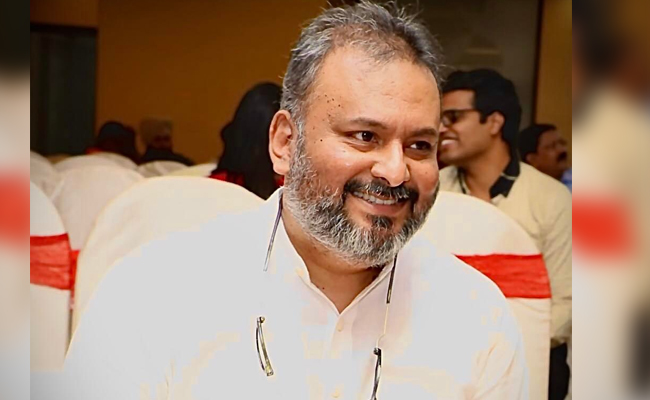
Chennai: Journalist and political commentator Sujit Nair has expressed concern over speculation that the Dravida Munnetra Kazhagam and the All India Anna Dravida Munnetra Kazhagam could explore a post-poll understanding to prevent Vijay-led Tamilaga Vettri Kazhagam from forming the government in Tamil Nadu.
In a social media post, Sujit Nair said the election verdict in Tamil Nadu reflected a clear public demand for political change and argued that the mandate should be respected irrespective of political preferences.
Referring to reports and political discussions surrounding a possible understanding between the DMK and AIADMK, he said he hoped such developments remained only speculative conversations and did not turn into reality.
Nair stated that if such an alliance were to take shape, it would raise serious questions about ideological politics in the country. He said TVK had emerged through a democratic electoral process and that the legitimacy to govern in a parliamentary democracy comes from the people’s verdict.
According to him, attempts to prevent an electoral winner from forming the government through unexpected political arrangements may be constitutionally valid, but many people could view them as politically opportunistic.
He further said that such a move could particularly affect the political image of the DMK, which has historically projected itself around ideology, social justice and opposition politics. Nair said that in ideological terms, the DMK appeared closer to TVK than to the AIADMK, and joining hands with its long-time political rival only to remain in power could weaken its broader political narrative.
He added that the same questions would apply to the AIADMK as well, as the party had spent decades positioning itself against the DMK and such an arrangement could create discomfort among its cadre and supporters.
Drawing a comparison with Maharashtra politics in 2019, Nair said he had expressed similar views when the Shiv Sena formed an alliance with the Indian National Congress and the Nationalist Congress Party after the Assembly elections.
He said post-poll alliances between long-standing political rivals often create a public perception that ideology and electoral mandates become secondary when political power equations come into play.
Nair also said such developments increase public cynicism towards politics and reinforce the belief among voters that ideology is often sidelined after elections.
He maintained that the Tamil Nadu verdict was emphatic and said respecting both the spirit and substance of the mandate was important for the credibility of democratic politics.