Iranian official warns Israel that its embassies are not safe after deadly Damascus strike
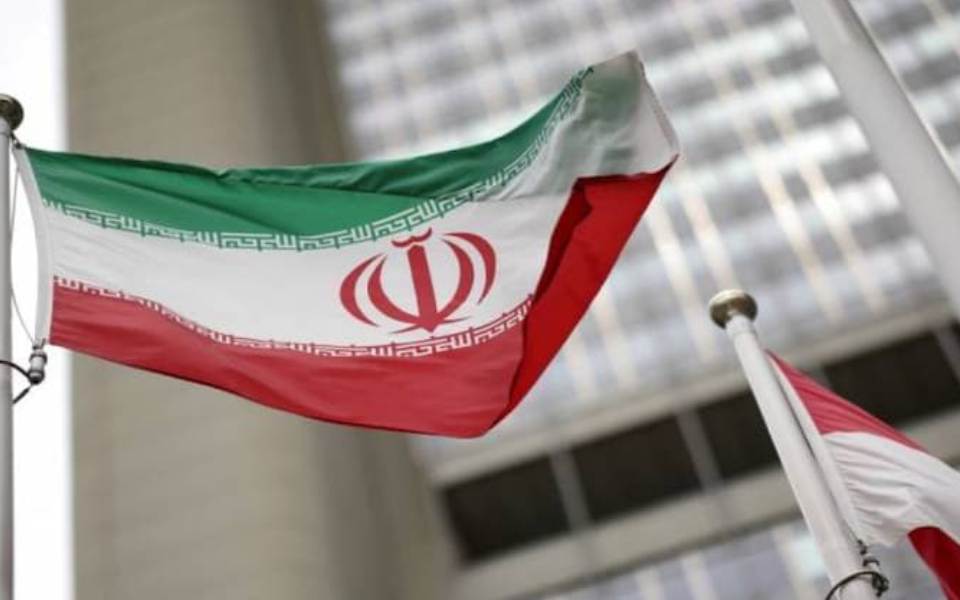
Jerusalem, Apr 7: A top Iranian military adviser on Sunday warned Israel that none of its embassies were safe following last week's strike in Damascus blamed on Israel that killed two elite Iranian generals.
Regional tensions threaten to draw the Middle East into a wider conflict as Israel's war against Hamas marks six months.
The remarks by Gen. Rahim Safavi, a military adviser to Iran's supreme leader Ayatollah Ali Khamenei, signalled that the attack on a diplomatic mission could be met with a similar response. Israel has not directly acknowledged its involvement.
“None of the embassies of the (Israeli) regime are safe anymore,” Safavi was quoted as saying by the semi-official Tasnim agency. He spoke at a ceremony in Tehran for the generals killed in the strike that flattened an Iranian consular building.
Israeli Prime Minister Benjamin Netanyahu said Israel was prepared for any response. “Whoever harms us or plans to harm us, we will harm them," he told a Cabinet meeting.
The regional tensions came at the six-month mark of the war, which was sparked when Hamas-led groups crossed from Gaza into Israel, killing 1,200 people, mostly civilians, and taking about 250 captive. Israel retaliated with a fierce bombardment and ground offensive that has killed more than 33,000 Palestinians, mostly women and children, according to local health authorities.
Also Sunday, Israel's military announced it was drawing back forces from the 98th paratroopers division who had been operating in the area of Khan Younis in southern Gaza, bringing Israeli troop levels in Gaza to some of the lowest levels since the war began. The Hamas stronghold has been the main focus of Israel's offensive in recent months.
The forces withdrew to recuperate and prepare for future operations, while a significant number remain elsewhere in Gaza, said Israeli military officials who spoke on condition of anonymity because they weren't authorised to speak to the media.
Israel maintains troops in devastated northern Gaza and can send them south when needed. Israel has vowed a ground offensive on the southernmost Gaza city of Rafah, considered Hamas' last stronghold. But the area shelters some 1.4 million people — more than half of Gaza's population. The prospect of an offensive has raised global alarm, including from top ally the US, which has demanded to see a credible plan to protect civilians.
The war's six-month mark has been met with growing frustration in Israel, where anti-government protests have swelled and anger is mounting over what some Israelis see as government inaction to help free the remaining roughly 130 hostages, about a quarter of whom are said by Israel to be dead.
Negotiations in pursuit of a cease-fire in exchange for the hostages' release were expected to resume in Cairo on Sunday. An Israeli delegation led by the head of the Mossad intelligence agency was due to depart for Cairo, according to an Israeli official who spoke on condition of anonymity because they were not authorised to discuss the matter with the media.
“Israel is prepared for a deal; Israel is not prepared to surrender," Netanyahu said. "Instead of the international pressure being directed at Israel, which is only causing Hamas to harden its positions, the pressure of the international community needs to be directed at Hamas.”
Pressure rose for action now.
“This doesn't seem a war against terror. This doesn't seem anymore a war about defending Israel. This really, at this point, seems it's a war against humanity itself," Chef Jose Andres told ABC, days after an Israeli airstrike killed seven of his World Central Kitchen colleagues in Gaza. Aid deliveries on a crucial new sea route to the territory were suspended.
The UN and partners now warn of “imminent famine” for more than 1 million people in Gaza as humanitarian workers urge Israel to loosen restrictions on the delivery of aid overland, the only way to meet soaring needs as some Palestinians forage for weeds to eat.
Mothers who have given birth in Gaza since the war began are especially vulnerable.
The Health Ministry in Gaza said the bodies of 38 people killed in Israel's bombardment had been brought to the territory's remaining functional hospitals in the past 24 hours. Hospitals also received 71 wounded, it said.
The ministry said 33,175 have been killed since the war began. The ministry doesn't differentiate between civilians and combatants but says two-thirds of the dead are children and women. Another 75,886 have been wounded.
Israel's military continued to suffer losses, including in Khan Younis, where the military said four soldiers were killed in a battle with Hamas group.
Over 600 Israeli soldiers have been killed since October 7, including 260 in the Gaza ground operation, according to Israel's government.
Let the Truth be known. If you read VB and like VB, please be a VB Supporter and Help us deliver the Truth to one and all.
TN Assembly elections: Eight-month pregnant homemaker wins Thiru Vi Ka Nagar seat for TVK

Chennai (PTI): Before giving birth, she had already delivered a mandate—a symbol of hope for Thiru Vi Ka Nagar.
Echoing Delhi’s 2013 “common citizen” political churn associated with the rise of the Aam Aadmi Party (AAP), an eight-month-pregnant homemaker, M R Pallavi, has been elected as an MLA from Chennai’s Thiru Vi Ka Nagar constituency, emerging as one of the notable first-time faces of the Vijay-led TVK in the recently held Tamil Nadu Assembly elections.
In the narrow lanes of Thiru Vi Ka Nagar, a steady stream of media personnel has been making their way to Pallavi’s residence—a scene reminiscent of the result day in Delhi when journalists thronged the modest home of Rakhi Birla, who had won from Mangolpuri on an AAP ticket.
Pallavi, 36, a homemaker educated up to class XII, defeated the DMK candidate K S Ravichandran by a margin of 22,333 votes in the reserved Thiru Vi Ka Nagar Assembly constituency.
Tamilaga Vettri Kazhagam emerged as the single largest party by winning 108 seats, while DMK and AIADMK got 59 and 47, respectively.
Pallavi’s victory has drawn attention due to her personal circumstances. She campaigned extensively while eight months pregnant, going door-to-door to reach voters.
According to local accounts, she even fainted once during the campaign but continued her outreach.
She has not spoken to the media following her victory, as doctors have advised her to rest. Her husband, Rajesh, briefly recounted her campaign efforts.
A self-professed admirer of actor-turned-politician Vijay, Pallavi joined TVK soon after its formation and is now among its first-time legislators.
Doctors have advised her to be hospitalised around May 20, as she is expecting her second child. Ahead of that, voters in Thiru Vi Ka Nagar have entrusted her with representing them in the state Assembly.
Political observers say the rise of candidates like Pallavi signals a possible shift in Tamil Nadu’s political landscape, with voters backing a new party and candidates from non-traditional backgrounds.