Iran's Khamenei asks India to 'confront extremist Hindus and their parties'
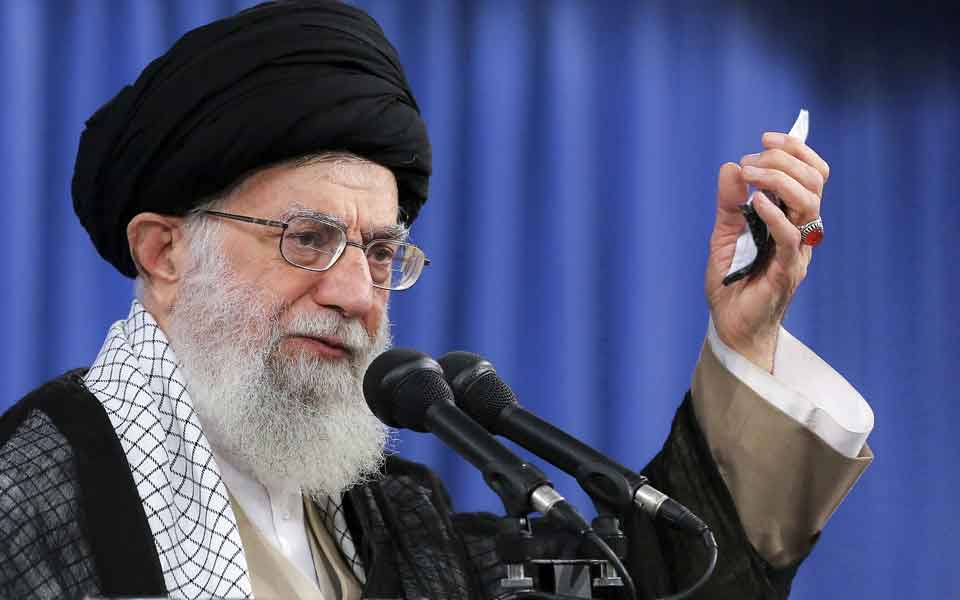
Tehran: Iranian Supreme Leader Ayatollah Ali Khamenei on Thursday asked the Indian government to confront what he called "extremist Hindus and their parties", saying the hearts of Muslims all over the world are "grieving" over the recent communal violence in Delhi.
His remarks comes two days after India summoned Iran's Ambassador Ali Chegeni in New Delhi and lodged a strong protest over the "unwarranted" comments by Iranian Foreign Minister Javad Zarif over communal violence in the national capital.
"The hearts of Muslims all over the world are grieving over the massacre of Muslims in India. The govt of India should confront extremist Hindus & their parties & stop the massacre of Muslims in order to prevent India's isolation from the world of Islam," Khamenei tweeted.
Khamenei, who controls all major security and foreign policy decisions, tweeted in English, Urdu, Persian and Arabic along with a photograph of a child grieving over the body of a man who was killed in the recent violence in Delhi.
In a tweet on Monday, Zarif said Iran condemned the "wave of organised violence against Indian Muslims" and urged Indian authorities to "not let senseless thuggery" prevail.
Next day, India summoned Iranian Ambassador Chegeni and conveyed to him that Zarif's "selective and tendentious" characterisation of incidents in Delhi are not acceptable.
The ties between India and Iran have been on an upswing over the last few years.
Notwithstanding US sanctions against Iran, India has been maintaining cordial relationship with Tehran and have been actively involved in development of the strategically located Chabahar port in the Gulf nation.
Zarif visited India in January in the midst of Tehran's escalating tension with the Trump administration over the killing of top Iranian General Qassem Sulemani in a US military strike in Iraq.
The national capital witnessed horrific violence last week following clashes between supporters and those opposing the Citizenship Amendment Act. According to authorities, at least 42 people were killed in the violence.
Massive protests took place across India in the last two months over the new law with the opposition parties and rights groups terming it as violative of founding principles of Indian Constitution.
According to the law, members of Hindu, Sikh, Buddhist, Jain, Parsi and Christian communities who have come from Pakistan, Bangladesh and Afghanistan till December 31, 2014 due to religious persecution will be given Indian citizenship.
Let the Truth be known. If you read VB and like VB, please be a VB Supporter and Help us deliver the Truth to one and all.
Man arrested with Rs 2.54-crore heroin in Mumbai

Mumbai (PTI): Police have arrested a man and seized over 500 grams of heroin worth Rs 2.54 crore in the illicit market from him in Mumbai, officials said on Friday.
The police's Anti-Narcotics Cell (ANC) made the drug seizure in Santacruz in the western suburbs. The operation was conducted by the Kandivali unit of the ANC on Thursday as part of a special crackdown against drug trafficking in the area, they said.
Acting on specific inputs, an ANC team conducted a raid in Santacruz (East) and intercepted a man. During a search, the team recovered 508 grams of high-grade heroin from his possession, an official said.
The seized contraband, a highly addictive, opioid drug derived from morphine, is estimated to be worth Rs 2.54 crore in the international market, he informed.
Following the seizure, a case was registered against the man under relevant sections of the Narcotic Drugs and Psychotropic Substances (NDPS) Act, 1985, and he was formally placed under arrest in the early hours of Friday.
The police are currently investigating the source of the drug and trying to identify the intended recipients of the consignment, he said.