How many innocent Palestinian does Israel has to slaughter? Irish MP questions government
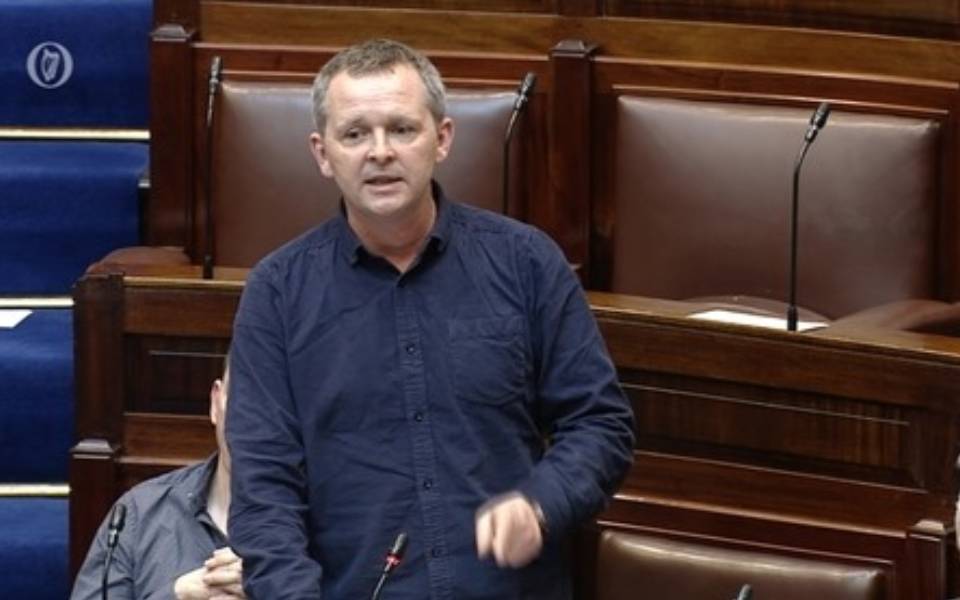
Dublin: In a powerful exchange within the Irish Parliament, Member of Parliament Richard Boyd Barrett confronted Prime Minister Leo Varadkar over Ireland's response to the ongoing conflict in the Middle East. Boyd Barrett condemned Israel's actions, labeling them as war crimes and genocide, and called for immediate international sanctions and accountability.
Varadkar, in response, stressed Ireland's commitment to promoting peace and justice in the region, advocating for a two-state solution and collaboration with the European Union, the United States, and Middle Eastern nations.
In his speech on October 24 in the Irish Parliament, Richard Boyd Barrett, raised a poignant question to the Prime Minister of his country, stating, "How many innocent Palestinian civilians, men, women, and children, does Israel have to slaughter? How many war crimes does Israel have to commit? How much death and destruction does Israel have to visit upon the people of Gaza and Palestine before you will call for and impose sanctions on Israel and expel the Israeli ambassador from this country? How much longer will the international community turn a blind eye to the suffering of the Palestinians?"
He continued, asserting, "We cannot ignore the gravity of the situation. The world must hold Israel accountable for its actions. The continuous loss of innocent lives demands immediate attention. The international community must step in and demand justice for the Palestinian people."
He further emphasized the necessity of international intervention, saying, "It is our moral duty to stand against the atrocities being committed. Israel's actions cannot go unpunished. We must call for and impose sanctions on Israel, expel the Israeli ambassador from our country, and urgently refer Israel to the International Criminal Court for its crimes against humanity and war crimes."
He highlighted the undeniable facts surrounding Israel's actions, stating, "In front of the world, by their own admission, Israel is committing war crimes. This isn't a matter of opinion; they have declared their intention publicly. Israel is displacing more than a million Palestinians from their homes in Gaza, ethnically cleansing them, which constitutes a crime against humanity. They have publicly stated their intention to deny 2.2 million people access to water, electricity, medicine, and life-saving equipment. These atrocities are unfolding before the eyes of the world, and they continue unabated."
He continued, expressing deep concern over the ongoing violence, saying, "Every minute, children are being slaughtered by Israeli artillery in a relentless bombardment of residential complexes, hospitals, schools, and civilian infrastructure. The gravity of these actions cannot be overstated. The international community must recognize the urgency of the situation and take immediate steps to address these egregious violations of human rights."
He lamented, "They just go on and on, and you do nothing. Nothing but words of concern, yet no action to hold them to account. It is undeniably premeditated war crimes and genocide. Scholars and academics, including Jewish people in the United States, Canada, and around the world, have labeled these actions as genocidal."
Quoting Israeli officials, Boyd Barrett revealed the shocking rhetoric used by some in power, stating, "An Israeli General brazenly declared, 'Human animals must be treated as such; there will be no electricity and no water, there will only be destruction.' A minister openly stated, 'We are fighting human animals; we will act accordingly; we will remove every restriction on the IDF.' Another minister, Smotrich, asserted, 'There is no such thing as the Palestinians.' Furthermore, the President of Israel referred to the people of Gaza and said they are all responsible."
He went on to mention a significant incident, saying, "Before October 7th, Netanyahu appeared in front of the UN General Assembly with a map of Israel that had removed all references to Palestine, a clear declaration of intent to destroy the Palestinian people and steal all of their land."
In response to Richard Boyd Barrett's concerns about the situation in the Middle East, Irish Prime Minister Leo Varadkar emphasized the need to protect innocent lives, both Palestinian and Israeli. He expressed his condolences for the Israeli citizen who lost her life due to violence in the region and highlighted the importance of multilateral actions in addressing the crisis. Varadkar stated that individually imposed sanctions would not be effective and underscored the significance of keeping lines of communication open with countries involved in the conflict, including having ambassadors in place.
Varadkar condemned collective punishment and hostage-taking, affirming Ireland's stance against targeting civilian infrastructure. He also acknowledged Hamas's objective, which he described as seeking the destruction of Israel, raising concerns about the existence of a Jewish state established by the UN.
In response to Prime Minister Leo Varadkar's comments, Richard Boyd Barrett retorted, asserting the world's responsibility in addressing the harsh realities of the Israeli regime. Barrett pointed out, "The world is responsible for failing to call out the reality of the Israeli regime. It is an apartheid regime that was established through the ethnic cleansing of 750,000 Palestinians. This regime continues its policies of ethnic cleansing on a daily basis, particularly in East Jerusalem and across the West Bank, regardless of the presence of Hamas."
He went on to provide historical context, stating, "Even in the absence of Hamas, back in 1987 during the First Palestinian intifada, young people rose up because their entire future had been stolen from them. They faced severe oppression under the Israeli regime and military. At that time, there was no Hamas; there was no significant Palestinian resistance organization. Yet, Israel responded to their legitimate grievances with brutality, murder, administrative detention, and ethnic cleansing. These actions have persisted day in and day out."
Boyd Barrett criticized the lack of acknowledgment from governments, including Varadkar's, regarding the Israeli regime's apartheid policies and ongoing ethnic cleansing. He argued, "Your government refuses to even label them as an apartheid regime, let alone acknowledge the war crimes and ethnic cleansing that numerous human rights organizations have pleaded with you and European governments to address. The world has given Israel the license to conduct the savagery we are witnessing today. They are responsible for the crimes we are witnessing. If we genuinely want to end these senseless deaths, we must hold Israel accountable for its actions."
Prime Minister Leo Varadkar further clarified Ireland's role in promoting peace and justice in the Middle East. He highlighted the importance of collaboration with the European Union, the United States, and other countries in the region such as Egypt, Jordan, and Lebanon. He also advocated for a new peace initiative and a two-state solution, emphasizing the need for normal contacts and economic relations between Palestine and Israel.
Let the Truth be known. If you read VB and like VB, please be a VB Supporter and Help us deliver the Truth to one and all.
My party will complete 5-year term, says CM Siddaramaiah
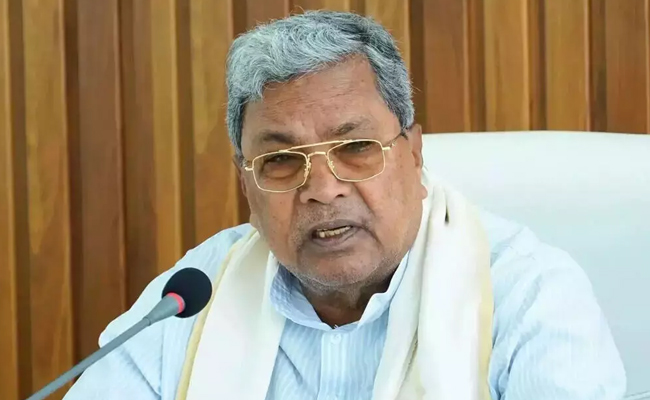
Mysuru (Karnataka) (PTI): Karnataka Chief Minister Siddaramaiah on Wednesday asserted that the Congress government would complete its five-year term, while sidestepping questions on whether he personally would remain in office for the full duration.
Addressing reporters here, he maintained that decisions on the leadership would rest with the party high command and refrained from giving a direct answer on his own tenure.
“Our party will complete five years,” Siddaramaiah said, when asked if he would complete a full term as Chief Minister.
On the issue of leadership, he reiterated that the final call would be taken by the party leadership, saying, “The high command will decide. There’s no point asking the same thing again.”
Indicating his readiness to travel to the national capital if required, he said, “If I am called to Delhi, I will go,” adding that he would seek an appointment with Rahul Gandhi if needed.
The talks on leadership change have intensified in the power corridor of the state where claims were made that Siddaramaiah would make way for his Deputy Chief Minister D K Shivakumar.
The Chief Minister also underlined that recent by-election victories in Bagalkote and Davanagere South assembly segment reflected public support for the government, stating that this clearly shows that people have appreciated the Congress government and its programmes.
The CM also dismissed the opposition’s claims, alleging they lacked strategy, and said local body elections would be conducted as per rules.