Islamic tradition of hospitality a remarkable lesson in this world: Guterres in Ramzan message
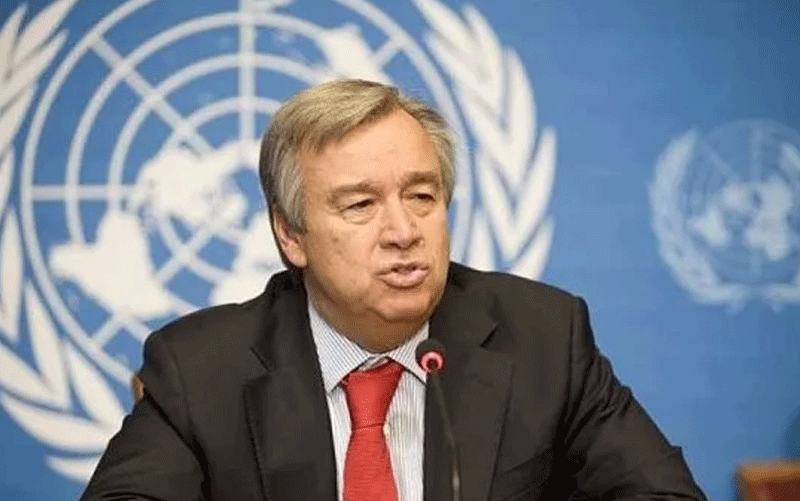
United Nations: As Muslims around the world will be observing "a very different" Ramzan amid a devastating COVID19 pandemic, UN chief has said the Islamic tradition of hospitality and generosity is a remarkable lesson at a time when people in conflict zones and vulnerable populations face dire consequences.
Ramzan is the holiest month in Islam, when devout Muslims fast from sunrise to sunset. It will begin this week, depending on the sighting of the moon.
"This will, of course, be a very different Ramzan. Many community activities will naturally be affected by measures to combat the COVID-19 pandemic, Secretary General Antonio Guterres said on Wednesday in his Ramzan message.
He said as millions of Muslims around the world begin observing the holy month of Ramzan, many people in conflict zones will once again be tragically marking this month with war and insecurity all around.
Underscoring that Ramzan is about supporting the most vulnerable, Guterres expressed appreciation for governments and people throughout the Muslim world who live by their faith, supporting those fleeing conflict in the best Islamic tradition of hospitality and generosity a remarkable lesson in this world where so many doors have been closed to those in need of protection, even before COVID-19.
Recalling his recent appeal for an immediate global ceasefire to focus on the novel coronavirus, the world's common enemy, Guterres said he repeats that appeal as he quoted words of the Holy Quran and if they incline to peace, then incline to it .
Muslims around the world will observe the holy month of Ramzan under lockdown and tight restrictions due to the coronavirus outbreak that has paralysed entire world.
The COVID-19 has so far infected more than 2.6 million people and killed over 183,330.
Because of the pandemic, which has spread to 185 nations, many countries this year have advised citizens to avoid large gatherings and have suhoor and iftar individually or with family at home.
During Ramzan, Muslims wake up early to eat a pre-dawn meal called suhoor, and break their fast after sunset with a meal called iftar.
Congregational prayers are banned in several countries, and many mosques have been temporarily closed.
Let the Truth be known. If you read VB and like VB, please be a VB Supporter and Help us deliver the Truth to one and all.
Man arrested with Rs 2.54-crore heroin in Mumbai

Mumbai (PTI): Police have arrested a man and seized over 500 grams of heroin worth Rs 2.54 crore in the illicit market from him in Mumbai, officials said on Friday.
The police's Anti-Narcotics Cell (ANC) made the drug seizure in Santacruz in the western suburbs. The operation was conducted by the Kandivali unit of the ANC on Thursday as part of a special crackdown against drug trafficking in the area, they said.
Acting on specific inputs, an ANC team conducted a raid in Santacruz (East) and intercepted a man. During a search, the team recovered 508 grams of high-grade heroin from his possession, an official said.
The seized contraband, a highly addictive, opioid drug derived from morphine, is estimated to be worth Rs 2.54 crore in the international market, he informed.
Following the seizure, a case was registered against the man under relevant sections of the Narcotic Drugs and Psychotropic Substances (NDPS) Act, 1985, and he was formally placed under arrest in the early hours of Friday.
The police are currently investigating the source of the drug and trying to identify the intended recipients of the consignment, he said.