Israel is pulling thousands of troops from Gaza as combat focuses on enclave's main southern city
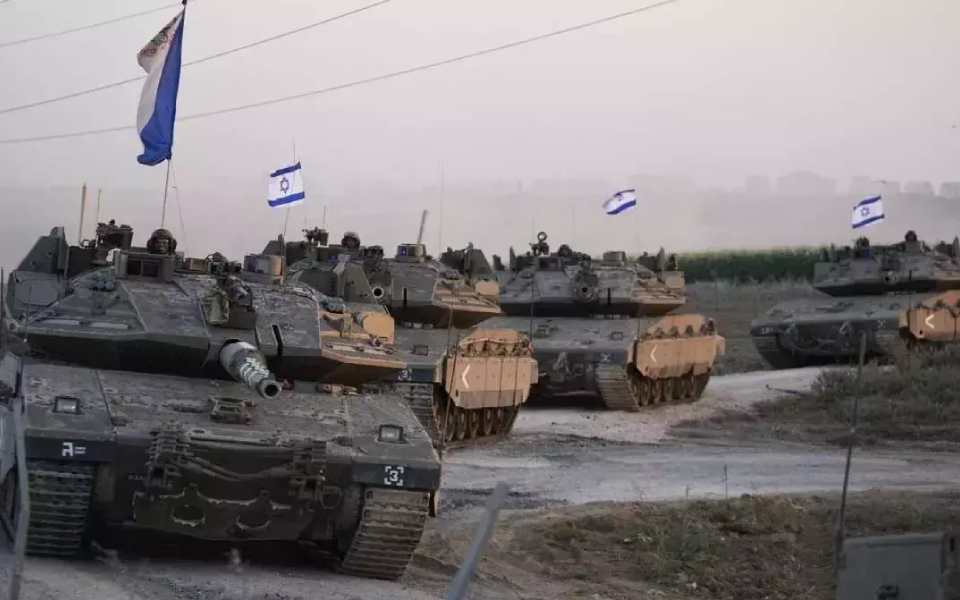
Tel Aviv, Jan 01: Thousands of Israeli soldiers are being shifted out of the Gaza Strip, the military said on Monday, in the first significant drawdown of troops since the war began as forces continued to bear down on the main city in the southern half of the enclave.
The troop movement could signal that fighting is being scaled back in some areas of Gaza, particularly in the northern half where the military has said it is close to assuming operational control. Israel has been under pressure from its chief ally, the United States, to begin to switch to lower-intensity fighting.
Word of the drawdown came ahead of a visit by Secretary of State Antony Blinken to the region and after the Biden administration bypassed Congress for the second time this month to approve an emergency weapons sale to Israel.
But fierce fighting continued in other areas of Gaza, especially the southern city Khan Younis and central areas of the territory. Israel has pledged to charge ahead until its war aims have been achieved, including dismantling Hamas, which has ruled Gaza for 16 years.
The military said in a statement Monday that five brigades, or several thousand troops, were being taken out of Gaza in the coming weeks for training and rest.
In a briefing Sunday that first announced the troop withdrawal without specifying how many forces were leaving, army spokesman Rear Adm. Daniel Hagari did not say whether the decision meant Israel was launching a new phase of the war.
"The objectives of the war require prolonged fighting, and we are preparing accordingly," he said.
Israel has vowed to crush Hamas' military and governing capabilities in its war, which was sparked by the Hamas group's October 7 attack on southern Israel, which killed 1,200 people. Roughly 240 people were taken hostage.
Israel responded with a blistering air, ground and sea offensive that has killed more than 21,900 people in Gaza, two-thirds of them women and children, according to the Health Ministry in Gaza, which does not differentiate between civilians and combatants in its count.
The war has displaced some 85 per cent of Gaza's 2.3 million residents, sending swells of people seeking shelter in Israeli-designated safe areas that the military has nevertheless bombed. Palestinians are left with a sense that nowhere is safe in the tiny enclave.
Let the Truth be known. If you read VB and like VB, please be a VB Supporter and Help us deliver the Truth to one and all.
KSCA expresses disappointment over missing IPL playoffs, says it was ready to host matches in B’luru
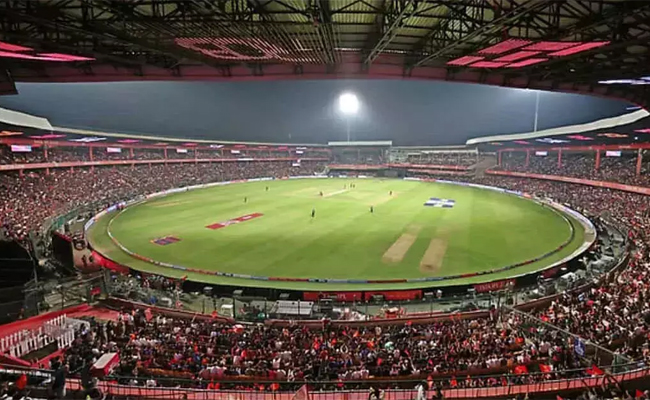
Bengaluru: The Karnataka State Cricket Association (KSCA) has issued a clarification stating that it was fully prepared to host the IPL playoffs and final matches in Bengaluru but the fixtures were allotted to other venues.
In a media note, KSCA said it was disappointed with the decision. The association stated that its president, former India cricketer Venkatesh Prasad, had been in touch with the Board of Control for Cricket in India (BCCI) and had formally conveyed the association’s readiness and interest in hosting the matches at the M. Chinnaswamy Stadium.
KSCA said the IPL matches held in Bengaluru this season were appreciated for smooth conduct, crowd management and overall experience for spectators. It said this reflected its ability to handle high-profile matches.
The association also stated that it had sent a detailed communication to the BCCI explaining its preparedness and the operational arrangements followed during the current IPL season. According to KSCA, these systems have been in place since the start of the Indian Premier League in 2008 and were followed consistently, including during previous playoff matches hosted in Bengaluru.
The clarification added that the communication sent to the BCCI was only meant to provide factual and operational details and to bring clarity on logistical and stakeholder-related requirements involved in hosting such matches.
KSCA said that although it had shown willingness and preparedness, the BCCI has decided to allocate the playoff matches to other venues. It added that the reasons for this decision have not been formally shared with the association, but it respects the authority of the board in taking such decisions.
The association further said it remains ready to host matches of national and international importance and will continue to cooperate with the BCCI, franchises, government authorities and other stakeholders for conducting cricket events.
The statement was issued by KSCA official spokesperson Vinay Mruthyunjaya, who also thanked the media and cricket fans for their continued support.