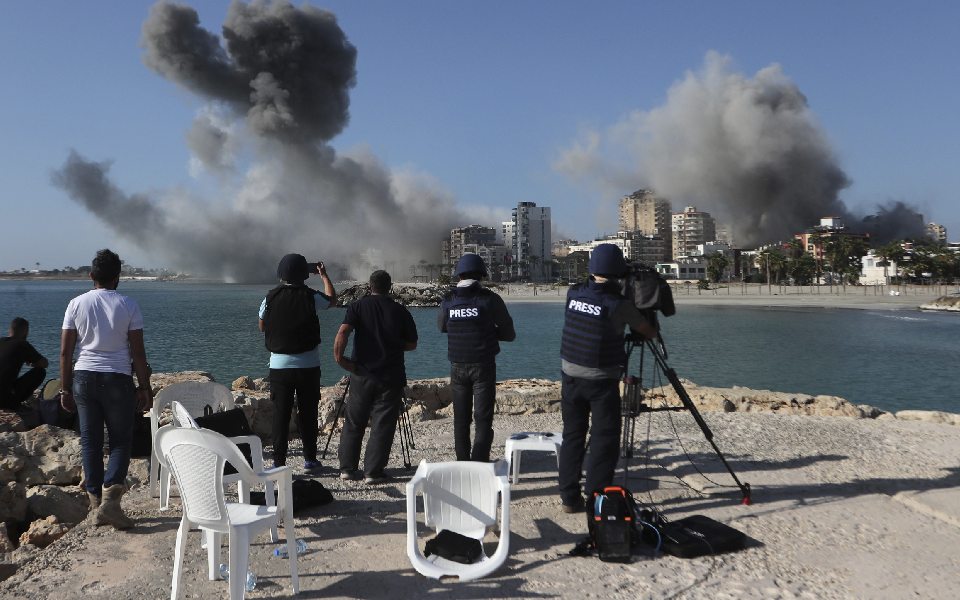
Jerusalem: The Israel Defense Forces (IDF) have issued an evacuation order for residents in the northern Gaza Strip on Thursday, for the towns of Beit Lahia, Jabalia, the Jabalia refugee camp and northern neighbourhoods of Gaza City.

The IDF announced the evacuation order through a social media message. The IDF spokesperson Avichay Adraee said, "The IDF will greatly expand its military operations in your areas." He also warned civilians that they were located in what he described as "dangerous combat zones" and urged them to flee southward for their safety.

Earlier, the IDF on May 19 also directed civilians in Khan Younis, Bani Suhaila, and Abasan in southern Gaza to evacuate. Adraee further warned and said, “Terrorist organisations have brought you disaster. For your safety, evacuate immediately.”

Hospitals across Gaza have reported over 100 deaths in the last 24 hours alone. According to health authorities in Gaza, the total death toll has now reached 53,655 since Israel started the attack.

Let the Truth be known. If you read VB and like VB, please be a VB Supporter and Help us deliver the Truth to one and all.


Tehran: Iranian officials have claimed that they have not responded to private communication from the United States seeking talks, even as public statements from US President Donald Trump suggest that Tehran is keen to negotiate amid the ongoing conflict.

According to a report by Drop Site News, two Iranian officials said US Special Envoy Steve Witkoff had sent messages to Iranian authorities, including Foreign Minister Abbas Araghchi, last week exploring the possibility of resuming negotiations. The officials said Iran did not respond to these messages and also received communication routed through third countries.

A senior Iranian official was quoted as saying that the decision not to respond was taken at the highest level. “The message here is clear: Iran has once again closed the window for any direct negotiations,” the official said, adding that any decision on ceasefire rests with the country’s Supreme Leader.

In contrast, President Trump has repeatedly stated in public that Iran is seeking talks. “They want to negotiate. They want to negotiate badly,” he said, while also claiming that Iran’s military capabilities have been significantly weakened.

The White House, responding to the report, dismissed the claims as false and criticised the publication. It said the US operation against Iran would continue until its objectives are achieved.

Meanwhile, conflicting accounts have emerged. A US official told Axios that it was Iran that had initiated contact, a claim denied by Araghchi, who said his last communication with Witkoff took place before recent military strikes. “Any claim to the contrary appears geared solely to mislead oil traders and the public,” he said.

Araghchi also rejected the suggestion that Iran is seeking a ceasefire or negotiations, stating in an interview that the country would continue to defend itself. Iranian officials have maintained that they will not consider any ceasefire arrangement unless it ensures an end to future attacks.

The report also indicates that multiple countries have attempted to mediate between the two sides, but Iran has conveyed that efforts should instead be directed towards the US administration.

Amid the conflict, global oil markets have been affected. Iran has threatened to target vessels linked to the US and its allies passing through the Strait of Hormuz, leading to a sharp drop in shipping traffic through the route. Iranian officials said the strait remains open in general but restricted for certain countries.

US officials, however, said Iranian ships have been allowed to pass through without being targeted. Rising oil prices and disruptions in supply have led to concerns among global energy companies, with industry leaders reportedly warning of severe economic consequences if the situation continues.

The US has also moved to strengthen its military presence in the region, including deploying additional troops and exploring options to secure maritime routes. President Trump has called for international participation, including from NATO countries and China, though several nations have expressed reservations.

On the ground, the conflict has intensified, with continued missile and drone strikes reported across the region. Iran has indicated that it is prepared for a prolonged confrontation and may expand its strategy to apply pressure on US and allied interests.

Iranian officials have also warned against any attempt to target key infrastructure such as Kharg Island, which handles a major portion of the country’s oil exports. They said any such move would escalate the situation further.

At the diplomatic level, divisions remain visible. While some Gulf countries have blamed Iran for the escalation, Tehran has criticised them for not condemning US and Israeli actions.

The report also notes that the conflict has led to significant casualties in Iran, with authorities claiming over 1,400 deaths and thousands injured. At the same time, regional tensions remain high, with concerns that the conflict could widen further involving other actors.

Iran has indicated that any future ceasefire would need to include broader conditions, including guarantees against further attacks and international oversight.