Israel strikes Gaza in first major test of ceasefire
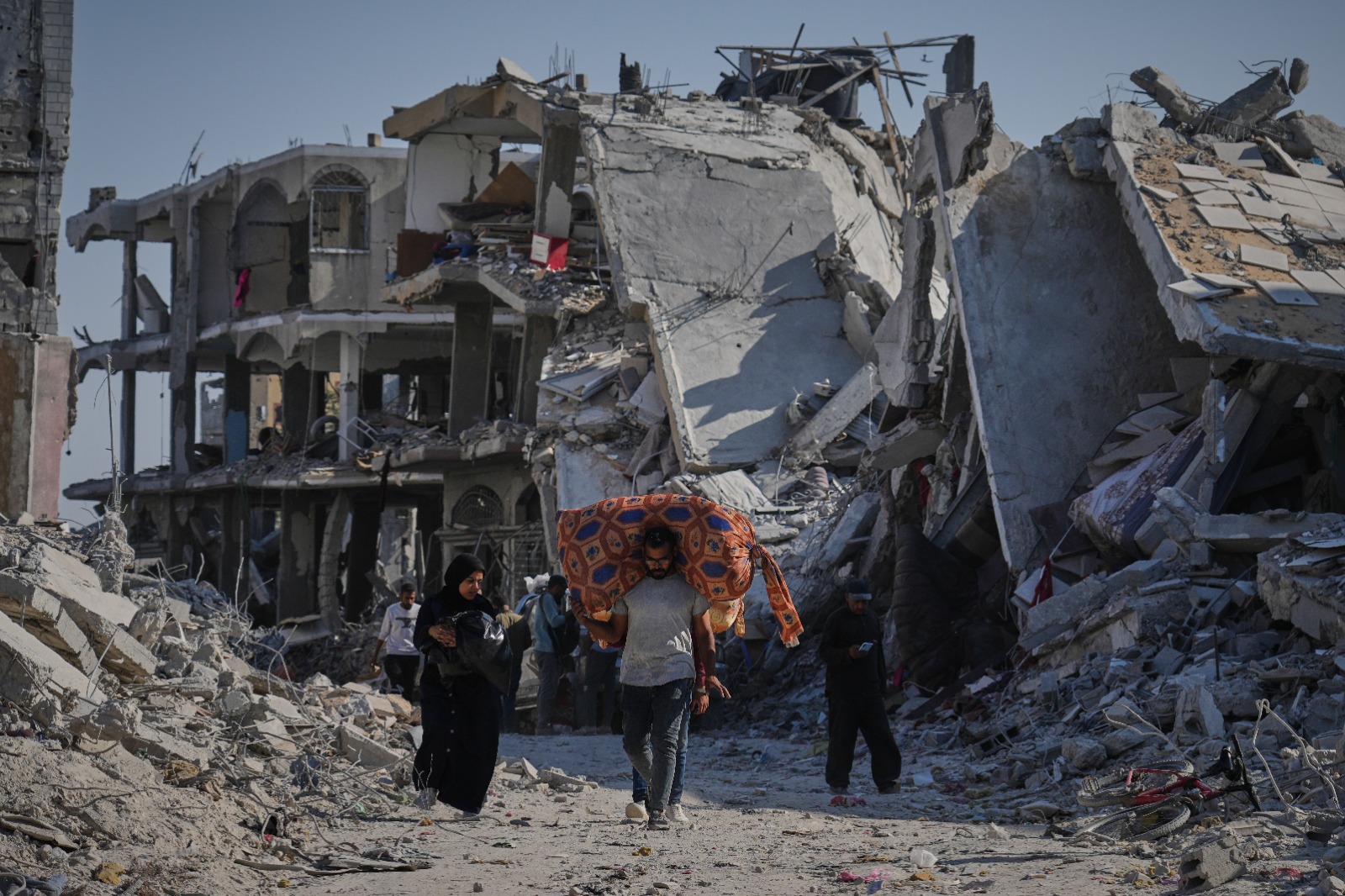
Tel Aviv(AP): Israel's military said it struck multiple targets on Sunday in Gaza, using aircraft and artillery, after it said Hamas shot at Israeli soldiers who were inside the area still under Israeli control, the first major test of the ceasefire reached over a week ago.
Prime Minister Benjamin Netanyahu held consultations with Israel's security heads and directed the military to take “strong action” against any ceasefire violations, but did not threaten to return to war.
Hamas said that it was not connected to any clashes in Rafah in Southern Gaza.
The strikes came as Israel identified the remains of two hostages released by Hamas overnight, and the Palestinian group said talks to launch the second phase of ceasefire negotiations have begun.
Prime Minister Benjamin Netanyahu's office said the bodies belonged to Ronen Engel, a father of three from Kibbutz Nir Oz, and Sonthaya Oakkharasri, a Thai agricultural worker killed at Kibbutz Be'eri.
Meanwhile, Israel threatened to keep the Rafah border crossing between Gaza and Egypt closed “until further notice.” The statement by Netanyahu's office said reopening Rafah would depend on how Hamas fulfils its ceasefire role of returning the remains of all 28 deceased hostages.
In the past week, Hamas has handed over the remains of 13 bodies, 12 of which have been identified as hostages. Israel said one of the bodies released did not belong to a hostage.
Israel has released 150 bodies of Palestinians back to Gaza, including 15 on Sunday, according to the Gaza Health Ministry, part of the Hamas-run government.
Israel has neither identified the bodies nor said how they died. The ministry has posted photos of dozens of bodies on its website to help families and relatives attempting to locate their loved ones, but the bodies were decomposed, blackened and some were missing limbs and teeth. Only 25 bodies have been identified, the Health Ministry said.
After Israel and Hamas exchanged 20 living hostages for more than 1,900 Palestinian prisoners and detainees, the handover of the remains of deceased hostages and prisoners remains a major issue in the first stage of the ceasefire proposed by US President Donald Trump.
A major scale-up of aid, including the opening of the Rafah border crossing, for humanitarian aid and people entering or leaving Gaza, is the other central issue.
The next stages of the ceasefire will focus on disarming Hamas, Israeli withdrawal from additional areas it controls in Gaza, and future governance of the devastated territory.
Let the Truth be known. If you read VB and like VB, please be a VB Supporter and Help us deliver the Truth to one and all.
4 workers die after being buried under coal slurry in Jharkhand's Dhanbad

Dhanbad (Jharkhand) (PTI): At least four workers died after being buried under coal slurry in Jharkhand's Dhanbad district on Saturday, a police official said.
The incident took place at Moonidih coal washery in the command area of Bharat Coking Coal Limited (BCCL).
"Bodies of all four workers were dug out of debris during a rescue operation," Putki police station in-charge Waqar Hussain told PTI.
The incident took place when coal slurry was being loaded into trucks by workers, during which a large chunk of slurry fell and trapped several workers underneath, officials said.
The deceased have been identified as Manik Bauri, Dinesh Bauri, Deepak Bauri, and Hemlal Gope.
Meanwhile, the family members of the deceased and local villagers placed the bodies in front of the washery gate and began a protest.
They demanded compensation, jobs for dependents and action against those responsible for the incident.
Police and administration officials are trying to pacify the protesters, an official said.