Israeli drone strike kills five, including three children, in southern Lebanon
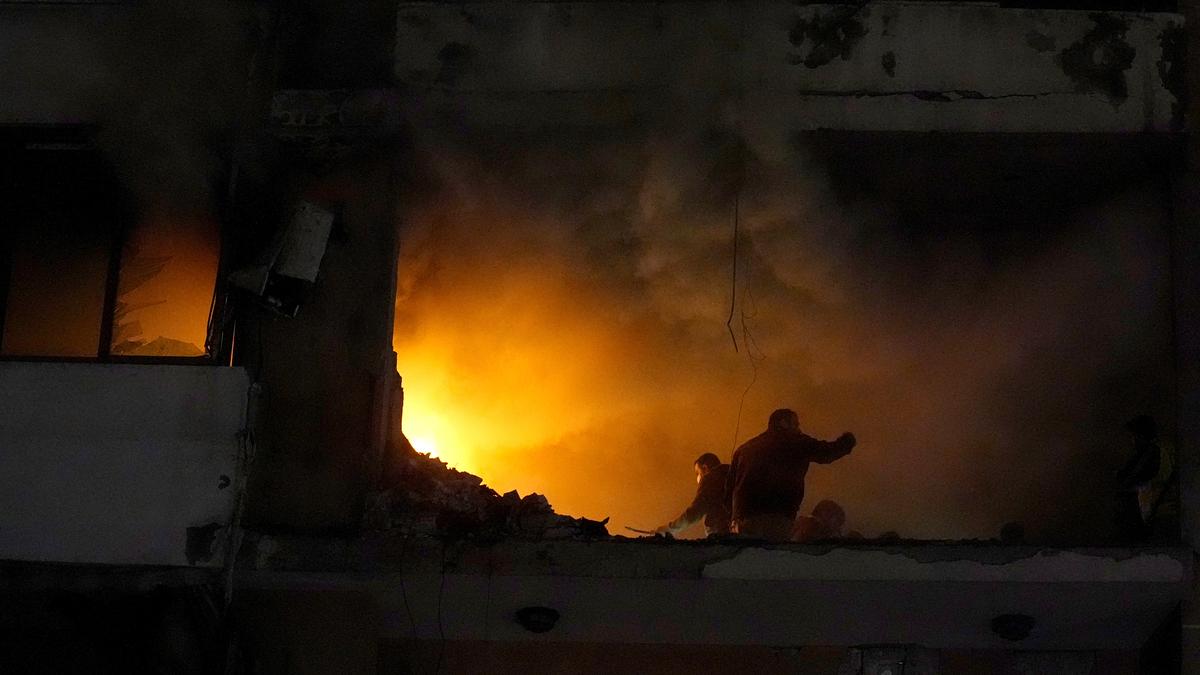
Beirut (AP): An Israeli drone strike in southern Lebanon killed five people Sunday, including three children, Lebanon's Health Ministry said. Parliament Speaker Nabih Berri said four of the killed, the three children as well as their father, held US citizenship.
Two others were wounded, including the mother in the family.
Officials at the US Embassy in Beirut could not immediately be reached for comment.
Since a ceasefire agreement was reached in November to end Israel's monthslong war with the Hezbollah group, Israel has continued to strike southern and eastern Lebanon almost daily.
Under the Washington-brokered ceasefire, both the Hezbollah group and Israel were supposed to withdraw their forces from southern Lebanon and halt strikes against each other. Israeli forces have continue to occupy five Lebanese hilltop points by the border.
Lebanese officials have warned that the ongoing strikes risk the country's recent efforts to disarm the group and further worsen its shaky security situation. Hezbollah has maintained that it no longer has a military presence south of the Litani River, and has refused to speak of disarmament without Israel stopping its attacks and withdrawing from southern Lebanese territory.
President Joseph Aoun, who earlier landed in New York ahead of the United Nations General Assembly, condemned the strike and called on the international community to pressure Israel to stop. Aoun, alongside the Lebanese government under Prime Minister Nawaf Salam, endorsed an agreement last month that would gradually disarm Hezbollah.
“There is no peace above the blood of our children,” said Aoun in a statement from his office.
The monthslong war between Hezbollah and Israel killed some 4,000 people in Lebanon and displaced residents across southern and eastern Lebanon.
Prime Minister Salam, who like Aoun, vowed upon his appointment earlier this year to disarm all non-state groups, said the strike was a “message of intimidation targeting our people returning to their villages in the south.”
“The states sponsoring the cessation of hostilities agreement must exert maximum pressure on Israel to immediately halt its attacks, withdraw from occupied Lebanese territories, and release prisoners,” said Salam in a post on X, formerly Twitter.
Hezbollah officials say the ongoing strikes justify their refusal to give up their arms, and claim that the ceasefire agreement and monitoring mechanism with the United States, France, and United Nations peacekeeping forces is ineffective.
“They have proven once again that resorting to official protection under international auspices has not provided them with security and stability,” said Hezbollah parliamentarian Hassan Fadlallah. “All these attacks and killings perpetrated by the enemy will not push our people to abandon their land and rights, and they will only strengthen the people of the south's adherence to the option of resistance.”
Let the Truth be known. If you read VB and like VB, please be a VB Supporter and Help us deliver the Truth to one and all.
JD(U) supremo Nitish Kumar's son Nishant to start maiden political yatra on Sunday
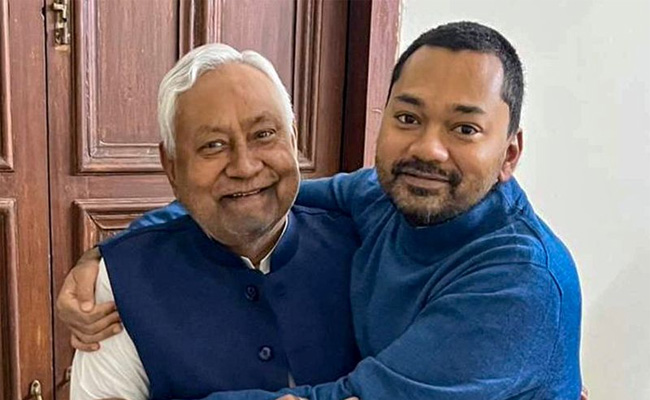
Patna (PTI): JD(U) leader Nishant Kumar, whose belated political entry has shone a ray of hope on the party rattled by his father Nitish Kumar's sudden relinquishment of power, is set to launch his first public outreach programme in Bihar on Sunday.
The 45-year-old, who joined the party only last month, is scheduled to kick off his "Sadbhav Yatra" (goodwill tour) from Valmiki Nagar in West Champaran district.
The place had been chosen multiple times by his father as the starting point for numerous "yatras" during a nearly two-decade-long tenure as the chief minister of Bihar.
The party, which is still recovering from the shock of the 75-year-old leader's sudden decision to enter the Rajya Sabha, triggering fears of a diminution in political clout, has coined a catchy slogan to announce the arrival of the heir apparent.
"Jai Nishant, tay Nishant" (victory for Nishant, his rise is inevitable) is a catchphrase that can now be seen splashed on the JD(U)'s posters as well as social media handles.
On the eve of the launch of "Sadbhav Yatra", JD(U) spokesperson and MLC Neeraj Kumar told a press conference in West Champaran's headquarters of Bettiah, that "Nishant belongs to the land where Emperor Asoka was born.
Like his father, he is starting a Yatra from the land of Sage Valmiki".
"Both Valmiki and Asoka epitomised renunciation. Our supreme leader Nitish Kumar showed the same spirit of renunciation when he decided to give up the seat of power to live by his convictions," said Neeraj Kumar.
He added that "the same dispassion for power has been demonstrated by Nishant. He could have secured a berth in the new Cabinet or the state legislature any time. But he chose to shun shortcuts and earn his spurs through the tried and tested method of mass contact".
After the JD(U) supremo stepped down as chief minister, a new government headed by BJP leader Samrat Choudhary has been formed in Bihar.
"Nitish Kumar had always followed the policy of zero tolerance for crime, corruption and communalism. The new government, too, has adopted the same as its motto. In Nishant, we have a leader who will carry forward the legacy," said Neeraj Kumar.