Israel's Netanyahu blames Biden for withholding weapons; US officials say that's not the whole story
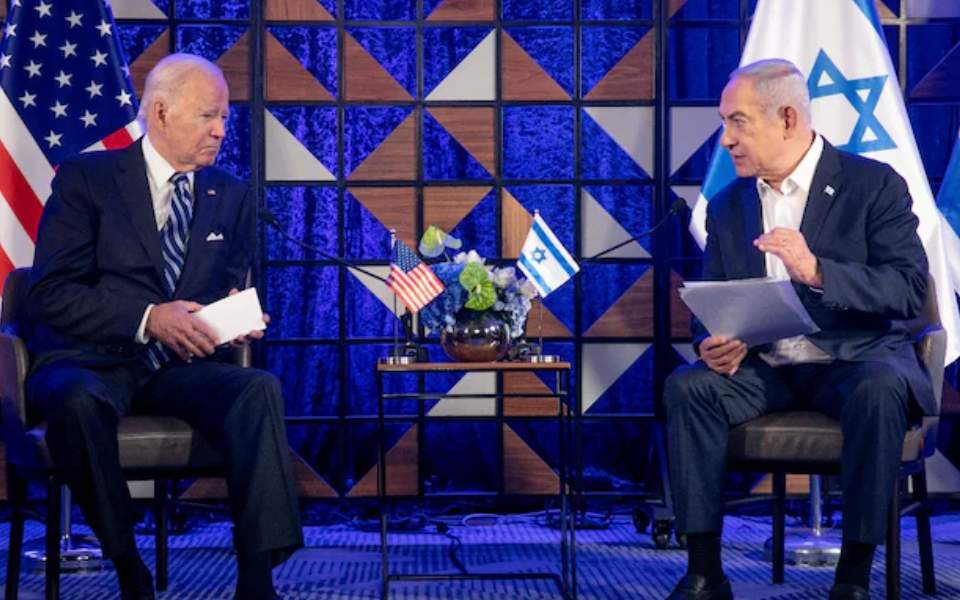
Jerusalem, Jun 18: Israeli Prime Minister Benjamin Netanyahu on Tuesday claimed the United States is withholding weapons and implied this was slowing Israel's offensive in the southern Gaza city of Rafah, where fighting has exacerbated the already dire humanitarian situation for Palestinians.
President Joe Biden has delayed delivering certain heavy bombs to Israel since May over concerns about the killing of civilians in Gaza.
However, the administration has gone to lengths to avoid any suggestion that Israeli forces have crossed a red line in the deepening Rafah invasion, which would trigger a more sweeping ban on arms transfers.
Netanyahu, in a short video, spoke directly to the camera in English as he lobbed sharp criticisms at Biden over “bottlenecks” in arms transfers.
“It's inconceivable that in the past few months, the administration has been withholding weapons and ammunitions to Israel,” Netanyahu said, adding, “Give us the tools and we'll finish the job a lot faster.”
Netanyahu didn't elaborate on what weapons were being held back, and the Israeli military declined to respond to a request for comment. Ophir Falk, a foreign policy adviser to Netanyahu, deferred questions on details to the US government.
Netanyahu also claimed that US Secretary of State Antony Blinken, in a recent visit to Israel, said he was working around the clock to end the delays.
However, Blinken said the only pause in sending weapons to Israel was related to those heavy bombs from May, speaking during a news conference Tuesday at the State Department.
“We, as you know, are continuing to review one shipment that President Biden has talked about with regard to 2,000-pound bombs because of our concerns about their use in a densely populated area like Rafah,” Blinken said. “That remains under review. But everything else is moving as it normally would.”
The US has given Israel crucial military and diplomatic support since the war against the Palestinian Hamas group began in October. Israel blames civilian deaths on Hamas, saying group operate among the population.
Two top Democrats in Congress have cleared the way for a USD 15 billion US sale of F-15s to Israel to move forward, after a delay while one sought answers from the Biden administration on Israel's current use of US weapons in the war in Gaza.
With the Israeli offensive now in its ninth month, international criticism has grown steadily over US support for Israel's air and ground campaign in Gaza, and the top United Nations court has concluded there is a “plausible risk of genocide” in Gaza — a charge Israel strongly denies.
Both Netanyahu and Biden are balancing their own domestic political problems against the explosive Mideast situation, and the embattled Israeli leader has grown increasingly resistant to Biden's public charm offensives and private pleading.
Months of cease-fire talks have failed to find common ground between Hamas and Israeli leaders. Both Israel and Hamas have been reluctant to fully endorse a US-backed plan that would return hostages, clear the way for an end to the war, and commence a rebuilding effort of the decimated territory.
Netanyahu disbanded his war Cabinet on Monday, a move that consolidates his influence over the Israel-Hamas war and likely diminishes the odds of a cease-fire anytime soon.
The move may also give Netanyahu leeway to draw out the war to stay in power. Critics accuse him of delaying because an end to the war would mean an investigation into the government's failures on October 7 and raise the likelihood of new elections when the prime minister's popularity is low.
Netanyahu denies the allegations and says he is committed to destroying Hamas' military and governing capabilities — no matter how long that may take.
Israel's war against Hamas in Gaza has killed more than 37,100 people, according to Gaza's Health Ministry. The war has largely cut off the flow of food, medicine and other supplies to Palestinians who are facing widespread hunger.
Israel launched the war after Hamas' October 7 attack, in which group stormed into southern Israel, killed some 1,200 people — mostly civilians — and abducted about 250.
Let the Truth be known. If you read VB and like VB, please be a VB Supporter and Help us deliver the Truth to one and all.
11-year-old dies by suicide after sexual assault in Bareilly; accused arrested

Bareilly (UP) (PTI): A 26-year-old man has been arrested for allegedly sexually assaulting an 11-year-old girl, who later died by suicide due to trauma, police said on Wednesday.
The post-mortem report confirmed sexual assault and multiple injuries on the minor's body, including bite marks and nail scratches. The cause of death was found to be hanging, they said.
According to ASP (South) Anshika Verma, the incident came to light on 27 April, when the girl, a Class 8 student, was found hanging at her home in Deoria Abdullaganj village under the Mirganj police station area. Initially, the family reported the death as suicide and was reluctant to pursue police action.
"The autopsy report changed the course of the investigation. It confirmed sexual assault and noted severe physical trauma. The cause of death was confirmed as hanging," Verma said.
A breakthrough in the case came from the statement of the victim's younger sister, who told police that the accused, Zeeshan (26), a resident of the same village, frequently loitered near the minor's school and allegedly gave her small sums of money to keep his interactions with her a secret, she said.
Police said that on the day of the incident, the accused allegedly lured the minor and assaulted her. Distressed by the incident, the child later took her own life while her mother was away, police said.
"Based on technical surveillance, CCTV footage, and statements from the family, we established Zeeshan's involvement. He was arrested near the Mirganj weekly market on Tuesday," they said.