Italy wins Euro 2020, beats England in penalty shootout
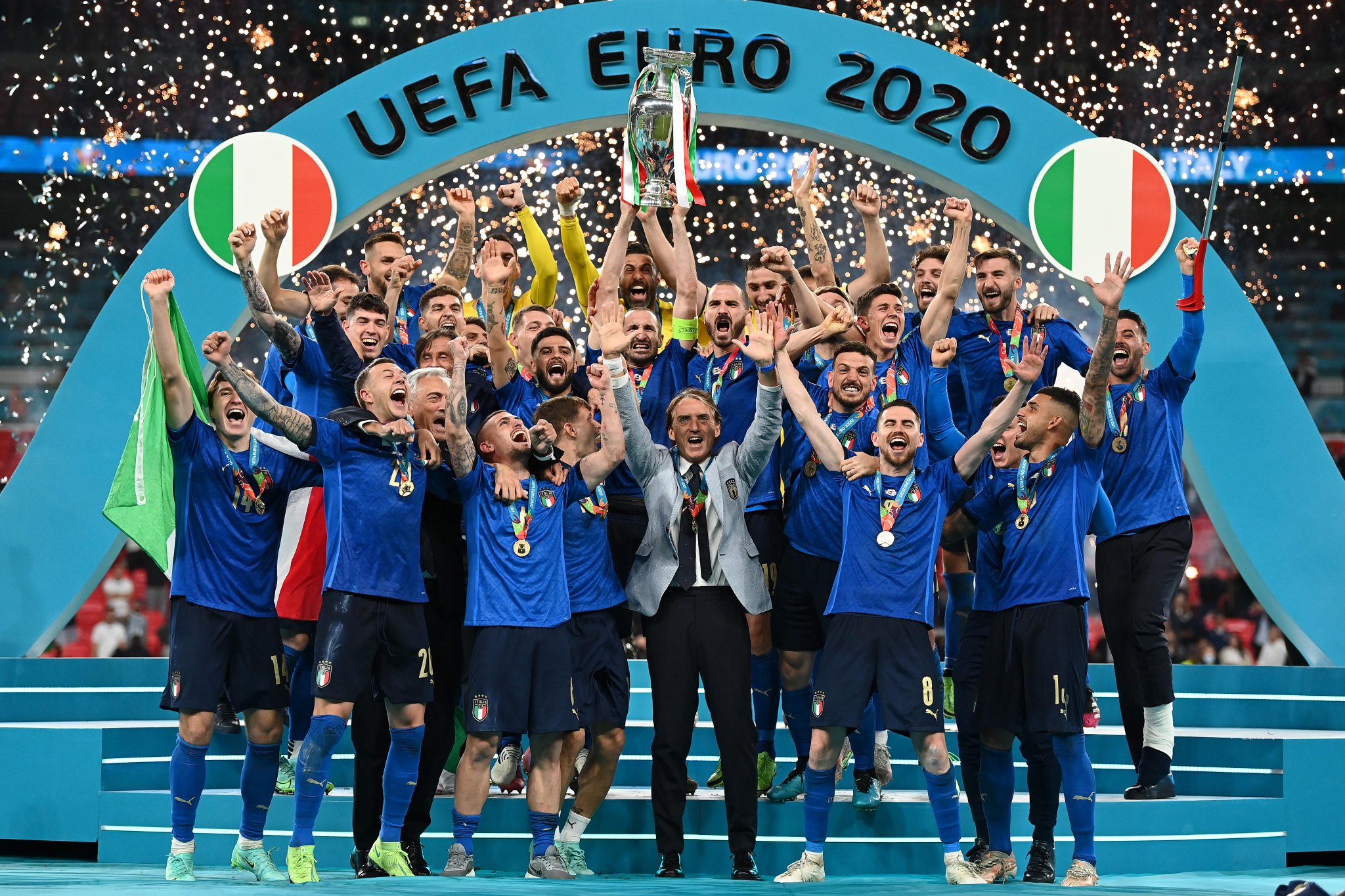
London: Italian soccer's redemption story is complete. England's painful half-century wait for a major title goes on.
And it just had to be because of a penalty shootout.
Italy won the European Championship for the second time by beating England 3-2 on penalties on Sunday. The match finished 1-1 after extra time.
Gianluigi Donnarumma dived to his left and saved the decisive spot kick by Bukayo Saka, England's third straight failure from the penalty spot in the shooutout in front of its own fans at Wembley Stadium.
It was less than four years ago that the Italians plunged to the lowest moment of its soccer history by failing to qualify for the World Cup for the first time in six decades. Now, they are the best team in Europe and on a national-record 34-match unbeaten run under Roberto Mancini, their suave coach.
England was playing in its first major final in 55 years. It's the latest heartache in shootouts at major tournaments, after defeats in 1990, 1996, 1998, 2004, 2006 and 2012.
England went ahead in the second minute when Luke Shaw scored the fastest goal in a European Championship final. Leonardo Bonucci equalized in the 67th.
Saka, a 19-year-old Londoner, was embraced by several England players after his miss. England coach Gareth Southgate hugged Jadon Sancho, who missed the previous England penalty, while Marcus Rashford -- the other one to miss -- walked off down the tunnel.
Sancho and Rashford had been brought on in the final minute of extra time, seemingly as specialist penalty takers.
Donnarumma was in tears as he was embraced by his teammates as they sprinted toward him from the halfway line, where they watched the second penalty shootout in a European Championship final.
They then headed to the other end of the field and ran as one, diving to the ground in front of their own fans.
It was Italy's second continental title after 1968, to add to the country's four World Cups.
That the match went to extra time -- like three of the six European finals before it -- was not unexpected, given both semifinals also went the distance and the defensive solidity of both the teams.
In fact, Italy's famously robust defense was only really opened up once in the entire 90 minutes and that resulted in Shaw's goal, a half-volley that went in off the near post from Kieran Trippier's cross.
It was Shaw's first goal for England and it prompted a fist-pump between David Beckham and Tom Cruise in the VIP box amid an explosion of joy around Wembley.
The fact that it was set up by Trippier, a full back recalled to the team as part of a change of system to a 3-4-3 for the final, would have brought extra satisfaction to Southgate.
Then, England barely saw the ball for the rest of the game.
Italy's midfielders dominated possession, started playing their pretty passing routines and England resorted to getting nine or even all 10 outfield players behind the ball. It was reminiscent of the 2018 World Cup semifinals, when England also scored early against Croatia then spent most of the game chasing its opponent's midfield.
Initially, the Italians could only muster long-range efforts but the equalizer arrived from much closer in.
A right-wing corner was flicked on at the near post, Marco Verratti had a stooping header tipped onto the post by Pickford, and Bonucci put the ball in from close range.
Still, England managed to hold on for extra time and actually had the better of the final stages.
Let the Truth be known. If you read VB and like VB, please be a VB Supporter and Help us deliver the Truth to one and all.
Two injuries, one DNF, a DQ as India end messy World Relays campaign
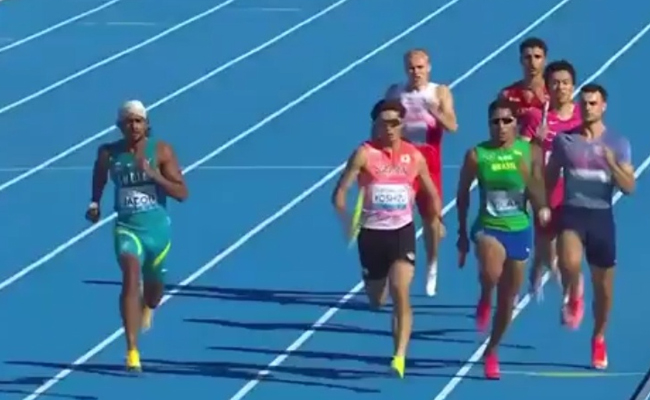
Gaborone (Botswana) (PTI): Amoj Jacob and Ragul Kumar got injured during the men's 4x400m and 4x100 races respectively as India ended their World Athletics Relays campaign in disappointment on the second day of competitions here on Sunday.
The Indian camp had high hopes of making the 2027 World Championships in the men's 4x400m relay but the team did not finish (DNF) the race as Jacob suffered cramps and pulled out of the race after taking the baton from the first leg runner Dharamveer Choudhary. Rajesh Ramesh and Vishal TK were to run in the third and fourth legs.
Those teams which could not qualify for the 2027 Beijing World Championships by reaching the final round of each of the six relay events on Saturday were given another chance in the second qualification round on Sunday.
The top two teams in each of the two heats (in all six relay events) booked the Beijing ticket on Sunday.
India will now have to try and qualify for the World Championships through the Top Lists of the World Athletics, which is a long and tedious process.
In the men's 4x100m race, third leg runner Ragul Kumar fell down the track after failing to hand over the baton inside the exchange zone to fourth leg runner Gurindervir Singh, which clearly showed the lack of coordination among the runners.
Harsh Santosh Raut and Animesh Kujur ran the first two legs.
The Indian quartet was disqualified and Kumar was seen being taken away from the Field of Play with the help of the volunteers.
It was a comedy of errors in the case of the women's 4x100m race, which saw the baton being dropped during an exchange between first leg runner Tamanna and second runner Nithya Gandhe, though the Indians finished the race in 53.09 seconds.
Gandhe started running quite a distance, but after realising that the baton was not in her hand, she turned and ran back to pick it up.
The only silver-lining for the Indian contingent was the national record time in the mixed 4x100m relay race, though the quartet of Ragul Kumar, Nithya Gandhe, Animesh Kujur and Sneha SS finished sixth in heat number two with a time of 41.35 seconds, bettering the previous national mark of 42.30 seconds set in March in Chandigarh.
The mixed 4x400m relay quartet of Theerthesh P Shetty, Kumari Saloni, Nihal William and Rashdeep Kaur ended at fifth in heat number one with a time of 3 minutes and 19.40 seconds.
On Saturday, all the five Indian relay teams had failed to make it to the respective final rounds and thus missed out on the 2027 World Championships berths.