Jaahnavi Kandula to be awarded master's degree posthumously: Chancellor of Northeastern University
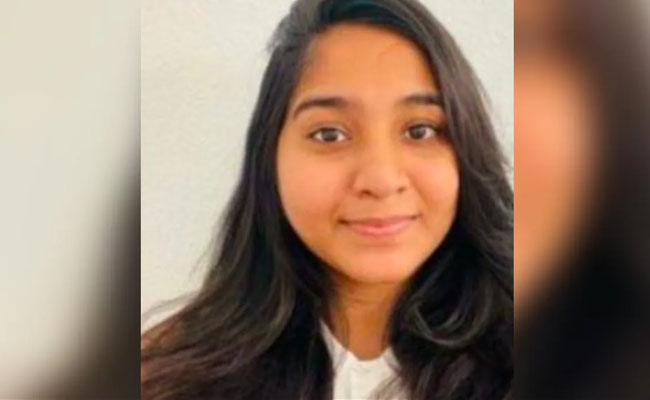
Seattle (PTI): Jaahnavi Kandula, the Indian student who was struck and killed by a speeding police car here will be awarded her master's degree posthumously, the Chancellor of Northeastern University has announced, hoping that the ongoing probe will bring a measure of justice and accountability.
Kandula, a 23-year-old student at Washington State's Northeastern University was struck at a pedestrian crossing on the night of January 23.
Kandula was set to graduate this coming December with a master's degree in information systems from the Seattle campus of Northeastern University. Her family said she was working toward supporting her mother in India.
She was struck by a police vehicle driven by Officer Kevin Dave when she was crossing a street. He was driving 74 mph (more than 119 kmh) on the way to a report of a drug overdose call.
In bodycam footage released on Monday by the Seattle Police Department, Officer Daniel Auderer laughed about the deadly crash and dismissed any implication Dave might be at fault or that a criminal investigation was necessary.
In the video, Auderer, who is captured on body camera while discussing the fatal collision, can be heard saying, "Yeah, just write a check. USD 11,000. She was 26 anyway, she had limited value."
Saddened by Kandula's death, Kenneth W. Henderson, Chancellor of Northeastern University in a statement issued on the varsity's official Facebook page on Friday said that." Her loss will be felt deeply by students, staff, and faculty. The university plans to award Jaahnavi her degree posthumously and present it to her family.
"In the days following this tragedy, our Seattle campus community joined together in a vigil of remembrance and solidarity. At the time, our dean Dave Thurman wrote of Jaahnavi's tremendous engagement, noting that all on our Seattle campus, "loved her bubbly laugh, sense of humor and infectious personality," the post read.
This week, Jaahnavi's friends and loved ones are enduring the additional pain of new developments related to this tragedy, he noted.
"Callous and insensitive remarks by a Seattle police officer have become public, reopening wounds and deepening our collective heartbreak," Henderson wrote.
He acknowledged that the Indian student community across all Northeastern campuses has been especially impacted by this tragedy and its aftermath.
"We stand in solidarity with you and have every expectation that the ongoing investigations will bring a measure of justice and accountability," the Chancellor of Northeastern University said in the statement.
"When a group of us are experiencing anguish, we are all in pain. These are the times when we must draw strength from each other and move forward in unity. Next week, we will convene campus gatherings to allow our community to join together in harmony," he added.
India has taken up Kandula's case with the US government as well as with local officials in Washington state.
"Recent reports including in the media of the handling of Ms Jaahnavi Kandula's death in a road accident in Seattle in January are deeply troubling," the Consulate General of India in San Francisco tweeted on Wednesday.
"We have taken up the matter strongly with local authorities in Seattle & Washington State as well as senior officials in Washington DC for a thorough investigation & action against those involved in this tragic case," the mission said.
The Consulate and the Embassy will continue to closely follow up on this matter with all concerned authorities, it added.
Let the Truth be known. If you read VB and like VB, please be a VB Supporter and Help us deliver the Truth to one and all.
AIITA welcomes Karnataka’s ban on obscene songs in school events

Bhatkal: The Karnataka unit of the All India Ideal Teachers Association (AIITA) has welcomed the Karnataka government’s decision to strictly ban school children from dancing to obscene songs during educational and cultural programmes in government, aided, and private schools across the state.
AIITA Karnataka State President M. R. Manvi congratulated the government for taking what he termed an important step to preserve the sanctity of education.
“Such decisions to safeguard the dignity of school children and uphold the values of education are the need of the hour. This rule should not be limited to government schools alone but must be strictly implemented in all private educational institutions as well,” he said.
He further urged the government to address other concerns within school programmes.
“The government should not only prohibit obscene dances in the name of school anniversaries, but also ensure that plays and dialogues that incite religious hatred are avoided. Schools should be centres of harmony, not platforms for spreading hatred,” he added.
According to a recent circular issued by the Department of School Education and Literacy, obscene dances are adversely affecting the mental health and moral values of students.
In this regard, schools have been advised to use songs that promote nationalism, positive thinking, the greatness of Kannada culture, and value-based traditions instead of inappropriate content during programmes.
The circular also emphasises that students should be dressed in decent attire.
AIITA also backed the department’s warning that disciplinary action would be taken against head teachers if such guidelines are violated. The association has further demanded that district Deputy Directors of Public Instruction strictly monitor the implementation of these rules.