Jacinda Ardern to step down as New Zealand Prime Minister
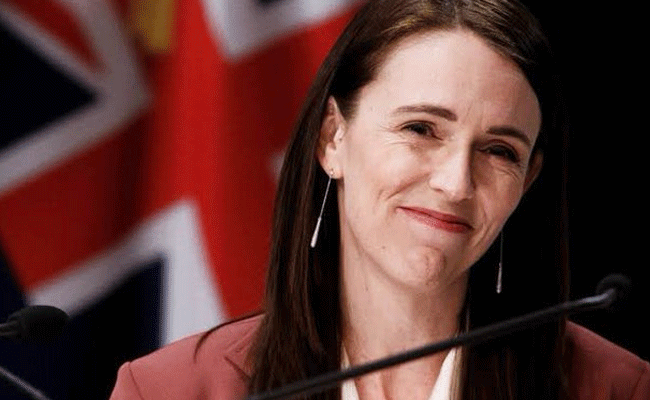
Wellington (AP): New Zealand Prime Minister Jacinda Ardern, whose empathetic handling of the nation's worst mass-shooting and health-driven response to the coronavirus pandemic led her to become an international icon but who faced mounting criticism at home, said Thursday she was leaving office.
Fighting back tears, Ardern told reporters in Napier that February 7 will be her last day as prime minister.
"I am entering now my sixth year in office, and for each of those years, I have given my absolute all," she said.
She also announced that New Zealand's next general elections would be held on October 14, and that she would remain a lawmaker until then.
It's unclear who will take over as prime minister until the election. Deputy Prime Minister Grant Robertson announced he wouldn't be contesting for the leadership of the Labour Party, throwing the competition open.
Ardern described her job as among the most privileged but challenging and said doing it required having a reserve to face the unexpected. She said she no longer had that reserve to serve another term.
She said her time in office has been fulfilling but challenging. "But I am not leaving because it was hard. Had that been the case I probably would have departed two months into the job. I am leaving because with such a privileged role, comes responsibility, the responsibility to know when you are the right person to lead, and also, when you are not. I know what this job takes, and I know that I no longer have enough in the tank to do it justice. It is that simple," she said.
Ardern had been facing tough election prospects. Her liberal Labour Party won re-election two years ago in a landslide of historic proportions, but recent polls have put her party behind its conservative rivals.
She was lauded globally for her country's initial handling of the coronavirus pandemic after New Zealand managed for months to stop the virus at its borders. But that zero-tolerance strategy was abandoned once it was challenged by new variants and vaccines became available.
She faced tougher criticism at home that the strategy was too strict.
Ardern in December announced a Royal Commission of Inquiry would look into whether the government made the right decisions in battling COVID-19 and how it can better prepare for future pandemics. Its report is due next year.
In March 2019, Ardern faced one of the darkest days in New Zealand's history when a white supremacist gunman stormed two mosques in Christchurch and slaughtered 51 people. She was widely praised for the way she embraced the survivors and New Zealand's Muslim community in the aftermath.
Let the Truth be known. If you read VB and like VB, please be a VB Supporter and Help us deliver the Truth to one and all.
Karnataka School Edu Dept prohibits children from being made to dance to obscene songs
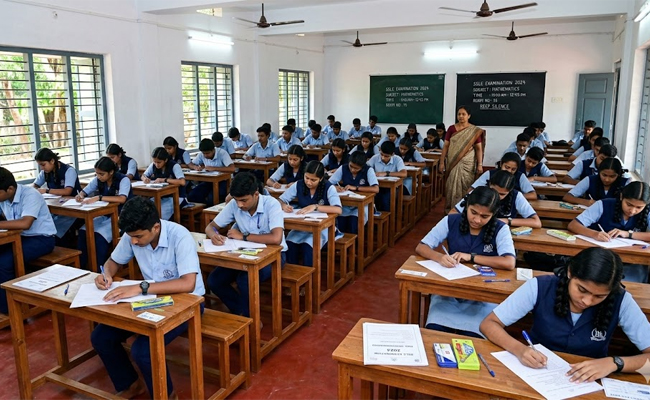
Bengaluru (PTI): The Karnataka School Education Department has issued a circular strictly prohibiting children from being made to dance to obscene songs in educational and cultural programmes.
It stated that such dances would negatively impact students' mental health and moral values. It will create indiscipline and harm the sanctity of education.
"All the Deputy Directors (Administration) of the state's School Education Department have been asked to take strict measures to prevent children or students from dancing to obscene songs in all government, aided and unaided schools in the state," the office of the commissioner of the School Education Department said in a recent circular.
"If it is found that children are being made to dance to obscene songs, appropriate action will be taken against the headmaster or management of such school," it added.
The department also listed certain measures in this regard, which include: strictly prohibiting children from being made to dance to obscene songs during educational and cultural programmes; selecting songs that are inspiring, positive, instilling national pride in children and reflecting the greatness, dignity, values, culture, and morality of the state.
Stating that the school headmaster and management are responsible for selecting songs and dances for cultural programmes, it said, they should also ensure that students wear decent clothes in dance or cultural programmes.