Jack Ma asks Zuckerberg to 'fix' Facebook
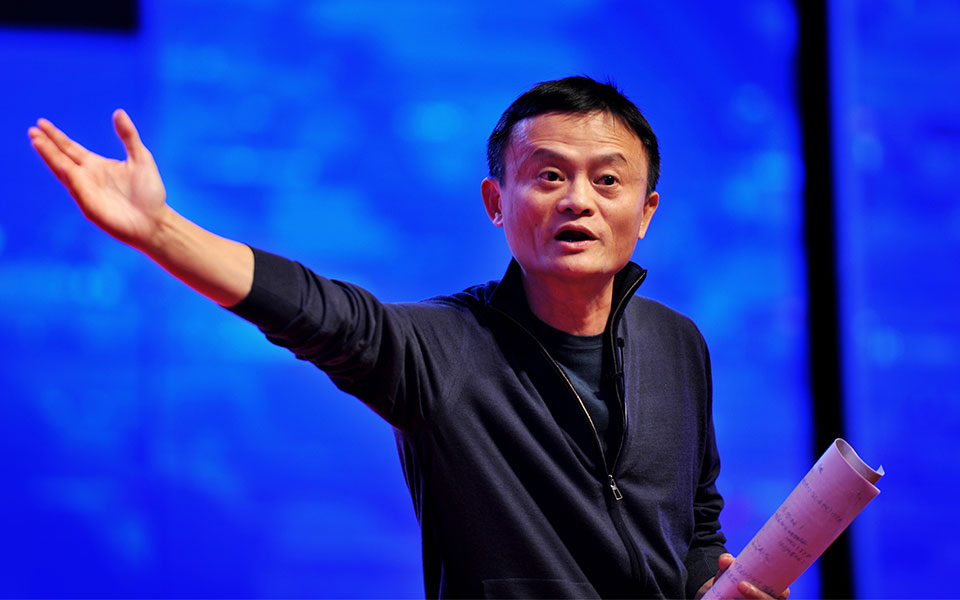
Beijing, April 10: Jack Ma, founder and chairman of Chinese e-commerce giant Alibaba Group, has asked Facebook CEO Mark Zuckerberg to "fix" the social networking giant that is mired in data breach controversy.
Attending the Boao Forum for Asia annual conference, which runs from April 8 to 11, Ma told delegates that Zuckerberg should "really take it seriously".
"It is the time to fix it. It is the time for the CEO to really take it seriously. I think the problems will be solved," Ma said.
Zuckerberg told Congress in written testimony on Monday that he was "responsible for" not preventing the social media platform from being used for harm, including fake news, foreign interference in elections and hate speech.
"We didn't take a broad enough view of our responsibility and that was a big mistake," Xinhua news agency quoted Zuckerburg as saying in a prepared testimony released by the US House Energy and Commerce Committee.
"It was my mistake, and I'm sorry. I started Facebook, I run it and I'm responsible for what happens here," he said in the remarks he is expected to deliver in a hearing on Wednesday.
His apology came after the social media giant found itself embroiled in a widening scandal that a British data firm called Cambridge Analytica had improperly gathered detailed Facebook information on 87 million users.
On US-China trade war, Ma said it was normal for the world's two biggest economies to have problems with trade, but tackling them with a trade war is just like treating a flu with chemotherapies.
"You are not solving the problem of the cold, you are destroying the whole body, the whole system," Ma made the comment while attending a dinner with International Monetary Fund Managing Director Christine Lagarde.
Ma said that trade is about mutual respect and that nobody can stop globalisation.
"Trade is about rules and negotiations. If trade stops, war starts," he said.
Speaking of the US-China trade deficit, Ma dismissed the issue as a problem, citing economic growth and a low jobless rate in the US as well as huge profit made by US firms in the bilateral trade.
"Today as a businessman, I don't feel that trade deficit is a problem," he said.
For her part, Lagarde also warned of the risk of temptation for inward policies, protectionism and closing off to the outside world.
She suggested reducing trade barriers in the service industry where there is "a big, big upside" in promoting openness.
The executive also cautioned challenges to the global economy, including corporate debt and demographic change, saying that "the sun is shining, but we have to look at the cloud arising".
Globalisation has not been inclusive enough in the past decades, but there are ways to fix it, Ma said.
He also said the world is facing a lot of challenges from poverty, environment and technology, noting that innovation is the only way to solve these challenges and problems.
Let the Truth be known. If you read VB and like VB, please be a VB Supporter and Help us deliver the Truth to one and all.
Centre spent Rs 76.13 lakh on print media ads for RSS centenary, reveals RTI

New Delhi: The Union Ministry of Culture allegedly spent Rs 76.13 lakh on print advertisements marking the 100-year celebrations of the Rashtriya Swayamsevak Sangh (RSS), according to a Right to Information (RTI) reply.
The information was sought by RTI activist Ajay Basudev Bose, who filed an application seeking details on expenditure incurred by the ministry for advertisements commemorating the RSS centenary.
Bose shared a picture of the reply from the ministry on his official ‘X’ handle.
“It is informed that an amount of Rs 76,13,129 has been spent on advertisement given in various print media by the Ministry of Culture on the occasion of the completion of 100 years of RSS,” the government’s reply stated.
RTI reply shows Min of Culture Govt of India spent a Whopping Rs 76L,13K,129 on Advertisement in Print Media on occasion of 100 yrs of #RSS
— AJAY Basudev Bose (@AjayBos93388306) April 16, 2026
When Everyone knows RSS is Not Registered & Does not Pay any Tax is it justified to spend Tax Payers Money on such Private event??@RSSorg… pic.twitter.com/dW4IUtdNCg
Bose questioned the expenditure in the post X, “when Everyone knows RSS is Not Registered & Does not Pay any Tax is it justified to spend Tax Payers Money on such Private event??”
Reacting to the development, Karnataka’s IT-BT and Panchayat Raj Minister Priyank Kharge also criticised the spending.
In a post on X, he asked why public money was being used for what he described as a “private ideological project.”
"Modi Sarkar spent Rs 76,13,129 of public money on newspaper advertisements to celebrate 100 years of the RSS. Why is Government spending taxpayers money on an unregistered, non-tax-paying organisation to celebrate their centenary?," he added.
Why is public money being used to serve a private ideological project?
— Priyank Kharge / ಪ್ರಿಯಾಂಕ್ ಖರ್ಗೆ (@PriyankKharge) April 16, 2026
Modi Sarkar spent ₹76,13,129 of public money on newspaper advertisements to celebrate 100 years of the RSS.
Why is Government spending taxpayers money on an unregistered, non-tax-paying organisation to… pic.twitter.com/EoZ6Pim3IM
According to reports, the RSS describes itself as a volunteer-based organisation and has stated that it functions as a body of individuals rather than a registered entity.
Founded by Keshav Baliram Hedgewar in 1925, the organisation is marking its centenary year beginning from Vijaydashami in 2025, with the milestone observed on October 2.