Japan Sushi Tycoon Pays Record Rs. 21 cr For Rare Bluefin Tuna Fish
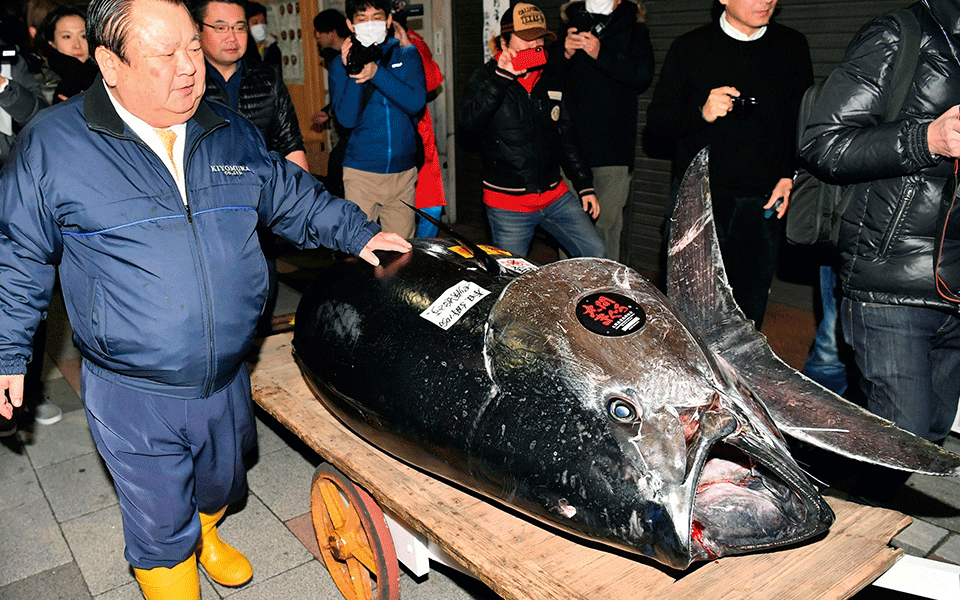
TOKYO, Jan 05: A Japanese sushi entrepreneur paid a record $3.1 million for a giant tuna Saturday as Tokyo's new fish market, which replaced the world-famous Tsukiji late last year, held its first pre-dawn New Year's auction.
Bidding stopped at a whopping 333.6 million yen for the enormous 278-kilogramme (612-pound) fish an endangered species that was caught off Japan's northern coast.
Self-styled "Tuna King" Kiyoshi Kimura paid the top price, which doubled the previous record of 155 million yen also paid by him in 2013.
"It's the best tuna. I was able to buy a delicious, super fresh tuna," the sushi restaurant chain owner proudly told reporters.
"The price was higher than originally thought, but I hope our customers will eat this excellent tuna," Kimura said after the auction.
Tsukiji the world's biggest fish market and a popular tourist attraction in an area packed with restaurants and shops moved in October to Toyosu, a former gas plant a bit further east.
Opened in 1935, Tsukiji was best known for its pre-dawn daily auctions of tuna, caught from all corners of the world, for use by everyone from top Michelin-star sushi chefs to ordinary grocery stores.
Especially at the first auction of the new year, wholesalers and sushi tycoons have been known to pay eye-watering prices for the biggest and best fish.
Despite the relocation, the auction ritual remained intact: before dawn, buyers in rubber boots were inspecting the quality of the giant fresh and frozen tunas by examining the neatly cut tail end with flashlights and rubbing slices between their fingers.
At 5:10 am, handbells rang to signal the auction was underway and the air filled with the sound of auctioneers yelling prices at buyers, who raised fingers to indicate interest.
In a roar of wholesalers surrounding the day's best tuna, an auctioneer hammered the top price as the Kimura side outbid his rival wholesaler in a thrilling head-to-head battle.
"Black diamond"
Japan consumes a large portion of the global bluefin catch, a highly prized sushi ingredient known in Japan as "kuro maguro" (black tuna) and dubbed by sushi connoisseurs as the "black diamond" because of its scarcity.
A single piece of "otoro", or the fish's fatty underbelly, can cost dozens of dollars at high-end Tokyo restaurants.
The new market has already opened its auction warehouse to visitors to witness the organised pre-dawn chaos from a balcony, hoping to take over a must-see spot for tourists from Tsukiji.
"Finally, the first New Year auction was held at Toyosu market," said Yoshihiko Otaki, a market official.
"We have a lot of tuna here like we did in Tsukiji," he said.
Tokyo governor Yuriko Koike, wearing white rubber boots, said: "I sincerely hope this market will be loved by many people."
The relocation was a lengthy and controversial process.
Few would contest the fact that Tsukiji was past its prime, and there were concerns about outdated fire regulations and hygiene controls.
In contrast, the new market, located around two kilometres to the east at Toyosu, boasts state-of-the-art refrigeration facilities and is nearly twice as big again as Tsukiji.
But Toyosu is located on the site of a former gas plant and the soil was found to be contaminated, forcing local authorities to spend millions of dollars to clean it up and delaying the move.
Courtesy: www.ndtv.com
Let the Truth be known. If you read VB and like VB, please be a VB Supporter and Help us deliver the Truth to one and all.
Women BJP MLAs protest against opposition in UP assembly premises

Lucknow (PTI): Women BJP MLAs held a protest in the Vidhan Bhawan complex before the one-day special session of Uttar Pradesh assembly, slamming the opposition for defeating the passage of a bill, which would have led to implementation of the Women's Reservation Law, in the Lok Sabha.
This followed another demonstration by Samajwadi Party MLAs, who alleged that the BJP was misleading public in the name of women's reservation.
The women BJP legislators assembled in front of Chaudhary Charan Singh's statue in the assembly premises, holding banners inscribed with the slogan "Insult to Matrushakti (women's power), India will not tolerate it". The protesting members entered the main hall of Vidhan Bhawan carrying the banners.
Participating in the protest, the state Minister for Women Welfare and Child Development, Baby Rani Maurya, told reporters that all opposition parties, including the Samajwadi Party and the Congress, had opposed the women's reservation, a stance for which they would have to pay a heavy political price.
"On this issue, all of us women stand united. We will ensure that we secure our reservation," she said.
BJP MLA Ketki Singh remarked that their protest represents the collective outrage of millions of women across the state.
Singh asserted that the opposition has betrayed women by creating hurdles in the path of women's reservation. The current demonstration is merely the beginning, and very soon, women from every street, intersection and household will join the protest movement, she said.
Minister Vijaylakshmi Gautam said, "We strongly condemn the despicable act committed by the Samajwadi Party and the Congress in an attempt to hold back 'half the population' (women). Their action was directed against the very bill that Prime Minister Narendra Modi had introduced to empower and strengthen Nari Shakti (women's power), and which he strived to pass expeditiously."
Uttar Pradesh assembly is holding a one-day special session on Thursday. During the session, the government is set to move a censure motion against the opposition parties over their failure to pass the Constitution Amendment Bill, which would have led to implementation of the Women's Reservation Act, in the Lok Sabha.