Japanese PM Shinzo Abe set to resign over health concerns: Reports
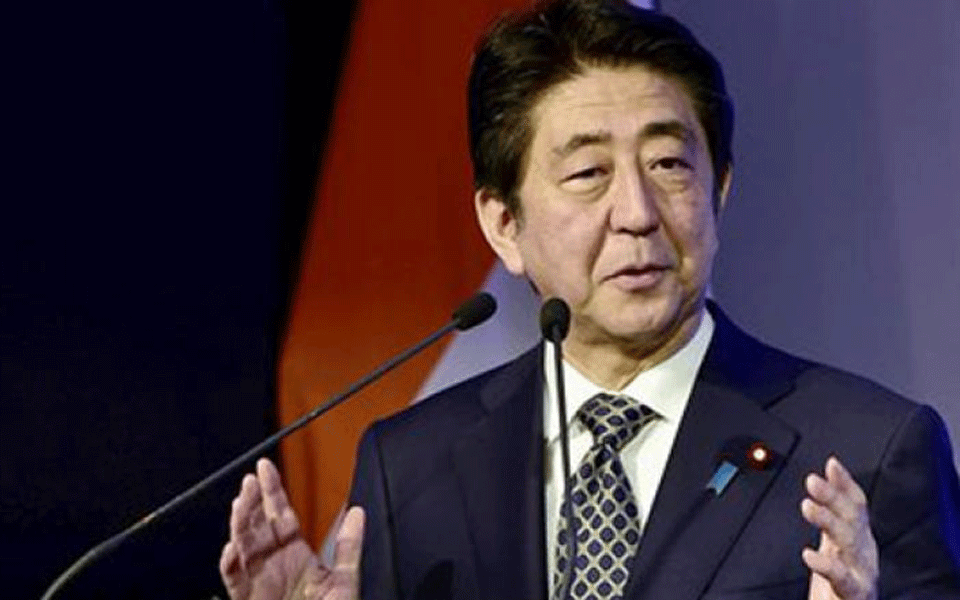
Tokyo: Japan's Prime Minister Shinzo Abe has expressed his intention to step down due to his declining health, according to reports on Friday by NHK and other Japanese media.
The Prime Minister's Office said the report could not be immediately confirmed, but that Abe was believed to be meeting top ruling officials at the party headquarters. The Liberal Democratic Party spokesman did not answer the phone.
Concerns about Abe's chronic health issues, simmering since earlier this summer, intensified this month when he visited a Tokyo hospital two weeks in a row for unspecified health checkups.
Abe, whose term ends in September 2021, is expected to stay on until a new party leader is elected and formally approved by the parliament.
He had abruptly resigned from his first stint in office in 2007 due to his health, which was fueling concerns about his recent condition.
Abe on Monday became Japan's longest serving prime minister by consecutive days in office, eclipsing the record of Eisaku Sato, his great-uncle, who served 2,798 days from 1964 to 1972.
But his second hospital visit on Monday eclipsed festivity for his record and has accelerated speculation and political maneuvering toward a post-Abe regime.
Abe has acknowledged having ulcerative colitis since he was a teenager and has said the condition was controlled with treatment. He has not made clear if it is related to his recent health issues or hospital visits.
After his recent hospital visits were reported, top officials from Abe's Cabinet and the ruling party said Abe was overworked and badly needed rest.
His health concerns added to speculation that Abe's days in office are numbered, when his support ratings are already at their lowest levels due to his handling of the coronavirus pandemic and its severe impact on the economy, on top of a slew of political scandals.
Shigeru Ishiba, a 63-year-old hawkish former defence minister and Abe's archrival, is a favorite next leader in media surveys, though he is less popular within the ruling party.
A low-key former Foreign Minister Fumio Kishida, Defence Minister Taro Kono, Chief Cabinet Secretary Yoshihide Suga, and economic revitalisation minister Yasutoshi Nishimura, who is in charge of coronavirus measures, are widely speculated in Japanese media as his potential successors.
The end of his scandal-laden first stint as prime minister was the beginning of six years of annual leadership change, remembered as an era of revolving door politics that lacked stability and long-term policies.
When he returned to office in 2012, Abe vowed to revitalise the nation and get its economy out of its deflationary doldrums with his Abenomics formula, which combines fiscal stimulus, monetary easing and structural reforms.
Let the Truth be known. If you read VB and like VB, please be a VB Supporter and Help us deliver the Truth to one and all.
Commercial LPG hike: Delhi restaurant owners warn of higher menu rates, job losses
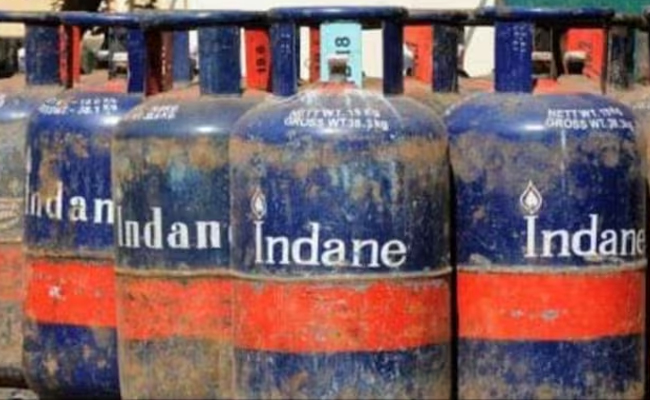
New Delhi (PTI) A day after a 50 per cent rise in commercial LPG cylinder prices, Delhi's food business, with restaurant owners and street vendors have warned of higher menu rates, financial strain and potential job losses if the trend persists.
The price of commercial LPG was hiked by a steep Rs 993 per 19 kg cylinder, marking the third consecutive monthly hike amid rising global energy prices linked to the West Asia conflict.
For many in the restaurant industry, the spike has been both sudden and steep.
Manpreet Singh, honorary treasurer of the National Restaurant Association of India, said that eateries are already grappling with supply challenges alongside rising costs.
"There is a huge difficulty in getting these cylinders, and black marketing is also increasing in many unregulated sectors," he said, noting that prices that were once around Rs 1,600, often dropping to nearly Rs 1,300 with discounts, have now surged to between Rs 3,000 and Rs 4,000 per cylinder.
He further added that a medium-sized restaurant typically uses between two and five cylinders daily, making the increase particularly burdensome as costs mount.
Singh further said that as costs mount, smaller establishments could struggle to stay afloat. Instead, the association has advised restaurants to shift towards piped natural gas connections through Indraprastha Gas Limited as a more sustainable alternative.
"If this problem continues, PNG is the only long-term solution," he said, adding that temporary measures like coal offer limited relief due to slower cooking times and that it can largely be used only for tandoors.
Echoing similar concerns, Kabir Suri, owner of Mamagoto in Khan Market, said the impact is already visible across the industry. "There has been almost a threefold increase in cylinder prices for restaurants," he said, adding that rising fuel and logistics costs are compounding the pressure.
"If this continues, it will become a significant financial burden, and food prices will inevitably go up. Adding to this burden, higher fuel costs are also affecting logistics and transportation, making a price rise unavoidable. The extent of the impact will vary between small eateries and large chains depending on their scale," he said.
Global oil prices have surged nearly 50 per cent following disruptions in energy supply chains due to the West Asia conflict, pushing up commercial fuel costs and transport expenses.
A West Delhi-based restaurateur said they are trying to manage rising costs while keeping their staff secure. "We are trying to ensure that our staff, from kitchen workers to waiters, are paid on time and do not face immediate hardship," the owner said.
"We are a small restaurant with seating for about 20 to 25 people at a time. But if this continues for long, we will have to take difficult calls. There is only so much we can absorb, and menu prices will have to go up. We hope this does not continue for a longer period," he said.
Another restaurant owner in North Delhi, who did not wish to be named, said operational adjustments alone may not be enough. "We are checking our costs very carefully and trying to cut wherever possible, but if fuel prices remain high, it will eventually affect how we run the business," the owner said.
"Coal helps in tandoor cooking, but it takes more time," the owner further added.
The strain is even more acute among street vendors, many of whom operate on thin margins. A vendor in Saket said he had recently expanded his business, moving from a mobile cart to a rented outlet.
"I have a family to feed and more responsibilities now. Earlier, I managed with a moving cart, but after renting the place, expenses increased," he said. "Whenever cylinders were unavailable, I had to buy them at higher rates in the black market. Now even regular supply is too expensive, and if this continues, we may have to shut down," he added.
In Laxmi Nagar, another vendor said they are struggling to keep the business running. "Sometimes we even used domestic cylinders from home when supply ran out because we had to keep the stall running," he said, adding that rising costs leave little choice but to increase prices or bear losses.
On April 1, the rates of commercial LPG cylinders were hiked by Rs 195.50 per cylinder, followed by a Rs 114.5 hike on March 1, taking the total increase over the past three months to Rs 1,303. With the latest revision, a 19 kg commercial LPG cylinder now costs Rs 3,371.5 in Delhi, up from Rs 2,078.5 earlier.
The prices of domestic LPG cylinders used for household cooking have remained unchanged. They were last increased by Rs 60 per 14.2 kg cylinder on March 7 and currently cost Rs 913 in Delhi.