Japanese Prime Minister Takaichi looks to translate her election gains into new conservative shift
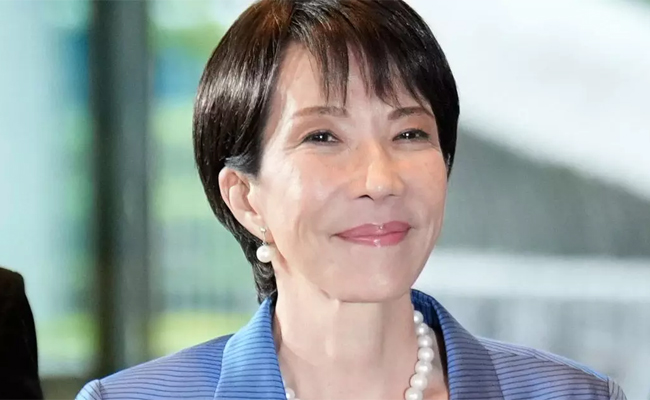
Tokyo (AP): Japanese Prime Minister Sanae Takaichi's gamble that her personal popularity would lead to big election gains for her struggling party paid off hugely.
On Monday, she began the process of translating that new power, made manifest in a two-thirds supermajority gained in parliamentary elections the day before, into what she hopes will be sweeping conservative legislation that will shift Japanese security, immigration, economic and social policies.
The first steps include reappointing her Cabinet and pushing forward on a delayed budget, and the votes next week that will re-elect her as prime minister.
Takaichi, in an interview with public television network NHK following her victory, said her efforts will make Japan strong and prosperous.
ALSO READ: Detractors falsely linked me to woman, now claiming she gave birth to my child: Tej Pratap
NHK, citing vote count results, said Takaichi's Liberal Democratic Party, or LDP, alone secured 316 seats by early Monday, comfortably surpassing a 261-seat absolute majority in the 465-member lower house, the more powerful of Japan's two-chamber parliament. That is a record since the party's foundation in 1955. With the 36 seats won by its new ally, Japan Innovation Party, the ruling coalition won 352 seats.
A smiling Takaichi placed a big red ribbon above each winner's name on a signboard at LDP headquarters as accompanying party executives applauded.
Despite the lack of a majority in the upper house, the huge jump from the pre-election share in the more powerful lower house allows Takaichi to make progress on policies that aim to boost Japan's economy and military capabilities as tensions grow with China, and she tries to nurture ties with the United States.
Takaichi said she would try to gain support from the opposition while firmly pushing forward with her policy goals.
“I will be flexible,” she said.
Takaichi is popular, but the LDP, which has ruled Japan for most of the last seven decades, has been hit with funding and religious scandals in recent years. She called Sunday's early election after only three months in office, hoping to turn that around while her popularity is high.
Popular leader
-------------------
Takaichi, who took office as Japan's first female leader in October, pledged to “work, work, work,” and her style, which is seen as both playful and tough, has resonated with younger fans who say they weren't previously interested in politics.
The opposition, despite the formation of a new centrist alliance and a rising far-right, was too splintered to be a real challenger. The new opposition alliance of LDP's former coalition partner, Buddhist-backed dovish Komeito, and the liberal-leaning Constitutional Democratic Party of Japan, is projected to sink to half of their combined pre-election share of 167 seats.
Takaichi was betting with this election that her LDP party, together with its new partner, the JIP, would secure a majority.
US President Donald Trump, in a post on his Truth Social platform Sunday, congratulated Takaichi on a LANDSLIDE Victory in today's very important Vote. She is a highly respected and very popular Leader. Sanae's bold and wise decision to call for an Election paid off big time.”
Akihito Iwatake, a 53-year-old office worker, said he welcomed the big LDP win because he felt the party had become too liberal in recent years. “With Takaichi shifting things more toward the conservative side, I think that brought this positive result,” he said.
Takaichi's policies
-----------------------
Japan has recently seen far-right populists gain ground, such as the anti-globalist and surging nationalist party Sanseito. Exit polls projected a big gain for Sanseito.
The first major task for Takaichi when the lower house reconvenes in mid-February is to work on a budget bill, delayed by the election, to fund economic measures that address rising costs and sluggish wages.
Takaichi has pledged to revise security and defence policies by December to bolster Japan's offensive military capabilities, lifting a ban on weapons exports and moving further away from the country's postwar pacifist principles.
She has been pushing for tougher policies on foreigners, anti-espionage and other measures that resonate with a far-right audience, but ones that experts say could undermine civil rights.
Takaichi also wants to increase defence spending in response to Trump's pressure for Japan to spend more.
She now has time to work on these policies, without an election until 2028.
Divisive policies
---------------------
Though Takaichi said she's seeking to win support for policies seen as divisive in Japan, she largely avoided discussing ways to fund soaring military spending, how to fix diplomatic tension with China and other issues.
Despite her rightward shift, Takaichi is expected to maintain good relations with South Korea, given shared concern about threats from North Korea and China. But Seoul would still worry about a Japanese attempt to revise the country's pacifist constitution or to further build up its military because of Japan's wartime past, said Leif-Eric Easley, professor of international studies at Ewha Womans University in Seoul.
In her campaign speeches, Takaichi enthusiastically talked about the need for government spending to fund “crisis management investment and growth,” such as measures to strengthen economic security, technology and other industries. Takaichi also seeks to push tougher measures on immigration, including stricter requirements for foreign property owners and a cap on foreign residents.
Sunday's election “underscores a problematic trend in Japanese politics in which political survival takes priority over substantive policy outcomes,” said Masato Kamikubo, a Ritsumeikan University politics professor. “Whenever the government attempts necessary but unpopular reforms ... the next election looms.”
Let the Truth be known. If you read VB and like VB, please be a VB Supporter and Help us deliver the Truth to one and all.
Trump says EU has until July 4 to approve last year's trade deal or it will face higher tariffs
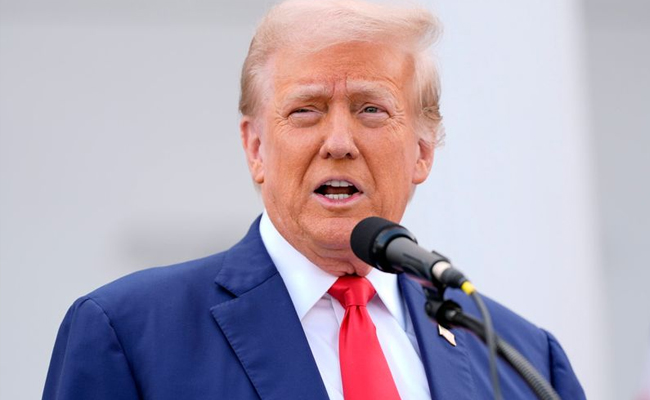
Washington (AP): President Donald Trump has said in a social media post that goods from the European Union would face higher tariff rates if the 27-member bloc fails to approve last year's trade framework by July 4.
The announcement on Thursday appeared to be a deadline extension after the president said last Friday that EU autos would face a higher 25 per cent tariff starting this week. Trump made the updated announcement after what he described as a "great call" with European Commission President Ursula von der Leyen.
Still, the US president was displeased that the European Parliament had yet to finalize the trade arrangement reached last year, which was further complicated in February by the US Supreme Court ruling that Trump lacked the legal authority to declare an economic emergency to impose the initial tariffs used to pressure the EU into talks.
"A promise was made that the EU would deliver their side of the Deal and, as per Agreement, cut their Tariffs to ZERO!" Trump posted. "I agreed to give her until our Country's 250th Birthday or, unfortunately, their Tariffs would immediately jump to much higher levels."
It was unclear from the post whether Trump was implying that the tariff rates would jump on all EU goods or the increase would only apply to autos.
His latest statement indicates he might be backing away from his earlier threat on EU autos by giving the European Parliament several more weeks to approve the agreement.
Under the original terms of the framework, the US would charge a 15 per cent tax on most goods imported from the EU.
But since the Supreme Court ruling, the administration has levied a 10 per cent tariff while investigating trade imbalances and national security issues, aiming to put in new tariffs to make up for lost revenues.