Japan's ruling party elects Sanae Takaichi as new leader, likely to become country's first female PM
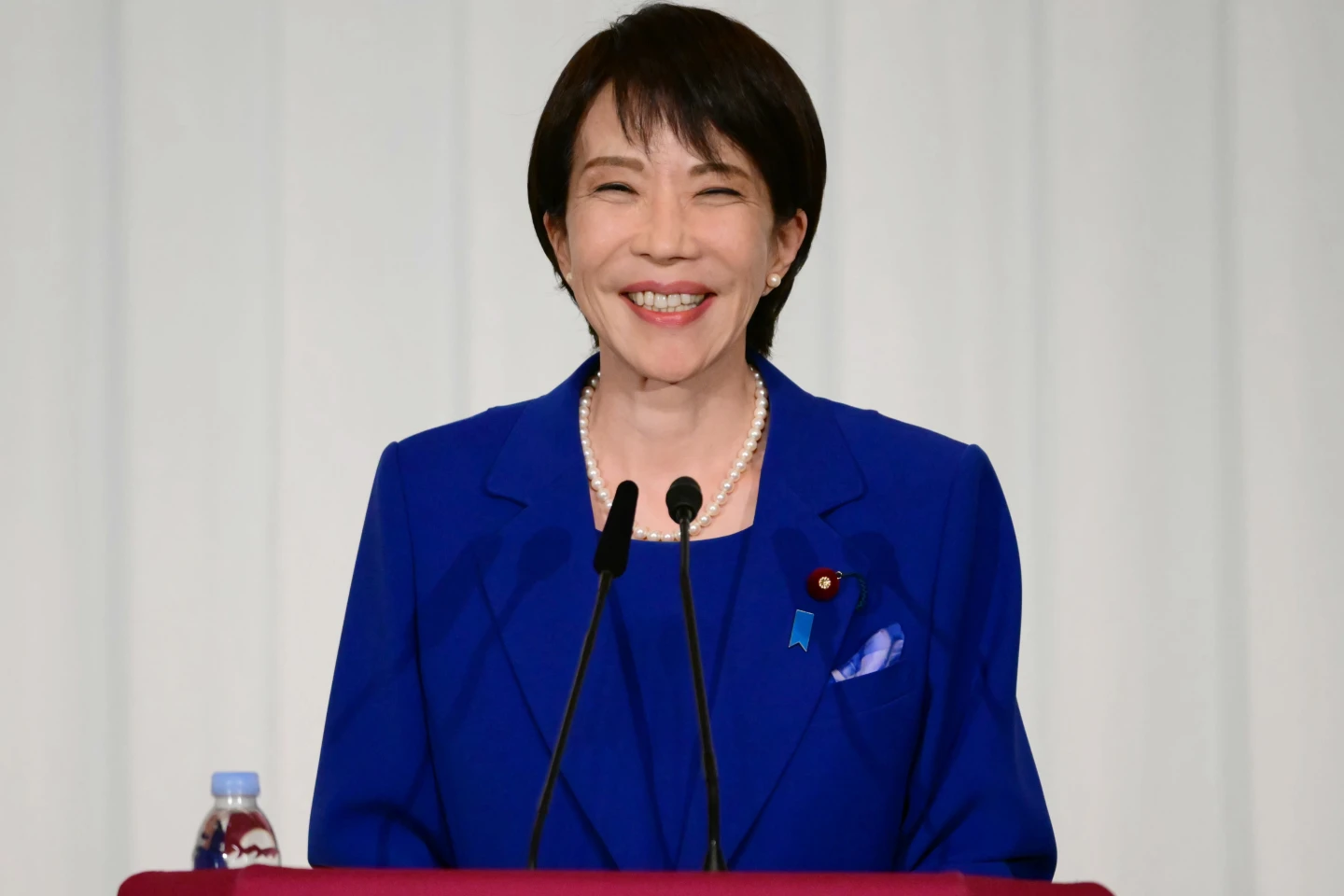
Tokyo (AP): Japan's governing party on Saturday elected former Economic Security Minister Sanae Takaichi, a hard-line ultra-conservative and China hawk, as its new leader, making her likely to become the country's first female prime minister.
In a country that ranks poorly internationally for gender equality, the 64-year-old Takaichi makes history as the first female leader of Japan's long-governing conservative Liberal Democratic Party (LDP).
Takaichi is one of the most conservative members of the male-dominated party.
An admirer of former British Prime Minister Margaret Thatcher, Takaichi is a protege of former Japanese Prime Minister Shinzo Abe's ultra-conservative vision and a regular at the Yasukuni Shrine, seen as a symbol of Japan's wartime militarism, which could complicate Tokyo's relations with its Asian neighbours.
Takaichi beat Agriculture Minister Shinjiro Koizumi, the son of popular former Prime Minister Junichiro Koizumi, in a runoff in a vote by the LDP on Saturday.
Takaichi replaces Prime Minister Shigeru Ishiba as the party hopes to regain public support and stay in power after major election losses.
She is likely to be Japan's next prime minister because the party remains by far the largest in the lower house, which determines the national leader, and because opposition groups are highly splintered.
Takaichi vows to strengthen Japan-US alliance
Takaichi later said she will immediately work on stemming rising prices, while also focusing on diplomatic and security challenges.
A parliamentary vote is expected in mid-October. The LDP, which has been criticised by opposition leaders for creating a prolonged political vacuum, said Takaichi needs to hurry because the winner will soon face a diplomatic test: a possible summit with US President Donald Trump, who could demand that Japan increase its defence spending.
A meeting is reportedly being planned for late October. Trump will travel to the Asia-Pacific Economic Cooperation summit in South Korea starting October 31.
Takaichi said ensuring the Japan-US alliance is her top diplomatic priority.
“It is essential to ... confirm the reinforcement of the Japan-US alliance,” she said. Takaichi stressed the importance of their cooperation through three-way frameworks that also include regional partners such as South Korea, Australia and the Philippines, pledging Japan's greater role in achieving a free and open Indo-Pacific.
She said she respects all tariffs and investment agreements struck between Tokyo and Washington under the Ishiba government.
Takaichi faces major domestic challenges
The LDP, whose consecutive losses in parliamentary elections in the past year have left it in the minority in both houses, needs its new leader to quickly bring back voter confidence and stability and to address challenges in and outside Japan.
Takaichi will also need cooperation from key opposition groups to implement her party's policies.
Ishiba, who achieved a 15 per cent tariff deal with Washington and put Japan's ties with South Korea and other Asian countries on track during his one-year stint, said “I hope the LDP will band together under new (party) president Takaichi to serve for the country and the people, as well as the world and for the new era.”
Ishiba, a centrist known as archrival of Abe, was virtually forced into resigning by ultra-conservative wings in the party.
There were five candidates for the job
Five candidates — two currently serving and three former ministers — vied for the LDP presidency.
Saturday's vote only involved 295 LDP parliamentarians and about 1 million dues-paying members. It only reflected 1 per cent of the Japanese public.
The LDP's choice of Takaichi, instead of the more centrist-to-liberal Koizumi, apparently underscores the party's hope to win back conservative voters who supported emerging far-right groups such as Sanseito in the July parliamentary election.
But the LDP also needs help from the opposition, which it has long neglected. The party will likely look to expand its current coalition with the moderate centrist Komeito with at least one of the key opposition parties, which are more centrist.
Takaichi shied away from her conservative and anti-China views during campaigning
Takaichi like other candidates called herself a “moderate conservative” during the run-up to the election to show their willingness to work with the opposition and stayed away from stressing her opposition to liberal social issues or anti-China policies.
Takaichi on Saturday said the Yasukuni issue should not be a diplomatic issue and that she will think about how she can “pay respect to the war dead and pray for peace.”
She supports bigger fiscal spending for growth, a stronger military and cybersecurity, as well as tougher regulations on increasing foreign tourists and labourers.
She was criticised for citing unconfirmed reports to slam foreigners for kicking deer in Nara, her hometown, and saying many foreign law offenders escaped indictments due to a shortage of translators.
Experts say candidates avoided discussing their usual political views on historical issues, same-sex marriage and other contentious topics, including the party's political funds scandal, which was the biggest reason for their election losses, and anti-corruption measures. Their avoidance of these subjects raised doubts over the party's ability to regain public trust, analysts said.
Let the Truth be known. If you read VB and like VB, please be a VB Supporter and Help us deliver the Truth to one and all.
4 workers die after being buried under coal slurry in Jharkhand's Dhanbad

Dhanbad (Jharkhand) (PTI): At least four workers died after being buried under coal slurry in Jharkhand's Dhanbad district on Saturday, a police official said.
The incident took place at Moonidih coal washery in the command area of Bharat Coking Coal Limited (BCCL).
"Bodies of all four workers were dug out of debris during a rescue operation," Putki police station in-charge Waqar Hussain told PTI.
The incident took place when coal slurry was being loaded into trucks by workers, during which a large chunk of slurry fell and trapped several workers underneath, officials said.
The deceased have been identified as Manik Bauri, Dinesh Bauri, Deepak Bauri, and Hemlal Gope.
Meanwhile, the family members of the deceased and local villagers placed the bodies in front of the washery gate and began a protest.
They demanded compensation, jobs for dependents and action against those responsible for the incident.
Police and administration officials are trying to pacify the protesters, an official said.