JF-17 used to shoot down Indian aircraft, says Pak military
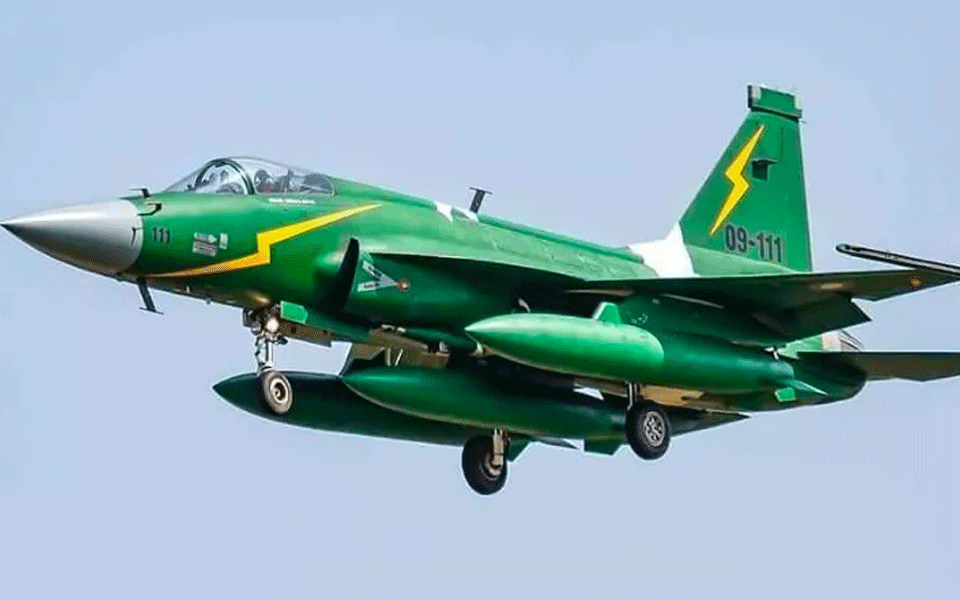
Islamabad, Mar 25: Pakistan's military has said for the first time that JF-17 Thunder combat aircraft developed jointly with China were used in retaliation to India's pre-emptive strikes on a JeM terror camp in Balakot as it once again denied that US-made F-16 jets were involved in the attack.
Referring to the aerial dogfight with the Indian Air Force jets after the February 14 Pulwama terror attack claimed by Pakistan-based Jaish-e-Mohammed (JeM), Pakistan Army spokesman Major General Asif Ghafoor said the Indian jets violated the Pakistani airspace on February 26, dropping payloads without inflicting any casualties or damage to infrastructure.
The next day, Pakistan Air Force retaliated and downed a MiG-21 in an aerial combat and captured Indian pilot Abhinandan Varthaman, who was handed over to India later.
"The aircraft which engaged those targets and fought them were JF-17. As regards to how to use F-16, in what context [they] were used or not - because at that point of time our entire Air Force was airborne - now it remains between Pakistan and the US to see how the MoUs regarding the use of F-16 have been adhered to or otherwise," Ghafoor told Russian news agency Sputnik International.
A day after Pakistan's attempt to retaliate the IAF's air strikes at the Jaish-e-Mohammed terror camp in Balakot, the Indian armed forces displayed parts of an AIM-120 AMRAAM (Advanced Medium-Range Air-to-Air Missile) fired by an F-16, which fell in Indian territory. New Delhi had also underlined that electronic signatures captured by Indian radars had established the use of F-16 for the offensive.
The US State Department announced that it was seeking more information from Pakistan on the potential use of American-made F-16 jets against India in violation of the end-user agreement.
The Pakistani General noted that Islamabad was discussing the use of its JF-17 with the US citing "friendly relations" with Washington, stressing, however, that the country would use whatever it deemed necessary if it came to "legitimate self-defence."
He said Pakistan only wanted to tell India that it has the capability to hit back. He said Pakistan has the footage of the operation.
At the time of the attack, the media reports said that the PAF military aircraft that shot down the Mig-21 Bison was JF-17 Thunder Block II multirole fighter jet.
"Proud to announce, I was project director for JF-17 Thunder program jointly produced by Pakistan and China during the tenure of General Pervez Musharraf," retired PAF Air Marshal Shahid Latif said at the time.
"Today, same jets targeted and shot down Indian Jets which entered Pakistani Airspace," he said soon after the attack last month.
Ghafoor said that Pakistan's nuclear arsenal is a deterrence tool to prevent wars in the region.
"Pakistan holds the position that this capability eliminates the possibility of conventional war. No sane country having this capability would talk about using it," Ghafoor was quoted as saying by the Russian news agency.
He said Pakistan would take steps towards non-proliferation of nuclear arms but only if India does the same.
Ghafoor said Pakistan would welcome every effort, including that of Russia, which can bring peace in the region.
On military cooperation with Russia, Ghafoor said Pakistan is negotiating defence industry cooperation with Moscow in the areas of aviation, air defence systems and anti-tank missiles.
Pakistan's defence ties with Russia have moved past the bitter Cold War hostilities in recent years and the chill in the relations between Pakistan and the US has further pushed the country towards Russia and China.
Let the Truth be known. If you read VB and like VB, please be a VB Supporter and Help us deliver the Truth to one and all.
Ladakh a living land of dharma for centuries: Amit Shah
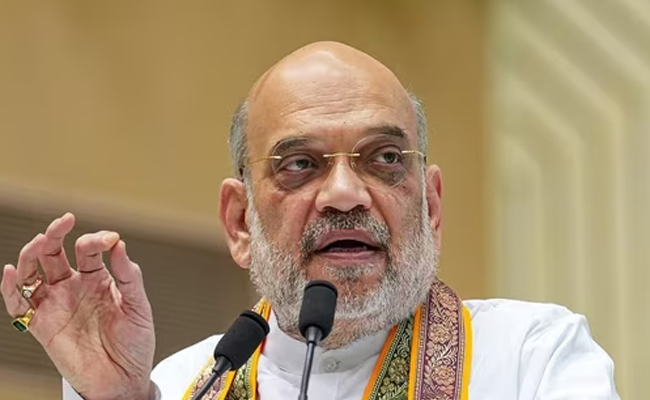
Leh/Jammu (PTI): Union Home Minister Amit Shah on Friday described the return of sacred relics of Lord Buddha to Ladakh after 75 years as a "historic reunion" and said that the Union Territory has remained a "living land of dharma", preserving and nurturing Buddhist knowledge for centuries.
Stressing the relevance of Buddha's teachings in modern times, Shah said the message of peace, compassion and the middle path was even more important today than it was 2,500 years ago.
"Ladakh has been a living land of dharma for centuries. When the Dalai Lama comes here, he says this land is not merely a geographical land but a living laboratory of Buddhist culture and compassion," Shah said, speaking after the inauguration of the sacred holy relics exposition of Tathagata Buddha and the 2569th Buddha Purnima celebrations at Jivetsal in Leh during his two-day visit to Ladakh.
Calling Ladakh a land of compassion, he said this land has preserved and nurtured knowledge. "Whenever Buddhism faced crises, this land worked to protect the teachings of Buddha. And when peace returned, it helped to expand and carry forward that preserved wisdom," he added.
"Unless one internalises knowledge and makes it a part of oneself, liberation is not possible. Knowledge is incomplete without spiritual practice, while spiritual practice without knowledge is blind. Therefore, the union of spiritual practice and knowledge is the right path. Even after all this, if there is no moral discipline, one cannot lead a truly wise life. The basis of a life of wisdom is moral discipline," he said.
Shah said it was through Ladakh and adjoining routes that the teachings of Tathagata Buddha, which originated in India, spread to China and several other countries.
"The message that emerged from the land of Ladakh has become a guiding force for many people around the world to take their lives forward. The presence of these sacred relics in Ladakh reminds us that India's civilisation has, for thousands of years, given the message of peace and coexistence," he said.
He said that in a diverse region like Ladakh and Kargil, this message becomes even more relevant. "This heritage still tells us today that amidst conflict and unrest, only the path of peace and compassion can provide solutions."
He said the return of the relics on Buddha Purnima had enhanced the significance of the festival for the people of Ladakh.
"These sacred relics have come to Ladakh after 75 years. It is as if Buddha himself is present here today," Shah said, adding that followers of Buddhism and people of other faiths in Ladakh and Kargil would draw spiritual energy from the relics.
Highlighting Ladakh's role in the spread of Buddhism, Shah said Kashmir was once an ancient centre of Buddhist studies, Mahayana philosophy and Buddhist art, from where Ladakh first came into close contact with Buddhism.
He said Emperor Ashoka's envoys laid the foundation of Buddhist influence in Ladakh through Kashmir and Gandhara, while Mahayana Buddhism expanded in the region during the Kushan period between the first and third centuries CE.
The Silk Route linking Kashmir, Leh, Yarkand, Khotan and Tibet became a channel not only for trade but also for ideas, monks, manuscripts and artistic traditions, Shah said.
He added that later, Tibetan influence between the seventh and tenth centuries further enriched Ladakh through Mahayana and Vajrayana traditions.
Stressing the relevance of Buddha's teachings in modern times, Shah said the message of peace, compassion and the middle path was even more important today than it was 2,500 years ago.
"Amid conflict and unrest, only the path of peace and compassion can provide solutions," he said.
Shah also appealed to the Ladakh administration to ensure complete arrangements so that followers of all faiths, especially Buddhists, could visit and pay obeisance to the relics.
#WATCH लेह, लद्दाख: केंद्रीय गृह मंत्री अमित शाह ने कहा, "जब दलाई लामा यहां आते हैं तो वे कहते हैं कि यह भूमि केवल भौगोलिक भूमि नहीं है। यह भूमि बौद्ध संस्कृति और करुणा की जीवंत प्रयोगशाला है। इस भूमि पर ज्ञान का संरक्षण हुआ है... भारत की सभ्यता हजारों वर्षों से शांति का संदेश… https://t.co/2nwG0w2CE6 pic.twitter.com/W13itRBqeX
— ANI_HindiNews (@AHindinews) May 1, 2026