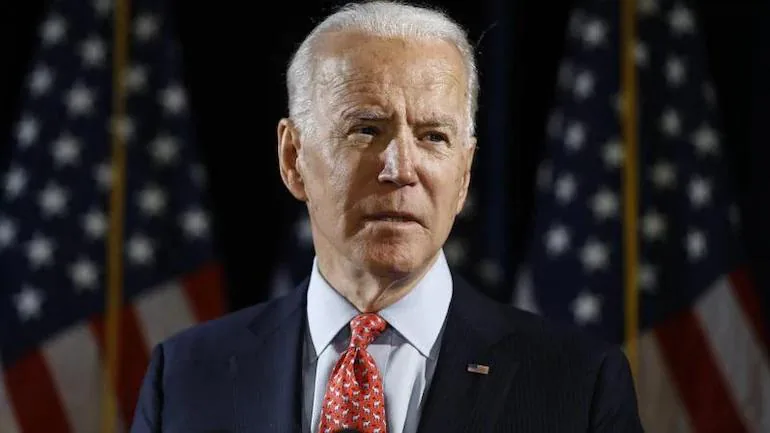
Joe Biden to receive COVID vaccine as Trump remains on sidelines
Washington, Dec 20: The leader of the Trump administration's vaccination programme says people who have been infected with the coronavirus a group that includes President Donald Trump should be vaccinated.
Moncef Slaoui, the chief adviser of Operation Warp Speed, told CNN's State of the Union on Sunday that the vaccine is safe for those who have recovered and offers stronger and potentially longer protection than does the virus itself.
We know that infection doesn't induce a very strong immune response and it wanes over time. So I think, as a clear precaution, it is appropriate to be vaccinated because it's safe," he said. I think people should be vaccinated, indeed.
Trump has not received the first of two vaccination shots, which began being administered last week as part of the largest vaccination campaign in the nation's history. Vice President Mike Pence, House Speaker Nancy Pelosi, D-Calif., and Senate Majority Leader Mitch McConnell, R-Ky., all were given doses Friday. President-elect Joe Biden was to receive his Monday.
All have chosen to publicize their injections as part of a campaign to convince a skeptical public that the vaccines are safe and effective, in hopes of finally putting an end to a pandemic that has killed more than 310,000 people in the United States and upended life around the globe.
Trump has spent the last week largely out of sight as he continues to stew about his election loss and floats increasingly outlandish schemes to remain in power. It's an approach that has bewildered top aides who see his silence as a missed opportunity for the president, who leaves office Jan. 20, to claim credit for helping oversee the speedy development of the vaccine and to burnish his legacy.
Trump was hospitalized with COVID-19 in October and given an experimental monoclonal antibody treatment that he credited for his swift recovery.
The Centers for Disease Control and Prevention's Advisory Committee on Immunization Practices said the Pfizer-BioNTech vaccine, which was the first to receive authorization, is safe and likely efficacious" in people who have been infected with COVID-19 and should be offered regardless of history of prior symptomatic or asymptomatic SARS-CoV-2 infection.
While there is no recommended minimum wait time between infection and vaccination, because reinfection is uncommon in the three months after a person is infected, the committee said people who tested positive in the preceding 90 days "may delay vaccination until near the end of this period, if desired. The advisers also recommended that those who received the kind of treatment Trump did should put off being vaccinated for at least 90 days to avoid potential interference.
Currently, there are no data on the safety and efficacy of Pfizer-BioNTech COVID-19 vaccination in persons who received monoclonal antibodies or convalescent plasma as part of COVID-19 treatment," they wrote, recommending that vaccination "be deferred for at least 90 days, as a precautionary measure until additional information becomes available, to avoid interference of the antibody treatment with vaccine-induced immune responses. Trump, who in the past has spread misinformation about vaccine risks, tweeted earlier this month that he was not scheduled to take the vaccine, but look forward to doing so at the appropriate time. The White House has said he is still in discussion with his medical team about when he should.
When the time is right, I'm sure he will remain willing to take it," White House spokesperson Brian Morgenstern echoed Friday. It's just something we're working through. Surgeon General Jerome Adams echoed that argument on CBS's Face the Nation when asked if Trump planed to receive the shot on camera to help allay concerns about its safety, especially among Republicans.
From a scientific point of view, I will remind people that the president has had COVID within the last 90 days. He received the monoclonal antibodies. And that is actually one scenario where we tell people maybe you should hold off on getting the vaccine, talk to your health provider to find out the right time, Adams said.
Dr. Anthony Fauci, the nation's top infectious diseases expert, has recommend that Trump be vaccinated publicly without delay.
Even though the president himself was infected, and he has, likely, antibodies that likely would be protective, we're not sure how long that protection lasts. So, to be doubly sure, I would recommend that he get vaccinated, he told ABC News.
Let the Truth be known. If you read VB and like VB, please be a VB Supporter and Help us deliver the Truth to one and all.
Fire breaks out in residential building in east Delhi, nine killed

New Delhi (PTI): At least nine people were killed after a fire broke out in a residential building in east Delhi's Vivek Vihar early Sunday, officials said.
The incident was reported around 3.48 am at a four-storey building in Vivek Vihar Phase-I, following which police, fire and disaster management teams rushed to the spot.
According to the police, the blaze engulfed flats on the second, third and fourth floors of the building, prompting a large-scale rescue operation.
The cause of the fire is yet to be ascertained.
"Around 10 to 15 people were rescued from the premises during the firefighting operation. Two of them, who sustained minor injuries, were shifted to the Guru Teg Bahadur Hospital," a senior police officer said.
A total of 12 fire tenders were pressed into service to douse the flames, while teams from the Delhi Disaster Management Authority (DDMA), traffic police and local police assisted in the rescue and evacuation efforts.
Police said the fire was brought under control after several hours.
The identities of the deceased are yet to be ascertained, and efforts are underway to determine the cause of the fire, police said.
Further investigation and proceedings are underway.