K P Sharma Oli appointed Nepal's new Prime Minister
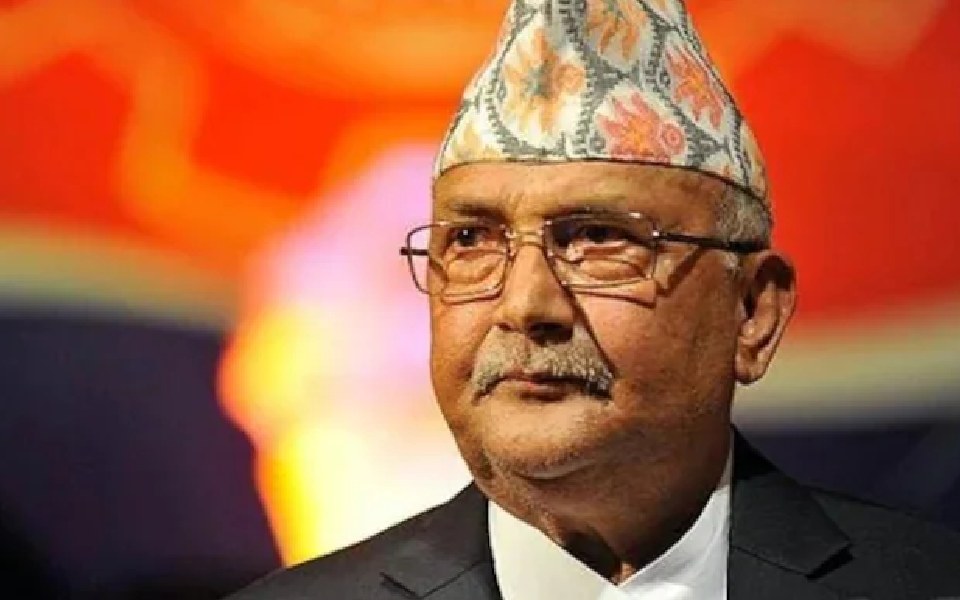
Kathmandu, Jul 14: K P Sharma Oli, CPN-UML chairman and seen as a pro-China leader, was appointed Nepal's Prime Minister for a fourth term on Sunday to lead the new coalition government that faces the daunting challenge of providing political stability in the Himalayan nation.
Oli, 72, succeeds Pushpa Kamal Dahal Prachanda who lost the vote of confidence in the House of Representatives on Friday, leading to the formation of the new government process as per Article 76 (2) of the Constitution.
President Ram Chandra Paudel appointed Oli as the new Prime Minister under Article 76-2 of the Constitution of Nepal, according to a notice issued by the President’s Office.
Oli became the Prime Minister with the support of the Nepali Congress, the largest party in Parliament.
Oli's swearing-in ceremony is scheduled to take place at 11 am on Monday at Shital Niwas, the main building of Rashtrapati Bhawan.
On Friday night, Oli staked his claim to become the next Prime Minister with the backing of NC president Sher Bahadur Deuba and submitted the signatures of 165 House of Representatives (HoR) members -- 77 from his Communist Party of Nepal-Unified Marxist Leninist (CPN-UML) party and 88 from the Nepali Congress. (NC).
CPN-Maoist Centre Chairman Prachanda lost the vote of confidence in HoR during a floor test on Friday.
Earlier last week, Nepali Congress president Sher Bahadur Deuba and CPN-UML chairman Oli inked a seven-point deal to form a new coalition government replacing Prachanda. The two leaders agreed that the remaining term of the Parliament would be shared between them turn by turn. In the first phase, Oli will become the Prime Minister for 18 months as per the agreement.
Prime Minister Oli will form a small cabinet on Monday, according to sources close to him.
Other political parties including Rastriya Prajatantra Party, Janata Samajwadi Party Nepal, Lokatantrik Samajwadi Party, Janamat Party and Nagarik Unmukti Party are also likely to join the government.
Oli served as Nepal's prime minister from October 11, 2015, to August 3, 2016 and then, from February 5, 2018, to July 13, 2021. He continued to serve from May 13, 2021, to July 13, 2021 -- because of an appointment by the then President Bidya Devi Bhandari, described by local media as a success of Oli’s Machiavellian tricks. Later, the Supreme Court ruled that Oli's claim to the post of prime minister was unconstitutional.
Let the Truth be known. If you read VB and like VB, please be a VB Supporter and Help us deliver the Truth to one and all.
CEC orders immediate arrest of those involved in post-poll violence in Bengal: Official
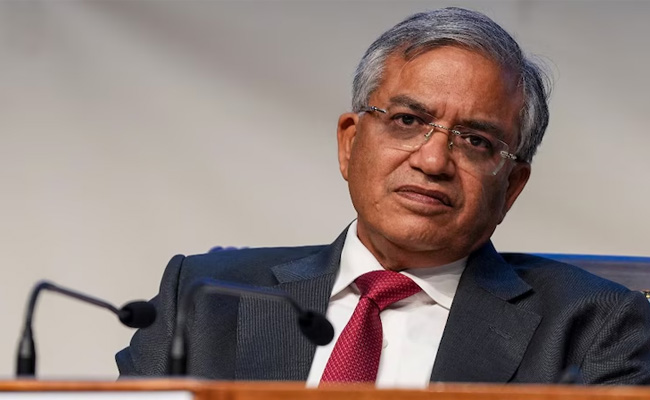
Kolkata (PTI): Chief Election Commissioner Gyanesh Kumar directed the authorities concerned to immediately arrest those involved in post-poll violence and vandalism in West Bengal, an official said on Wednesday.
The Election Commission's directive came after two persons were killed in alleged incidents of post-poll violence in the state on Tuesday, besides scores of party offices being ransacked.
The CEC issued instructions to the West Bengal chief secretary, director general of police, Kolkata police commissioner and directors general of central armed police forces, along with all district magistrates, superintendents of police and other officials, to maintain continuous patrolling in sensitive areas, he said.
"Those responsible for inciting violence and carrying out acts of vandalism must be arrested immediately," the official said, quoting the CEC's instruction.
The chief election commissioner also stressed the need for swift and firm enforcement of the law, he added.
This directive came amid concerns over law and order in parts of the state, with the Election Commission closely monitoring the situation, he added.
"We have been asked to remain on high alert and ensure that any attempt to disturb peace is dealt with firmly," a senior police officer said.
The state authorities have intensified vigil across districts, with coordinated efforts between the police and central forces to prevent any untoward incident, he added.
The assembly elections were held in West Bengal in two phases - April 23 and 29. The counting of votes took place on May 4.
The BJP sealed a landslide victory with 207 seats in the 294-member assembly, ending the TMC's uninterrupted 15-year rule in the state.