Karachi Police woman officer prevented terrorists from reaching Chinese consulate staff
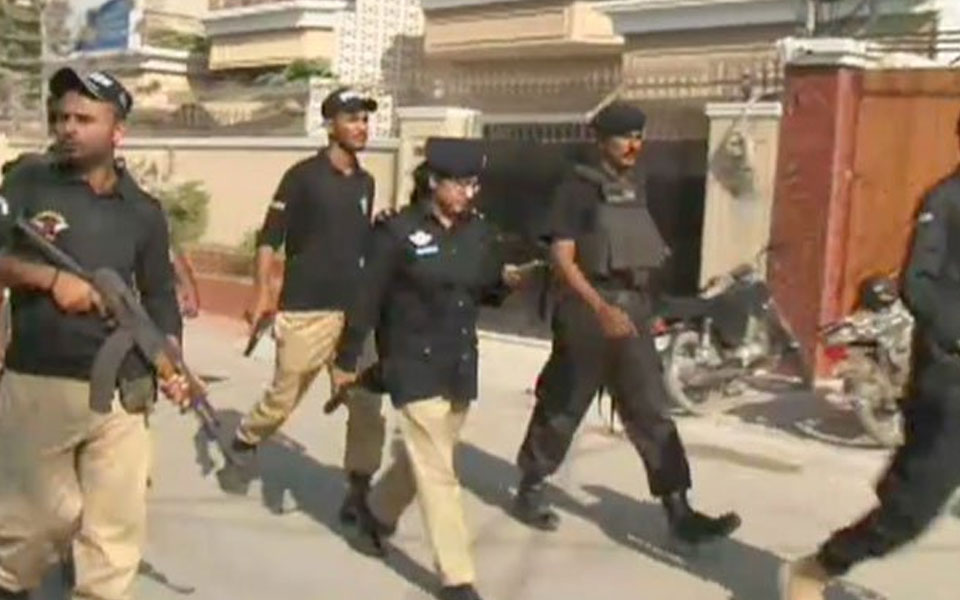
Karachi, Nov 23 : A fearless woman officer of Karachi Police, who was once abandoned by relatives in her village for joining a private school, on Friday saved the lives of many Chinese diplomatic staff when heavily-armed terrorists stormed the mission in the Pakistani city.
Senior Superintendent Police Suhai Aziz Talpur led the security operation that foiled the brazen attack by members of the Baloch Liberation Army, or BLA, in Karachi.
She ensured the terrorists, armed with nine hand-grenades, assault rifles, magazines and explosives, did not reach the diplomatic staff inside the consulate building. Police said the terrorists were carrying food supplies and medicines, suggesting they had planned to take hostages.
But as as soon as they reached the gates of the consulate, the police team took positions and retaliated. Two police officials were killed in the gunfight in which all the attackers were also neutralised.
Suhai hails from a lower middle-class family of Bhai Khan Talpur village in Tando Muhammad Khan district of Sindh province. She joined the police force after clearing elite Central Superior Services exam in 2013, The Express Tribune reported.
"When my parents decided to enrol me at a school, most of our relatives started taunting my family. So much so, that my family had to leave our village and move to a nearby town," she told the daily.
Her father Aziz Talpur, a political activist and writer, always dreamt big for his daughter.
"My relatives cut off ties with me because I wanted Suhai to study as they were only in favour of religious education," Aziz told the daily. "But I vowed to provide my daughter quality education."
Suhai started her primary education at a private school in Tando Muhammad Khan and joined Bahria Foundation for her intermediate studies.
Her educational path then led her to pursue B.Com from the Zubaida Girls College, Hyderabad in Sindh province.
"My family wanted me to become a chartered accountant but I found the job to be very dull as it had no social value," she said. "That is when I appeared for CSS and cleared it in the first attempt."
She credited her success to hard work and her upbringing. "My parents are nationalists. As a child, they used to emphasise that I memorise Sindhi poetry. This developed my interest in literature and history, leading me to secure top marks in both the subjects in the CSS (Central Superior Services) exams."
Let the Truth be known. If you read VB and like VB, please be a VB Supporter and Help us deliver the Truth to one and all.
Brothers awaiting board exam results drown in canal

Erode (Tamil Nadu) (PTI): Minor brothers who were awaiting their board exam results have drowned in a canal in this district while spending their Summer holidays at their aunt's place, police said.
According to Arachalure Police, Santhosh, aged 17, and his younger brother Sanjai, aged 15, natives of Musiri village in Tiruchirapalli district, came to Gopaliparai hamlet near Arachalure to their Aunt's house a couple of days ago after writing their annual 12th and 10th examinations, respectively.
The police said on Friday that both boys went to the nearby Lower Bhavani Project canal to take a bath. It was alleged that while taking a bath, both boys went to a deeper area of the canal and went missing.
As they didn't return home, even two hours after they left, their aunt grew suspicious and informed the Fire and Rescue Services, Chennimalai. A rescue team from the department rushed to the spot. After a few minutes of searching, they located the dead bodies of the brothers and sent them to the hospital. Arachalure police registered a case of death due to drowning and are investigating.