Kazakhstan holds referendum on first nuclear power plant amid public criticism
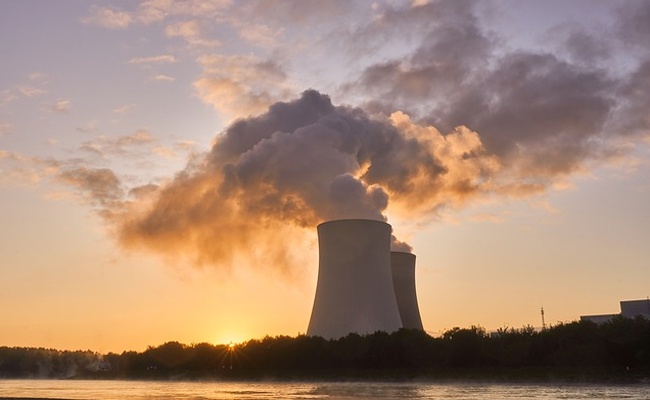
Almaty: Kazakhstan is voting in a referendum today to decide whether to construct its first nuclear power plant, a proposal pushed by President Kassym-Jomart Tokayev's government to phase out the country’s reliance on coal-powered energy.
Despite the government's emphasis on nuclear power as a step towards sustainable energy and economic progress, the proposal has been met with public skepticism due to safety concerns, the Soviet nuclear testing legacy, and apprehensions about Russia’s involvement.
Prominent blogger Vadim Boreiko expressed doubts about the referendum, suggesting that the decision to build the plant in collaboration with Russia's state nuclear firm, Rosatom, may have already been made and that the vote is merely a formality.
Kazakhstan, a country of 20 million people with abundant natural gas reserves, currently relies heavily on aging coal-powered plants and imports electricity from Russia to meet its energy needs. The government argues that nuclear power, given the country’s status as one of the world’s largest uranium producers, would be a logical addition to its energy mix, alongside growing renewable sources like wind and solar power.
The cabinet estimates that constructing the nuclear power plant would cost between $10 billion and $12 billion. However, critics advocate for alternatives like gas-powered plants, which, while still reliant on fossil fuels, are less harmful to the environment and present fewer risks compared to nuclear facilities.
The country's history with nuclear energy includes the 1986 Chornobyl disaster and numerous Soviet nuclear weapon tests, which have left a lasting impact on public health and have caused widespread distrust towards anything related to nuclear energy.
President Tokayev, addressing these concerns, emphasised the need to focus on future developments instead of lingering on past tragedies, stating, “We must move forward and be optimistic; otherwise, we will lag behind in this global race to progress.”
The outcome of the referendum will determine whether Kazakhstan takes its first step towards nuclear energy amidst ongoing debates over the potential risks and benefits of the project.
Let the Truth be known. If you read VB and like VB, please be a VB Supporter and Help us deliver the Truth to one and all.
CM Siddaramaiah alleges ‘criminal conspiracy’ in Sringeri recount, vows legal action
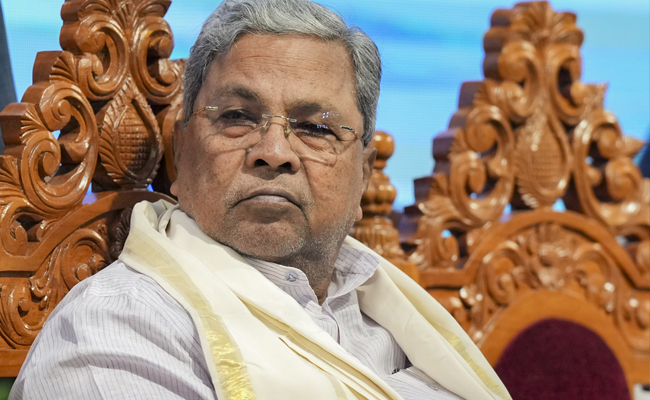
Bengaluru (PTI): Alleging a “criminal conspiracy” by BJP candidate D N Jeevaraj in the Sringeri Assembly poll recounting, Karnataka CM Siddaramaiah on Tuesday said the outcome was manipulated after valid postal ballot votes in favour of Congress leader T D Raje Gowda were tampered with during the recounting process.
Following a Karnataka High Court order on an election petition filed by Jeevaraj, challenging Raje Gowda’s election, the reverification and recounting were conducted on Saturday.
After the reverification and recount of postal ballots for the Sringeri Assembly constituency, votes polled in favour of Raje Gowda were reduced by 255, the returning officer said.
A report on the matter has been submitted to the Election Commission of India for further action, the officer added.
Congress leader Raje Gowda had won the 2023 Assembly polls from Sringeri by 201 votes, defeating his nearest rival Jeevaraj.
Addressing a press conference in Bengaluru, Siddaramaiah said the High Court had directed the recounting of postal ballots and that irregularities were noticed during the exercise conducted on May 2.
“This is a clear case of criminal conspiracy,” Siddaramaiah said, alleging that valid votes cast in favour of Raje Gowda were altered after being accepted by counting agents of all parties, including Congress, BJP, and JD(S).
He claimed that during the recounting of postal ballots, 255 votes were initially accepted as valid by all agents but were later tampered with by subordinate officials.
“There is a second mark on the votes polled in favour of Raje Gowda. They had accepted these as valid votes. Subsequently, another mark was made by officials. This is a clear case of criminal conspiracy,” he said.
When asked who was behind the alleged conspiracy, the CM replied, “It was hatched by Jeevaraj and others. It is planned.”
Siddaramaiah further alleged that the returning officer acted improperly by declaring the result despite the presence of an Election Commission observer during the recounting.
“Immediately after the counting, the returning officer announced the result. He should not have done so; this is against the law,” he said.
He pointed out that Raje Gowda had originally won by 201 votes, but after the recounting, the BJP candidate was declared the winner by 52 votes.
“The BJP has committed a criminal act of conspiracy. This is not vote chori but vote dacoity,” he alleged.
The CM said a police complaint had already been filed by Raje Gowda’s election agent, Sudhir Kumar, and emphasised the need for electoral integrity.
“We want transparency and free and fair elections. That is what our Constitution mandates,” he added.
Stating that the government would pursue legal remedies, Siddaramaiah said, “We are preparing an appeal challenging the returning officer’s announcement in a court of law.”
Responding to a separate query on elections in other states, the CM said there appeared to be an anti-incumbency factor in West Bengal, while results in Tamil Nadu were “surprising,” adding that Vijay’s party was emerging as the largest there.
Following the victory of party candidates in Bagalkote and Davanagere South, Siddaramaiah expressed confidence about future electoral prospects in Karnataka.
“Even in 2028, we will win the Assembly elections. We will come back,” the CM said.
Siddaramaiah added that he would order a forensic examination into the alleged tampering of postal ballots.