Korea ready for fast denuclearization, wants summit with US: Moon
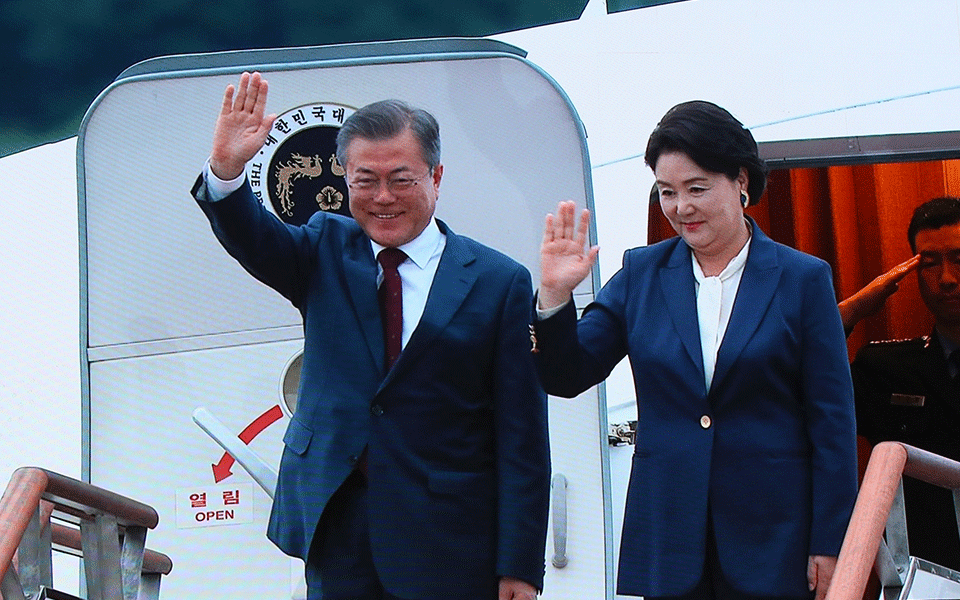
Seoul, Sep 20 : North Korean leader Kim Jong-un is ready to accelerate denuclearization in exchange for security guarantees from Washington and wants to hold a second summit with US President Donald Trump at an early date, South Korean President Moon Jae-in said on Thursday.
"Chairman Kim expressed his wish to finish complete denuclearization at an early date and focus on economic development," Moon said of his meeting with Kim in Pyongyang.
Moon, who returned to South Korea after a three-day bilateral summit with Kim, said Pyongyang also wanted US Secretary of State Mike Pompeo to visit again, Yonhap news agency reported.
Pompeo said earlier he was ready to restart negotiations, stalled since the first Trump-Kim summit in June. He said the aim was denuclearising North Korea "by 2021".
Moon said his government seeks to declare a formal end to the Korean War before the year ends and that he will bring up the issue when he meets Trump in New York next week.
The two Koreas technically remain at war as the 1950-53 Korean War ended only with an armistice, not a peace treaty.
Moon said he also had an additional message from Kim for Trump. "Among what we discussed, there are items that we did not include in the joint declaration," he said, referring to his joint declaration with Kim issued on Wednesday in Pyongyang.
"I plan to deliver such messages in detail to the US side if I visit the country and hold a summit again with President Trump in the future," he added.
Moon will visit New York next week to attend the UN General Assembly. His office said he and Trump will hold a bilateral summit on Monday.
The items discussed with Kim but not laid out in the Pyongyang declaration included an agreement to hold talks between the countries' Parliaments, Moon said.
The South Korean leader's trip to Pyongyang was aimed at breaking a deadlock in denuclearization talks between the US and North Korea that came after Trump called off a North Korea trip by Pompeo.
Moon said he and Kim dedicated nearly the entire first day of his three-day trip to discuss ways to completely denuclearize the Korean Peninsula and restart the stalled North Korea-US dialogue.
"However, specific ways to denuclearize and corresponding measures basically are an issue that need to be discussed between the North and the US," he said, apparently renewing his call for an early resumption of the US-North Korea talks.
In his summit with Moon, Kim agreed to permanently dismantle his country's only missile engine test facility and launch pads in Dongchang-ri in the presence of international experts.
Kim also offered to dismantle the country's key nuclear facility in Yongbyon, provided the US takes corresponding measures.
Moon stressed the need for the US to take reciprocal measures for Pyongyang's denuclearization steps. He has already invited Kim to visit Seoul before the year ends. The North Korean has accepted the invitation.
Let the Truth be known. If you read VB and like VB, please be a VB Supporter and Help us deliver the Truth to one and all.
4 workers die after being buried under coal slurry in Jharkhand's Dhanbad
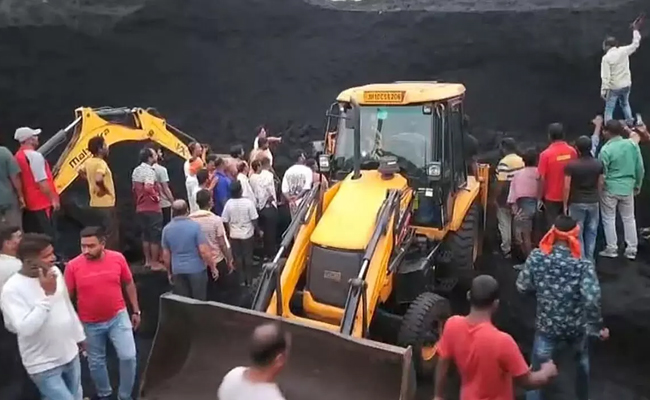
Dhanbad (Jharkhand) (PTI): At least four workers died after being buried under coal slurry in Jharkhand's Dhanbad district on Saturday, a police official said.
The incident took place at Moonidih coal washery in the command area of Bharat Coking Coal Limited (BCCL).
"Bodies of all four workers were dug out of debris during a rescue operation," Putki police station in-charge Waqar Hussain told PTI.
The incident took place when coal slurry was being loaded into trucks by workers, during which a large chunk of slurry fell and trapped several workers underneath, officials said.
The deceased have been identified as Manik Bauri, Dinesh Bauri, Deepak Bauri, and Hemlal Gope.
Meanwhile, the family members of the deceased and local villagers placed the bodies in front of the washery gate and began a protest.
They demanded compensation, jobs for dependents and action against those responsible for the incident.
Police and administration officials are trying to pacify the protesters, an official said.